
Ralph Abercromby
Scottish soldier and politician;
About Ralph Abercromby
Lived 1734 – 1801 (aged 66). Ralph Abercromby was a British military officer, politician, governor of Trinidad, lord Lieutenant of Clackmannanshire and member of Parliament (United Kingdom).
Lieutenant-General Sir Ralph Abercromby (7 October 173428 March 1801) was a British Army officer, politician and colonial administrator who served as the governor of Trinidad in 1797. Rising to the rank of lieutenant general in the British army, he was commander-in-chief, Ireland, and was noted for his military service during the French Revolutionary Wars, which included defeating the French invasion of Egypt and Syria.
Early life
Ralph Abercromby was born on 7 October 1734 at Menstrie Castle, Clackmannanshire. He was the second (but eldest surviving) son of George Abercromby (1705–1800), a lawyer and descendant of the Abercromby family of Birkenbog, Aberdeenshire and Mary Dundas (died 1767), daughter of Ralph Dundas of Manour, Perthshire. His younger brothers include the advocate Alexander Abercromby, Lord Abercromby and General Robert Abercromby.
The family had acquired Menstrie Castle in 1719 but their main family house was the nearby Tullibody House which they had built around 1700. Much of Ralph's childhood was spent in the latter.
Abercromby's education was begun by a private tutor, then continued at the school of Mr Moir in Alloa, then considered one of the best in Scotland despite its Jacobite leanings. Ralph attended Rugby School from 12 June 1748, where he remained until he was 18. Between 1752 and 1753, he was a student at the University of Edinburgh. There he studied moral and natural philosophy and civil law, and was regarded by his professors as sound rather than brilliant. He completed his studies at Leipzig University in Germany from autumn 1754, taking more detailed studies in civil law with a view to a career as an advocate.
Career
On returning from the continent, Abercromby expressed a strong preference for the military profession, and a cornet's commission was accordingly obtained for him (March 1756) in the 3rd Dragoon Guards. He served with his regiment in the Seven Years' War, and thus, the opportunity afforded him of studying the methods of Frederick the Great, which moulded his military character and formed his tactical ideas. Abercromby rose through the intermediate grades to the rank of lieutenant-colonel of the regiment (1773) and brevet colonel in 1780, and in 1781, he became colonel of the newly raised 103rd Regiment of Foot. When the regiment was disbanded in 1783, he retired on half pay. In 1791 he commissioned a large townhouse at 66 Queen Street, Edinburgh. During the American War of Independence, he was a strong supporter of the Patriot cause and chose to serve in Ireland to avoid having to fight in North America.
When France declared war on Great Britain in 1793, Abercromby returned to active duty. He was appointed commander of a brigade under the Duke of York for service in the Netherlands, where he commanded the advanced guard in the action at Le Cateau. During the 1794 withdrawal to Holland, he commanded the allied forces in the action at Boxtel and was wounded directing operations at Fort St Andries on the Waal. In 1795 he commissioned a townhouse at 66 Queen Street, Edinburgh.
In July 1795 Abercromby was nominated by Secretary of State for War Henry Dundas to lead an expedition to the West Indies. That same month he had been made a Knight of the Bath and in August Lieutenant Governor of the Isle of Wight – a reward for his services but also possibly an incentive to lead the army in the Caribbean.
On 17 March 1796 Abercromby arrived in Carlisle Bay, Barbados onboard HMS Arethusa. A third of the 6,000 troops that had arrived on the island before him had already been sent on to Saint Vincent and Grenada, leaving the general with 3,700 soldiers at his disposal. Control of much of Saint Vincent had been lost to rebelling French planters and native Caribs since early 1795, while Grenada was in the midst of an insurrection led by Julien Fédon. The reinforcements to Grenada allowed General Nicolls to attack enemy posts south of Port Royal on 25 March, preventing further French reinforcements from Guadeloupe. Three months later Abercromby arrived with further reinforcements and attacked Fédon's camp on 19 June, routing the insurgents and ending the rebellion.
The British fleet sailed on 25 April 1796 for Saint Lucia, landing the following day and establishing a beachhead. The French were soon repelled and retreated to the fort at Morne Fortune, which Abercromby decided to besiege. The garrison under General Goyrand surrendered to the British army 26 May. The island had been retaken at the cost of 566 men. A force of around 4,000 was left to hold Saint Lucia under the command of Colonel John Moore before Abercromby left for Saint Vincent at the beginning of June.
Abercromby arrived on Saint Vincent 7 June with a force of just over 4,000. He marched his troops near to the insurgent base at Vigie Ridge and camped nearby as the British started to execute an encircling movement: Quartermaster General John Knox manoeuvred his men on the seaward side in order to prevent the enemy retreating north, and Lieutenant Colonel Dickens used the 34th Regiment as a diversion on the opposite side. Knox was able to cut off communications with the Vigie, whilst Dickens ousted the nearby Caribs to complete the encirclement. The black French commander, Marinier, signed terms of surrender on 11 June and the Caribs did 4 days later. The British took around 200 prisoners, with another 200 escaping into the jungle. Although some of the Caribs would remain in resistance until October, the rebellion had effectively been put down at the cost of 17 officers and 168 men killed or wounded.
In February 1797 the General Abercromby launched the invasion of Trinidad. His squadron sailed through the Bocas and anchored off the coast of Chaguaramas. The Spanish Governor Chacón decided to capitulate without fighting. Trinidad thus became a British crown colony, with a French-speaking population of Catholic faith and Spanish laws. British rule was formalized under the Treaty of Amiens (1802).
Afterward Abercromby secured possession of the settlements of Demerara and Essequibo in South America. after fierce fighting where both sides suffered heavy losses.
Abercromby returned to Europe and, in reward for his services, was appointed colonel of the 2nd (Royal North British) Regiment of Dragoons. He was also made Lieutenant-Governor of the Isle of Wight, Governor of Fort George and Fort Augustus in the Scottish Highlands, and promoted to the rank of Lieutenant-general. He again entered Parliament as the member for Clackmannanshire from 1796 to 1798.
In 1798 Abercromby was made Commander-in-Chief of the forces in Ireland, then in rebellion and anticipating French intervention. To quote the biographic entry in the 1888 Encyclopædia Britannica, "e laboured to maintain the discipline of the army, to suppress the rising rebellion, and to protect the people from military oppression, with the care worthy of a great general and an enlightened and beneficent statesman. When he was appointed to the command in Ireland, an invasion of that country by the French was confidently anticipated by the British government. He used his utmost efforts to restore the discipline of an army that was utterly disorganized; and, as a first step, he anxiously endeavoured to protect the people by re-establishing the supremacy of the civil power, and not allowing the military to be called out, except when it was indispensably necessary for the enforcement of the law and the maintenance of order.
In 1801 Abercromby was sent with an army to recover Egypt from France. His experience in the Netherlands and the West Indies particularly fitted him for this new command, as was proved when he carried his army in health, in spirits, and with the requisite supplies to the destined scene of action despite great difficulties. The debarkation of the troops at Aboukir, in the face of strenuous opposition, is justly ranked among the most daring and brilliant exploits of the British army.
Abercromby's old friend and commander, the Duke of York, paid tribute to Abercromby's memory in general orders: The adjacent curtain wall linking this bastion to the fortifications of Valletta, originally called Santa Ubaldesca Curtain, was also renamed Abercrombie's Curtain.
Recognition
By a vote of the House of Commons, a monument was erected in Abercromby's honour in St Paul's Cathedral in London. His widow was created Baroness Abercromby of Tullibody and Aboukir Bay, Of four sons, all four entered Parliament, and two saw military service. Hon. Anne Abercromby (born 21 September 1768 and died October 1832) married Donald Cameron, 22nd Chief of Clan Cameron. They had two sons, and two daughters. Hon. Mary Abercromby (born 19 August 1773 and died 26 April 1825) Hon. Catherine Abercromby (born 4 December 1780 and died 1841), married on 31 December 1811 to Thomas Buchanan of Powis (d. 1842) Superintendent of Marines at Bombay. They had one son. George Abercromby, 2nd Baron Abercromby (1770–1843) General Hon. Sir John Abercromby (1772–1817) James Abercromby, 1st Baron Dunfermline (1776–1858) Lt.-Col. Hon. Alexander Abercromby (1784–1853)
Popular culture Numerous works have been written about Abercromby. A public house in central Manchester, the "Sir Ralph Abercromby", is named after him. There is also a primary school and pub in Tullibody. There is also another 'General Abercrombie' pub with his portrait by John Hoppner as the sign off of the Blackfriars Bridge Road in London.
Three ships have been named HMS Abercrombie after the general but using the variant spelling of his name.
The ballad song "The Banks of the Nile", perhaps most notably recorded by Sandy Denny and Fotheringay, refers to Sir Ralph Abercrombie's campaign in Egypt.
Don’t just read it —
keep it.
Full-length biographies made to live with: read them, listen on the way to work, watch them tonight.
- E-book
- Audio
- Video
Instant download · yours to keep · every purchase keeps this site free
Important facts
People in Ralph Abercromby's life
Named in this biography and alive at the same time
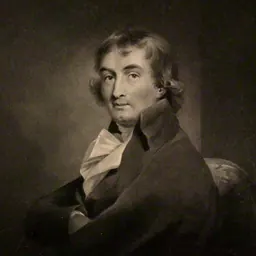
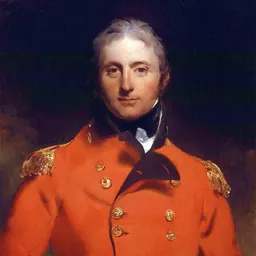

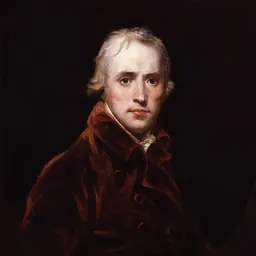

Related people
Same field, nearest in time
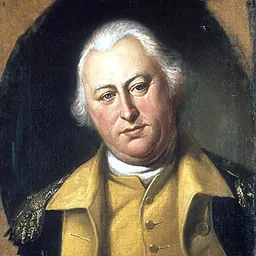


Contemporaries
People whose lives overlapped Ralph Abercromby's






Frequently asked questions
Who was Ralph Abercromby?
Scottish soldier and politician; (1734-1801)
When was Ralph Abercromby born?
Ralph Abercromby was born on 7 October 1734 in Tullibody.
When did Ralph Abercromby die?
Ralph Abercromby died on 28 March 1801 in Alexandria.
What was Ralph Abercromby's occupation?
Ralph Abercromby was a military officer, politician, governor of Trinidad, lord Lieutenant of Clackmannanshire and member of Parliament (United Kingdom).
What nationality was Ralph Abercromby?
Ralph Abercromby was British.
Sources & further reading
Cite this page
APA: Biography.guide. (2026). Ralph Abercromby. https://biography.guide/ralph-abercromby-military-officer/
MLA: "Ralph Abercromby." Biography.guide, https://biography.guide/ralph-abercromby-military-officer/.
Chicago: "Ralph Abercromby." Biography.guide. https://biography.guide/ralph-abercromby-military-officer/.
Data last updated: 2026-09-20 · Spot an error? Report a correction.
Page generated 2026-09-27 05:18 UTC