
About Alexander Cochrane
Lived 1758 – 1832 (aged 73). Alexander Cochrane was a British naval officer and politician.
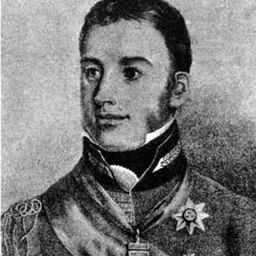
Vice-Admiral of the Red Sir Alexander Inglis Cochrane, GCB (born Alexander Forrester Cochrane; 23 April 1758 – 26 January 1832) was a Royal Navy officer and politician who served in the American War of Independence, French Revolutionary and Napoleonic Wars and War of 1812. He captained off Alexandria, Egypt during the French invasion of Egypt and Syria. Cochrane was knighted into the Order of the Bath for his services in 1806. In 1814 he became commander-in-chief of the North American Station, led British naval forces during the attacks on Washington and New Orleans, and subsequently became commander-in-chief of the Plymouth naval base.
Naval career
Alexander Inglis Cochrane was born on 23 April 1758 in Scotland. His parents were Thomas Cochrane, 8th Earl of Dundonald and his second wife Jane. On 25 October 1809 he was promoted to the rank of Vice Admiral. He held the position of Governor of Guadeloupe from 6 February 1810 to 26 June 1813. Cochrane also owned the "Good Hope" slave plantation in Trinidad.
"No individual had greater responsibility for the decision to recruit and arm American slaves than did Alexander Cochrane." Cochrane formed two Corps of Colonial Marines, made up primarily of escaped slaves. The first corps was based on the island of Marie-Galante and operated from 1808 to 1810. The larger second corps (the first had been disbanded), formed in 1814, was disbanded in 1815, at the conclusion of the War of 1812.
War of 1812
From April 1814, during the War of 1812 against the United States, Cochrane, then a vice admiral, served as commander-in-chief of both the North American Station, based at the new dockyard in Bermuda, Then, Tonnant served as the flagship for Vice Admiral Sir Alexander Cochrane from 9 June 1814 onwards. Cochrane approved the plan proposed by Rear Admiral Sir George Cockburn, 10th Baronet to attack Washington, after the latter predicted that "within a short period of time, with enough force, we could easily have at our mercy the capital". The 4,500 troops, commanded by Major General Robert Ross, successfully captured the capital city on 24 August 1814; Ross then directed the Burning of Washington but refused suggestions by both Cochrane and Cockburn to raze the city. Ross ordered his troops to cause no damage to private property.
It was aboard Cochrane's flagship, , near the mouth of the Potomac on 7 September 1814 that Francis Scott Key and Colonel John Skinner pleaded for and got the release of Doctor William Beanes, a civilian who had been taken prisoner in Upper Marlboro after withdrawing from the assault on Washington. The next day Key, Skinner and Beanes were transferred to the frigate HMS Surprise, with their truce vessel in tow, as the fleet slowly moved up the Chesapeake toward Baltimore. They would not be released until the assault on Baltimore was completed. On 11 September, Skinner insisted they be put back on their own truce vessel which they were allowed to do, under guard.
The morning of the 12th, 4500 British troops landed on the North Point peninsula and started marching toward Baltimore. Major General Robert Ross was killed by sniper fire in a skirmish that afternoon during the Battle of North Point.
Cochrane transferred his flag to HMS Surprise to facilitate moving up the Patapsco River to direct the 25-hour bombardment of Fort McHenry outside Baltimore (13 and 14 September), which proved ineffectual. He resisted calls by his junior officers to attack the fort more aggressively with frigates at close range. He ordered a diversionary raid by boats, around 1am on the 14th, to assist the army encamped near Baltimore in their proposed attack on Hampstead Hill (which they cancelled and withdrew), but this diversion had no success. In the bombardment of Fort McHenry, Cochrane's fleet used bomb vessels and a rocket ship for a long-range bombardment to minimize casualties and damage to the fleet from the fort's return fire, which inspired Francis Scott Key's poem that became "The Star-Spangled Banner", the US national anthem.
Cochrane controlled the soldiers and marines on ships during the Battle of New Orleans. His forces built a hard short road to New Orleans for use by British armed forces. The British army was defeated at the Battle of New Orleans on 8 January 1815 and Cochrane received some criticism for his role in that loss, which prevented the British from gaining a foothold in the US.
The Duke of Wellington was particularly vociferous in his criticism. He claimed that the failure of the New Orleans campaign was In a eulogy to General Edward Pakenham (Wellington's brother-in-law, killed at New Orleans), he said: I cannot but regret that he was ever employed on such a service or with such a colleague. The expedition to New Orleans originated with that colleague ... The Americans were prepared with an army in a fortified position which still would have been carried, if the duties of others, that is of the Admiral (Sir Alexander Cochrane), had been as well performed as that of he whom we now lament.
Prior to returning to Great Britain in 1815, he protested against accusations by Monroe that Black refugees had been sold into slavery in the West Indies. Firstly, he wrote to Monroe on 8 March, then he raised the matter in a letter he composed on 13 March 1815 with the Secretary to the Admiralty on the matter.
Vice Admiral Cochrane continued to lobby the Secretary of the Admiralty for the men of the Corps of Colonial Marines to be retained on Bermuda. In the past, he had been criticised for the manner in which captured slaves had been placed on his plantation in Trinidad. It was important for his public reputation to avoid this being brought up again. Cochrane transferred his pennant to the Puissant on 15 May 1815.
In spite of bearing some responsibility for the loss at New Orleans, Cochrane was later promoted to Admiral on 12 August 1819. From 1821 to 1824, he was Commander-in-Chief, Plymouth.
Family
In 1788, he married Maria Shaw; they had three sons and two daughters.
Legacy Namesake of Admiral Rock, Nova Scotia
Arms
Don’t just read it —
keep it.
Full-length biographies made to live with: read them, listen on the way to work, watch them tonight.
- E-book
- Audio
- Video
Instant download · yours to keep · every purchase keeps this site free
Important facts
People in Alexander Cochrane's life
Named in this biography and alive at the same time





Related people
Same field, nearest in time


Contemporaries
People whose lives overlapped Alexander Cochrane's




Frequently asked questions
Who was Alexander Cochrane?
Scottish Royal Navy commander (1758-1832)
When was Alexander Cochrane born?
Alexander Cochrane was born on 23 April 1758 in Scotland.
When did Alexander Cochrane die?
Alexander Cochrane died on 26 January 1832 in Paris.
What was Alexander Cochrane's occupation?
Alexander Cochrane was a naval officer and politician.
What nationality was Alexander Cochrane?
Alexander Cochrane was British.
Sources & further reading
· Wikipedia: Alexander Cochrane
Cite this page
APA: Biography.guide. (2026). Alexander Cochrane. https://biography.guide/alexander-cochrane/
MLA: "Alexander Cochrane." Biography.guide, https://biography.guide/alexander-cochrane/.
Chicago: "Alexander Cochrane." Biography.guide. https://biography.guide/alexander-cochrane/.
Data last updated: 2026-09-20 · Spot an error? Report a correction.
Page generated 2026-09-27 05:28 UTC