
John Jervis
English lawyer, law reformer, Attorney General and judge
About John Jervis
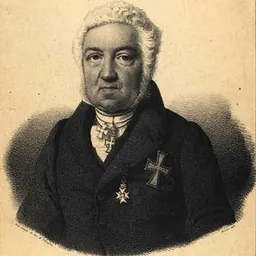
Lived 1802 – 1856 (aged 54). John Jervis was a British judge, politician and jurist.
Sir John Jervis, PC (12 January 1802 – 1 November 1856) was an English lawyer, law reformer and Attorney General in the administration of Lord John Russell. He subsequently became a judge and enjoyed a career as a robust but intelligent and innovative jurist, a career cut short by his early and sudden death.
Early life The son of Thomas Jervis, he was educated at Westminster School and Trinity College, Cambridge, though he did not graduate, apparently preferring to take a commission as an officer in the British Army. However, after two years he returned to study law being called to the bar by the Middle Temple in 1824. Jervis followed his father onto the Oxford circuit and the Chester and north Wales circuit and built a substantial practice, being appointed a postman of the Court of Exchequer. He was offered the distinction of Queen's Counsel in 1837 but, aspiring to a political career, he declined, managing to obtain a patent of precedence instead. The commission's findings led to the Common Law Procedure Acts 1852 and 1854 (15 & 16 Vict. c. 76 and 17 & 18 Vict. c. 135) which started the process of rationalising the English courts, until then still hampered by much medieval practice, and creating the modern system.
Political career (1832–1850)
Jervis was elected Liberal Member of Parliament for Chester in 1832 and held the seat until he became a judge in 1850. Jervis was never overly concerned with local politics and was distant as a constituency MP, even being censured in the Liberal Chester Chronicle for his inaction over the River Dee Bill and his overly-insistent attempts to ensure that his son was nominated as candidate in his stead when he stood down. Jervis did however take an uncharacteristic interest in the Chester Criminals' Execution Bill (1835), and the Weaver Churches Act 1840. Jervis was appointed Solicitor-General in 1846, becoming Attorney General three days later when Sir Thomas Wilde was appointed a judge.
Jervis was Attorney General while the revolutions of 1848 were unfolding across Europe and affecting events in the UK. The collateral domestic civil unrest resulted in the speedy enactment of the Treason Felony Act 1848 (11 & 12 Vict. c. 12) and Jervis was involved in the drafting and promotion of the Bill. its statutory basis dating back to the sixteenth century. Jervis was responsible for sponsoring, drafting and all but single-handedly guiding through the House of Commons three bills to reform the criminal and civil roles of a Justice of the Peace in England and Wales: Indictable Offences Act 1848 (11 & 12 Vict. c.42); Summary Jurisdiction Act 1848; and Justices Protection Act 1848 (11 & 12 Vict. c. 44).
The Acts won considerable praise as soon as they came into force though they did later attract criticism for their verbose style.
The Indictable Offences Act 1848 is important in that it is the first codification of the police caution in England and Wales, in the words:
Judicial career (1850–1856)
Jervis was appointed Chief Justice of the Common Pleas and appointed a Privy Councillor. His greatest judicial achievement, however, was the creation of the "indoor management rule" or rule in Turquand's case, giving protection to third parties who deal with a company in good faith without knowledge that the company has not followed its own internal procedures.
In 1854, Jervis was appointed to the Royal Commission for Consolidating the Statute Law, a royal commission to consolidate existing statutes and enactments of English law.
Jervis died suddenly, possibly of lung cancer, on 1 November 1856 in London and was buried at Shipbourne.
Don’t just read it —
keep it.
Full-length biographies made to live with: read them, listen on the way to work, watch them tonight.
- E-book
- Audio
- Video
Instant download · yours to keep · every purchase keeps this site free
Important facts
People in John Jervis's life
Named in this biography and alive at the same time

Related people
Same field, nearest in time


Contemporaries
People whose lives overlapped John Jervis's





Frequently asked questions
Who was John Jervis?
English lawyer, law reformer, Attorney General and judge (1802-1856)
When was John Jervis born?
John Jervis was born on 12 January 1802.
When did John Jervis die?
John Jervis died on 1 November 1856.
What was John Jervis's occupation?
John Jervis was a judge, politician and jurist.
What nationality was John Jervis?
John Jervis was British.
Sources & further reading
· DBpedia: John Jervis (judge)
Cite this page
APA: Biography.guide. (2026). John Jervis. https://biography.guide/john-jervis-judge/
MLA: "John Jervis." Biography.guide, https://biography.guide/john-jervis-judge/.
Chicago: "John Jervis." Biography.guide. https://biography.guide/john-jervis-judge/.
Data last updated: 2026-09-25 · Spot an error? Report a correction.
Page generated 2026-09-27 05:11 UTC