
About George Hess
Lived 1926 – 2015 (aged 88–89). George Hess was a biochemist.
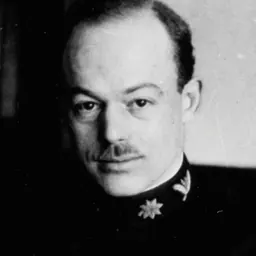
George Paul Hess (November 18, 1922 – September 15, 2015) was a research biochemist who specialized in studying acetylcholine receptors. Hess developed laser pulse photolysis and a quench flow technique.
Personal life George Hess was born on November 18, 1922, in Vienna, Austria. He lived with his parents and grandparents, near much of his extended family. He spent his summers in the lake region of Salzkammergut, After Germany annexed Austria 1938 Hess and his father had to flee because they were Jewish. They escaped to Turin, Italy and stayed with distant family members for 9 months until they were able to obtain US visas. His mother and her parents later joined Hess and his father in the US, where they settled in California. much smaller time increments than had been available before. Most of his research focused on the acetylcholine receptor. He often used cells from the electric organs of Electrophorus electricus (commonly known as the electric eel) and the Torpedo californica (commonly known as the Pacific electric ray) in his studies as these cells have a high density of acetylcholine receptors and imitate mammalian cells.
In his 1976 publication “Functional Acetylcholine Receptor-Electroplax Membrane Microsacs (Vesicles): Purification and Characterization,” Hess determines the utilization of functional versus nonfunctional microsacs and how they account for the efficiency differences in muscle and nerve cells. In his paper “Acetylcholine-Receptor-Mediated Ion Flux in Electroplax Membrane Microsacs (Vesicles): Change in Mechanism Produced by Asymmetrical Distribution of Sodium and Potassium Ions,” published two years later, Hess explored the biphasic flux and desensitization of the acetylcholine receptor in connection with microsac function. He studied these channels in the cells of the electric organs of the Electrophorus electricus and the Torpedo californica. Hess used carbamylcholine, a chemical analog of acetylcholine, to conduct these studies. This study mapped how these receptors worked, their ligand binding sites, and how they responded to variation in acetylcholine/carbamylcholine concentrations by conducting studies into the channel kinetics. He looked at the way that these concentrations affected the active and inactive states of the channel, and determined that the equilibrium position of this channel was one-fourth of the way open. and “Comparison of Acetylcholine Receptor-Controlled Cation Flux in Membrane Vesicles from Torpedo californica and Electrophorus electricus: Chemical Kinetic Measurements in the Millisecond Region,” His findings were published in his 1982 paper “Cocaine and Phencyclidine Inhibition of the Acetylcholine Receptor: Analysis of the Mechanisms of Action Based on Measurements of Ion Flux in the Millisecond-to-Minutes Time Region.” He also explored the use of an innovative fast reaction technique in his 1987 paper: “Chemical Kinetic Measurements of a Mammalian Acetylcholine Receptor by a Fast-Reaction Technique.” provided some of the first evidence that enzyme catalysts undergo conformational changes in their active site. His findings summarized the conformational change that chymotrypsin undergoes in reaction to a change in pH and how it leads to a proton uptake. He detailed the kinetics and determined the pK of the enzyme. where he also discussed the effects and uses of the photolysis technique. His results contrasted many previous studies done, as he was able to view results at a much smaller time increment yielding more accurate results.
In his article “How Fast Does the γ-Aminobutyric Acid Receptor Channel Open? Kinetic Investigations in the Microsecond Time Region Using a Laser-Pulse Photolysis Technique” published in 1999, Hess explores the GABAA receptor and its kinetics. He and his colleagues used cell flow and laser-pulse photolysis to determine the rate of ligand binding to the GABAA receptor, the effects that different dysfunction in this receptor would have on the body. He conducted research into hepatitis G, previously known as Hepatitis G virus (HGV), but later renamed GB virus C (GBC). His article published in the Journal of Infectious Diseases in 1999: “Analysis of Hepatitis G Virus (HGV) RNA, Antibody to HGV Envelope Protein, and Risk Factors for Blood Donors Coinfected with HGV and Hepatitis C Virus” details how he and his colleagues studied coinfections of GBC with HIV/AIDS and hepatitis C virus (HCV), ultimately concluding that coinfection of GBC with HCV did not worsen the symptoms of HCV infection.
Don’t just read it —
keep it.
Full-length biographies made to live with: read them, listen on the way to work, watch them tonight.
- E-book
- Audio
- Video
Instant download · yours to keep · every purchase keeps this site free
Important facts
People in George Hess's life
Named in this biography and alive at the same time


Related people
Same field, nearest in time




Contemporaries
People whose lives overlapped George Hess's


Frequently asked questions
Who was George Hess?
American biochemist
When was George Hess born?
George Hess was born in 1926 in Vienna.
When did George Hess die?
George Hess died in 2015 in New York City.
What was George Hess's occupation?
George Hess was a biochemist.
Sources & further reading
Cite this page
APA: Biography.guide. (2026). George Hess. https://biography.guide/george-hess/
MLA: "George Hess." Biography.guide, https://biography.guide/george-hess/.
Chicago: "George Hess." Biography.guide. https://biography.guide/george-hess/.
Data last updated: 2026-09-20 · Spot an error? Report a correction.
Page generated 2026-09-27 04:57 UTC