
About Gabriel de la Concepción Valdés
Lived 1809 – 1844 (aged 35). Gabriel de la Concepción Valdés was a Cuban poet and writer.
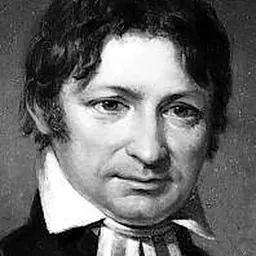
Gabriel de la Concepción Valdés (March 18, 1809 – June 28, 1844), also known as Plácido, was a Cuban poet and revolutionary.
Early life and education Diego Gabriel de la Concepción Valdés was born of Afro-Cuban descent on March 18, 1809, in the city of Havana, Spanish Cuba.
He was born to Diego Ferrer y Matoso, a free mulatto barber who attended stage performers, and Concepcion Vazquez, a traveling actress from Burgos, Spain. The Spanish dancer had been performing at a Havana theater, where his father was employed. Before he was one month old, his mother left him at a foundling asylum, which took him in. He was taken from the asylum by his father, who then gave him a modest and stable home for some years. Gabriel looked after himself after his father died young. He received his first formal education from Don Pedro del Sol, a Cuban schoolmaster, at 10 years old. At 12, he began drawing lessons with Vicente Escobar.
He moved to Matanzas in 1826, where he was warmly received at literary gatherings. He also featured in Tiburcio Campe's El Pasatiempo, and was widely reprinted in the Cuban press. The outcome was increased colonial repression. He faced imprisonment in 1834 for a satirical piece directed at the young Queen of Spain Isabella II. Spanish authorities closely examined his lyrics for sedition, and he had frequent difficulties with them from 1834 until his death.
By 1836, he had gained such renown that José María Heredia y Heredia visited him upon returning to Cuba that year. Prior to his return to Matanzas, he wrote a number of poems that showed his broad interest in international struggles and solidarity with weaker nations under domination. Among them were "To Greece," "To Poland," "A Tear of Blood," "To Venice," and "The Pirate." In Santa Clara, he edited the paper El Eco de Villa Clara, where he published his patriotic sonnet, "The Oath."
His first poetry collection was published in Matanzas in 1838. The Cuban writer was also a contemporary of Juan Francisco Manzano and Antonio Medina y Céspedes. Valdés and ten others were arrested by the military government for the conspiracy known as the Conspiración de la Escalera, accused of forming the General Junta.
After four months in La Vigía fortress, 32 charges were brought against him.
Execution On June 15, 1844, all 11 men were sentenced to execution by firing squad, a ruling affirmed on June 22 and carried out early on June 28. Led into a church cloaked in black and dimly illuminated, they each faced their own coffin as the priests in black robes chanted the service of the dead in sepulchral voices. The accused chief conspirator walked out of the chapel cool and composed, crucifix in hand. In the poem, he appeals to God as a witness to his innocence. The public execution took place at Plaza de la Libertad in Matanzas. Following orders, he sat on a bench with his back to the gunmen, and preparations for his execution proceeded rapidly. When his final moment came, he stood and declared, "Adieu, O world; here is no pity for me. Soldiers, fire!" Valdés was hit but not killed by the initial gunfire. As onlookers whispered in horror, he rose and turned toward the troops with remarkable courage. "Will no one have pity on me? Here!" he cried, pointing to his heart. "Fire here!" 1844 became known in Cuban history as the Year of the Lash.
Personal life In 1841, Valdés married Maria Gil Romona (Morales).
Valdés was made the protagonist in Cirilo Villaverde's 1843 novel "The Carved Comb" .
To honor the 100th anniversary of his death in 1944, Cuba announced a commemorative stamp with his image.
Works
(To A Beautiful Woman)
(The Oath)
(The Death of Gesler) (English translation)
Don’t just read it —
keep it.
Full-length biographies made to live with: read them, listen on the way to work, watch them tonight.
- E-book
- Audio
- Video
Instant download · yours to keep · every purchase keeps this site free
Important facts
People in Gabriel de la Concepción Valdés's life
Named in this biography and alive at the same time
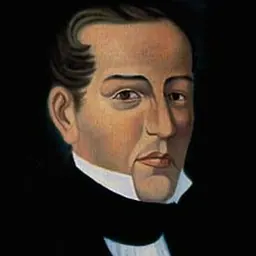




Related people
Same field, nearest in time
Contemporaries
People whose lives overlapped Gabriel de la Concepción Valdés's




Frequently asked questions
Who was Gabriel de la Concepción Valdés?
Afro-Cuban poet
When was Gabriel de la Concepción Valdés born?
Gabriel de la Concepción Valdés was born on 18 March 1809 in Havana.
When did Gabriel de la Concepción Valdés die?
Gabriel de la Concepción Valdés died on 28 June 1844 in Matanzas.
What was Gabriel de la Concepción Valdés's occupation?
Gabriel de la Concepción Valdés was a poet and writer.
What nationality was Gabriel de la Concepción Valdés?
Gabriel de la Concepción Valdés was Cuban.
Sources & further reading
· Wikipedia: Gabriel de la Concepción Valdés
· DBpedia: Gabriel de la Concepción Valdés
Cite this page
APA: Biography.guide. (2026). Gabriel de la Concepción Valdés. https://biography.guide/gabriel-de-la-concepcion-valdes/
MLA: "Gabriel de la Concepción Valdés." Biography.guide, https://biography.guide/gabriel-de-la-concepcion-valdes/.
Chicago: "Gabriel de la Concepción Valdés." Biography.guide. https://biography.guide/gabriel-de-la-concepcion-valdes/.
Data last updated: 2026-09-20 · Spot an error? Report a correction.
Page generated 2026-09-27 05:19 UTC