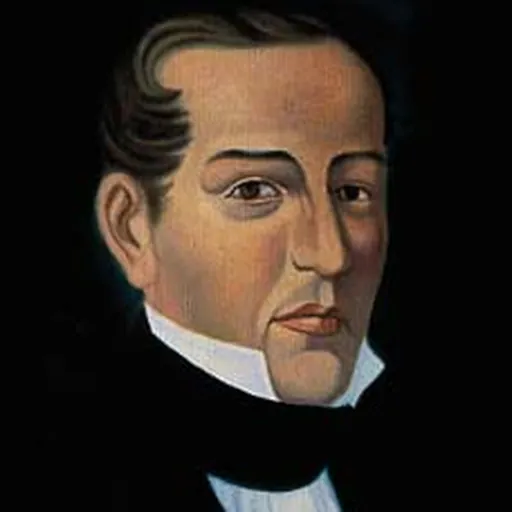
About José María Heredia y Heredia
Lived 1803 – 1839 (aged 35). José María Heredia y Heredia was a Spanish and Mexican poet, writer, literary critic, translator, jurist and journalist.
José María Heredia y Heredia, also known as José María Heredia y Campuzano (December 31, 1803 – May 7, 1839) was a Cuban-born poet considered by many to be the first romantic poet of the Americas and the initiator of Latin American romanticism. More recently, this view has been qualified, highlighting Heredia's roots in Neoclassicism and the aesthetics of eighteenth-century Sensibility. He is known as "El Cantor del Niagara" and regarded as one of the most important poets in the Spanish language. He has also been named National Poet of Cuba.
Heredia studied at the University of Havana, and received a law degree in 1823. In the autumn of 1823 he was arrested on a charge of conspiracy against the Spanish government for participating in pro-independence activities against the Spanish authorities, and was sentenced to banishment for life. To avoid the sentence, Heredia fled to the United States and spent two years in New York City when he was 19. He then took refuge in Mexico in 1825. For a few months he was one of the editors of the literary magazine El Iris. He became naturalized as a citizen of Mexico and obtained a post as magistrate.
Many of his earlier pieces are merely clever translations from French, English and Italian; but his originality is placed beyond doubt by such poems as the Himno del desterrado, the epistle to Emilia, Desengaños, and the celebrated ode to Niágara. As a young boy in Cuba, he learned how to read and write Latin and Greek and translated famous works such as Homer, Horace, and other classical authors and texts.
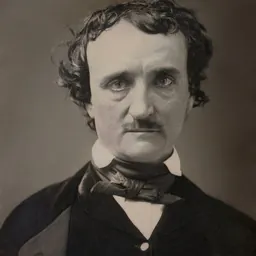
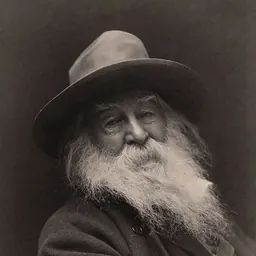
Middle years He returned to Cuba from Venezuela in 1818 and then registered at the University of Havana at the young age of 14. He did not stay at the University of Havana long; he continued his career the following year in Mexico. The death of his father, José Francisco Heredia, in 1820 caused his son José María to return to Cuba the following year from Mexico. It has been said that "if the United States had Walt Whitman and Edgar Allan Poe, Latin America had the Cuban poet Heredia" in regards to the prominence and literary importance of his poetry. Being compared to the great [North] American writers of the Romantic Movement shows who his work was characterized by the stylings of romanticism. His Romanticism is that of the search and longing for freedom, both political and literary. To this extent, his poetry comes directly from his life.
Important works "En el Teocalli de Cholula" ("On the Teocalli of Cholula" in English) and "Niagara" are his most important poems. His poetry lasts both because of the subject matter and for the intensely personal feeling in the works. Nature is clearly depicted in the fashion of the Romantic Era and mirrors his spiritual and emotional states. Nature acts as his freedom. In these poems, the poet praises the natural beauty of both Americas. The most prominent Romantic feature in Heredia is the ever-present involvement of his life in his poetry as well as the dark notes of death, melancholy and gloominess that pervade his writings.
"On the Teocalli of Cholula" Heredia's fascination with the Aztec Ruins is immensely contingent with the thematics of Romanticism. Representative of the ghostly past, it calls forth a feeling of death and mystery of the Romantic Era. Written after the death of his father in Mexico, a lyrical voice experiences the melancholy of watching the sunset over the fields of the valley of Anahuac, and after, reflecting on the disappearance of the pyramid builders and how the times have changed.
"Niagara" Niagara Falls was easily made accessible to the public thanks to the completion of the Erie Canal in 1825. Its existence attracted national and foreign romantics to witness in awe this spectacle of the forces of nature. Heredia stood in great wonder and "projected his anguished sentiments into its powerful flow and fall and swirl." The "Niágara" was originally published in Heredia's first collection, entitled Poesías, published in New York, 1825. The theme of a fissure or split in the relationship between subject and object appears in "Niágara" to coincide with his feelings of split or torn between countries.
Editions With the exception of a few isolated poems, Heredia's work has not been translated into English. Among the many Spanish-language editions stands out the critical edition of Heredia's poetry by Tilmann Altenberg, Poesías completas de José María Heredia (Madrid/Frankfurt: Iberoamericana/Vervuert, 2020).
Don’t just read it —
keep it.
Full-length biographies made to live with: read them, listen on the way to work, watch them tonight.
- E-book
- Audio
- Video
Instant download · yours to keep · every purchase keeps this site free
Important facts
People in José María Heredia y Heredia's life
Named in this biography and alive at the same time
Related people
Same field, nearest in time

Contemporaries
People whose lives overlapped José María Heredia y Heredia's





Frequently asked questions
Who was José María Heredia y Heredia?
Cuban poet (1803–1839)
When was José María Heredia y Heredia born?
José María Heredia y Heredia was born on 31 December 1803 in Santiago de Cuba.
When did José María Heredia y Heredia die?
José María Heredia y Heredia died on 7 May 1839 in Toluca de Lerdo, Mexico City.
What was José María Heredia y Heredia's occupation?
José María Heredia y Heredia was a poet, writer, literary critic, translator, jurist and journalist.
What nationality was José María Heredia y Heredia?
José María Heredia y Heredia was Spanish and Mexican.
Sources & further reading
· Wikipedia: José María Heredia y Heredia
· DBpedia: José María Heredia y Heredia
Cite this page
APA: Biography.guide. (2026). José María Heredia y Heredia. https://biography.guide/jose-maria-heredia-y-heredia/
MLA: "José María Heredia y Heredia." Biography.guide, https://biography.guide/jose-maria-heredia-y-heredia/.
Chicago: "José María Heredia y Heredia." Biography.guide. https://biography.guide/jose-maria-heredia-y-heredia/.
Data last updated: 2026-09-21 · Spot an error? Report a correction.
Portrait: Wikimedia Commons · author & licence
Page generated 2026-09-27 04:59 UTC