
About Juan Francisco Manzano
Lived 1797 – 1854 (aged 56–57). Juan Francisco Manzano was a writer, poet and playwright.
Juan Francisco Manzano (c. 1797–1853) was born a house slave in the province of Matanzas, Cuba during the colonial period. Manzano's father died before he was fifteen and his only remaining family was his mother, sister, and two brothers. Manzano worked as a page throughout his life. He wrote two works of poetry and his autobiography while still enslaved. The Autobiography of a Slave is one of only two personal accounts of 19th-century Cuban slavery, the only existing narrative accounts of slavery in Spanish America. The other is by Esteban Mesa Montejo. A modern translation exists, translated by Mauricio Di Paolantonio titled: Autobiography of a Slave: The Memoir of Juan Francisco Manzano.
An earlier translation exists by Irish abolitionist Richard Robert Madden who published his English translation of the autobiography under the title Life of the Negro Poet in his 1840 book Poems by a slave in the island of Cuba. A second part to Manzano's autobiography was lost. He obtained his freedom in 1836 and later wrote a book of poems and a play, Zafira.
Early life Manzano was born to María Pilar Infazón and Toribio Manzano in 1797 or 1798. His married parents were both enslaved under Señora Beatriz de Jústiz de Santa Ana, his mother being her chief handmaid. He had two younger brothers, one named Florencio, and a freed sister named María del Rosario.
Learning to write Manzano learned to write by copying discarded papers written on by his master, Don Nicolás. According to Manzano, Don Nicolás told him to stop trying to write and find something to sew. He also claims that when he turned 14 his punishments grew worse and worse. His mistress would cage him up for 24 hours at a time without food or water. He would be punished several times a week: "" (This punishment was so common that not a week passed where I would not suffer from beatings twice or three times per week.)
Spanish edition Spanish colonial regime suppressed the history of marginalized social groups such as the African and the Chinese during the period the autobiography was written. During that time the Cuban sugar economy depended on slave labor for its economy. Even after the end of the Spanish rule in 1898, the book was unavailable to be published in Cuba or the Spanish colonies. The autobiography was the property of Del Monte, passed to Del Monte's heirs and then passed to the national library in Havana where it was published in 1937.
English edition In the 19th century, Abolitionists published the literary works of slaves. In Manzano's case, his autobiography was published with the help of Del Monte and Madden. Manzano makes a subtle critique on personal and national sovereignty. His drama reflects the intellectual and political values of the enlightenment such as reason, order, justice and equality. Manzano may have found inspiration for Zafira from an earlier Spanish version entitled Tragedia. The Spanish hero in the original version was taken out in favor of the slave Noemi who represents Afro-Cuban slaves. In resistance writing, meaning is hidden in a symbol that appears harmless although it is full of complex double meanings. Manzano's autobiography gave rise to testimonial literature which discovered and uncovered the ""History of a people without a history."
Don’t just read it —
keep it.
Full-length biographies made to live with: read them, listen on the way to work, watch them tonight.
- E-book
- Audio
- Video
Instant download · yours to keep · every purchase keeps this site free
Important facts
People in Juan Francisco Manzano's life
Named in this biography and alive at the same time
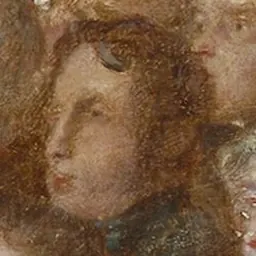
Related people
Same field, nearest in time
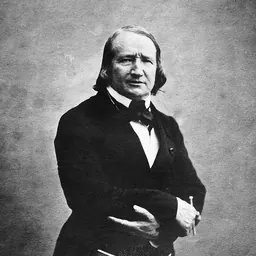


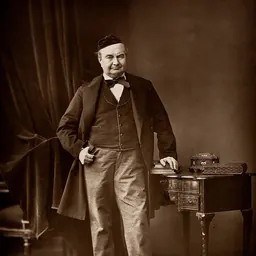


Contemporaries
People whose lives overlapped Juan Francisco Manzano's





Frequently asked questions
Who was Juan Francisco Manzano?
writer (1797–1854)
When was Juan Francisco Manzano born?
Juan Francisco Manzano was born in 1797 in Havana.
When did Juan Francisco Manzano die?
Juan Francisco Manzano died in 1854 in Havana.
What was Juan Francisco Manzano's occupation?
Juan Francisco Manzano was a writer, poet and playwright.
What nationality was Juan Francisco Manzano?
Juan Francisco Manzano's recorded nationality: Spanish Empire.
Sources & further reading
· Wikipedia: Juan Francisco Manzano
· DBpedia: Juan Francisco Manzano
Cite this page
APA: Biography.guide. (2026). Juan Francisco Manzano. https://biography.guide/juan-francisco-manzano/
MLA: "Juan Francisco Manzano." Biography.guide, https://biography.guide/juan-francisco-manzano/.
Chicago: "Juan Francisco Manzano." Biography.guide. https://biography.guide/juan-francisco-manzano/.
Data last updated: 2026-09-22 · Spot an error? Report a correction.
Page generated 2026-09-27 05:29 UTC