
About G. Marius Clore
Born 1955. G. Marius Clore is a British biochemist and biophysicist, known for NMR and Protein structure.
G. Marius Clore MAE, FRSC, FMedSci, FRS is a British and American molecular biophysicist and structural biologist. He was born in London, U.K. and is a dual U.S./U.K. Citizen. He is a Member of the National Academy of Sciences, a Fellow of the Royal Society, a Fellow of the Academy of Medical Sciences, a Fellow of the American Academy of Arts and Sciences, a NIH Distinguished Investigator, and the Chief of the Molecular and Structural Biophysics Section in the Laboratory of Chemical Physics of the National Institute of Diabetes and Digestive and Kidney Diseases at the U.S. National Institutes of Health. He is known for his foundational work in three-dimensional protein and nucleic acid structure determination by biomolecular NMR spectroscopy, for advancing experimental approaches to the study of large macromolecules and their complexes by NMR, and for developing NMR-based methods to study rare conformational states in protein-nucleic acid and protein-protein recognition. Clore's discovery of previously undetectable, functionally significant, rare transient states of macromolecules has yielded fundamental new insights into the mechanisms of important biological processes, and in particular the significance of weak interactions and the mechanisms whereby the opposing constraints of speed and specificity are optimized. Further, Clore's work opens up a new era of pharmacology and drug design as it is now possible to target structures and conformations that have been heretofore unseen.
Biography Clore received his undergraduate degree with first class honours in biochemistry from University College London in 1976 and medical degree from UCL Medical School in 1979. In 1984 he joined the Max Planck Institute for Biochemistry in Martinsried, Germany, where he headed the Biological NMR department from 1984 to 1988. He has remained at the NIH ever since and is currently a NIH Distinguished Investigator and Chief of the Section on Molecular and Structural Biophysics at the NIH. a Fellow of the Royal Society, a Fellow of the Academy of Medical Sciences, a Fellow of the American Academy of Arts and Sciences, and a Foreign Member of the Academia Europaea (Biochemistry and Molecular Biology Section). Clore's citation upon election to the Royal Society reads: "Clore pioneered the development of NMR for determining three-dimensional structures of biological macromolecules and has consistently extended the frontiers of NMR to ever more complex systems. His work on the development of paramagnetic and other relaxation-based NMR experiments to detect and visualize transient, rare states of macromolecules, invisible to conventional structural and biophysical techniques, has shed unique insights into how macromolecules efficiently locate their binding partners, provided the first atomic view of the dynamic amyloid Aß assembly process from disordered peptides into protofibrils, and directly demonstrated that the apo state of the chaperonin GroEL possesses intrinsic foldase/unfoldase activities." the use of residual dipolar couplings for structure determination, the development of simulated annealing and restrained molecular dynamics for three-dimensional protein and nucleic acid structure determination, the solution NMR structure determination of large protein complexes, the development of the combined use of NMR and small-angle X-ray scattering in solution structure determination, and the analysis and characterization of protein dynamics by NMR. Clore's work on complexes of all the cytoplasmic components of the bacterial phosphotransferase system (PTS) led to significant insights into how signal transduction proteins recognize multiple, structurally dissimilar partners by generating similar binding surfaces from completely different structural elements and exploiting side chain conformational plasticity.
Detection and visualization of excited and sparsely populated states Clore's recent work has focused on developing new NMR methods (such as paramagnetic relaxation enhancement, dark state exchange saturation transfer spectroscopy and lifetime line broadening) to detect, characterize and visualize the structure and dynamics of sparsely populated states of macromolecules, which are important in macromolecular interactions but invisible to conventional structural and biophysical techniques. Examples of include the direct demonstration of rotation-coupled sliding and intermolecular translocation as mechanisms whereby sequence-specific DNA binding proteins locate their target site(s) within an overwhelming sea of non-specific DNA sequences; the detection, visualization and characterization of encounter complexes in protein-protein association; the analysis of the synergistic effects of conformational selection and induced fit in protein-ligand interactions; and the uncovering of "dark", spectroscopically invisible states in interactions of NMR-visible proteins and polypeptides (including intrinsically disordered states) with very large megadalton macromolecular assemblies. The latter includes an atomic-resolution view of the dynamics of the amyloid-β aggregation process. and the demonstration of intrinsic unfoldase/foldase activity of the macromolecular machine GroEL. These various techniques have also been used to uncover the kinetic pathway of pre-nucleation transient oligomerization events and associated structures involving the protein encoded by huntingtin exon-1, which may provide a potential avenue for therapeutic intervention in Huntington's disease, a fatal autosomal dominant, neurodegenerative condition.
Scientific impact Clore is one of the most highly cited scientists in the fields of molecular biophysics, structural biology, biomolecular NMR and chemistry with over 560 published scientific articles and an h-index (number of papers cited h or more time) of 145. Clore is also one of only five NIH scientists to have been elected to both the United States National Academy of Sciences and The Royal Society, the other four being Julius Axelrod, Francis Collins, Harold Varmus and Ad Bax.
Personal life Marius Clore was educated at the Lycee Francais Charles de Gaulle in Kensington, London, University College London and UCL Medical School. He holds a 3rd degree black belt in Tae Kwon Do and was an avid cave diver. Marius Clore's father was the film producer Leon Clore whose credits include The French Lieutenant's Woman.
Awards and honors 2026: Stein & Moore Award of the Protein Society 2024: Elected Fellow of the American Physical Society 2024: Elected Fellow of the UK Academy of Medical Sciences 2021: Murray Goodman Memorial Prize 2021: Honorary Doctorate of Science (DSc) from University College London 2021: Royal Society of Chemistry Khorana Prize 2020: Elected Fellow of the Royal Society 2015: Elected Foreign Member of the Academia Europaea. 2011: Royal Society of Chemistry Centenary Prize 2011: Elected Fellow of the International Society of Magnetic Resonance 2011: Elected NIH Distinguished Investigator 2010: Elected Fellow of the American Academy of Arts and Sciences 2010: Hillebrand Award of the Washington Chemical Society 2003: Elected Member of the Lister Institute of Preventive Medicine (U.K.) 2001: Original member, Institute for Scientific Information (ISI) Highly Cited Researchers Database (in Biology & Biochemistry and Chemistry sections). 1999: Elected Fellow of the American Association for the Advancement of Science. 1993: Dupont-Merck Young Investigator Award of the Protein Society 1990: Elected Fellow of the Royal Society of Chemistry (FRSC) (U.K).
Don’t just read it —
keep it.
Full-length biographies made to live with: read them, listen on the way to work, watch them tonight.
- E-book
- Audio
- Video
Instant download · yours to keep · every purchase keeps this site free
Important facts
People in G. Marius Clore's life
Named in this biography and alive at the same time

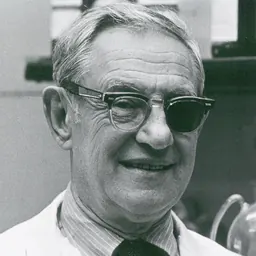




Related people
Same field, nearest in time
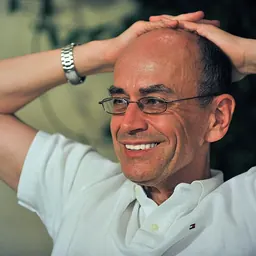


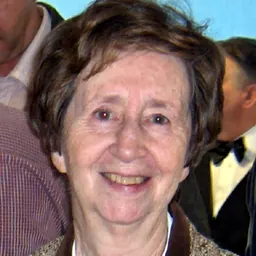
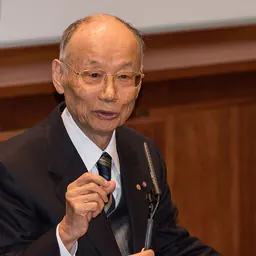
Contemporaries
People whose lives overlapped G. Marius Clore's

Frequently asked questions
Who is G. Marius Clore?
NMR spectroscopist
When was G. Marius Clore born?
G. Marius Clore was born on 6 June 1955 in London.
What is G. Marius Clore's occupation?
G. Marius Clore is a biochemist and biophysicist.
What is G. Marius Clore known for?
G. Marius Clore is known for NMR and Protein structure.
What nationality is G. Marius Clore?
G. Marius Clore is British.
Sources & further reading
Cite this page
APA: Biography.guide. (2026). G. Marius Clore. https://biography.guide/g-marius-clore/
MLA: "G. Marius Clore." Biography.guide, https://biography.guide/g-marius-clore/.
Chicago: "G. Marius Clore." Biography.guide. https://biography.guide/g-marius-clore/.
Data last updated: 2026-09-26 · Spot an error? Report a correction.
Page generated 2026-09-27 05:16 UTC