
About François Topino-Lebrun
Lived 1764 – 1801 (aged 36). François Topino-Lebrun was a French painter.
François Jean-Baptiste Topino-Lebrun (11 April 1764, in Marseille – 30 January 1801, in Paris) was a French painter and revolutionary. He worked in the Neo-Classical style and was said to be the favorite student of Jacques-Louis David.
Biography His father was a furniture dealer and his uncle was a master cabinet maker. He began his studies at the Académie de Marseille under the direction of Jean-Joseph Kapeller, one of its founding members. He went to Rome in 1784, where he met Jacques-Louis David, who was then working on the "Oath of the Horatii". Back in France, he settled in Paris where, from 1787 to 1790, he worked in David's studio at the Académie royale de peinture et de sculpture. He returned to Rome from 1790 to 1792 and was one of group of artists who supported the French Revolution.
Under threat by the authorities of the Papal States, he fled to Paris and lived with David. The following year, he was selected to be part of a mission from the Interior Ministry, charged with assessing the political situation in Marseille. On his return, with the support of David and Pierre-Antoine Antonelle, he was appointed to the Revolutionary Tribunal. In that capacity, he was part of the jury that tried Georges Danton. He barely managed to retain his position after the Thermidorean Reaction, and next appears in late 1794 as a jury member at the trial of Jean-Baptiste Carrier and other members of the "Revolutionary Committee of Nantes". The following year, perhaps after a brief stay in prison, he became an associate of Gracchus Babeuf and Marc-Antoine Jullien de Paris then, in November, he accompanied Jean Bassal (one of the Montagnards) on an official mission to Switzerland.
He returned to Paris in 1797 and, troubled by the trial of the Babeuvistes, he began painting again, for the first time in five years. It was then that he completed his best known work, depicting the death of Gaius Gracchus; an allusion to the suicide attempt made by Gracchus Babeuf after hearing his death sentence. When the painting was shown at the Salon in 1798, no one dared to say the name "Gracchus". In 1799, he joined the , a Neo-Jacobin organization, and painted "The Siege of Sparta", a call-to-arms to defend the Republic.
Later, he became a suspect in the Conspiration des poignards, an alleged plot to assassinate Napoléon that was apparently begun by a police agent in what would now be called a "sting operation". He was arrested on October 10, 1800, together with (a member of the Committee of Public Safety), Adjutant-General and the sculptor Giuseppe Ceracchi. His trial took place shortly after the Plot of the rue Saint-Nicaise, attributed to the Jacobins, so a fair trial was less possible than usual. Despite repeated protests of his innocence and lack of evidence, he was found guilty and guillotined on January 31, 1801.
Don’t just read it —
keep it.
Full-length biographies made to live with: read them, listen on the way to work, watch them tonight.
- E-book
- Audio
- Video
Instant download · yours to keep · every purchase keeps this site free
Important facts
People in François Topino-Lebrun's life
Named in this biography and alive at the same time
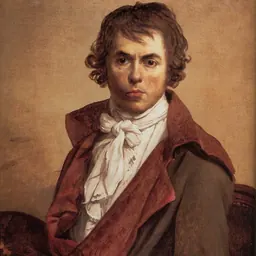

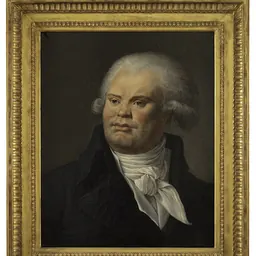
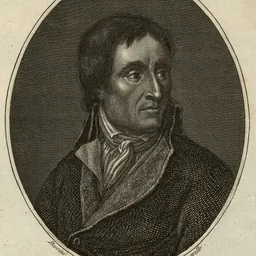
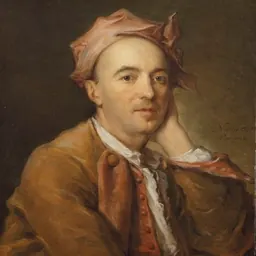


Related people
Same field, nearest in time


Contemporaries
People whose lives overlapped François Topino-Lebrun's





Frequently asked questions
Who was François Topino-Lebrun?
French painter (1764-1801)
When was François Topino-Lebrun born?
François Topino-Lebrun was born on 11 April 1764 in Marseille.
When did François Topino-Lebrun die?
François Topino-Lebrun died on 30 January 1801 in Paris.
What was François Topino-Lebrun's occupation?
François Topino-Lebrun was a painter.
What nationality was François Topino-Lebrun?
François Topino-Lebrun was French.
Sources & further reading
· Wikipedia: François Topino-Lebrun
· DBpedia: François Topino-Lebrun
Cite this page
APA: Biography.guide. (2026). François Topino-Lebrun. https://biography.guide/francois-topino-lebrun/
MLA: "François Topino-Lebrun." Biography.guide, https://biography.guide/francois-topino-lebrun/.
Chicago: "François Topino-Lebrun." Biography.guide. https://biography.guide/francois-topino-lebrun/.
Data last updated: 2026-09-20 · Spot an error? Report a correction.
Page generated 2026-09-27 05:19 UTC