
About Marc-Antoine Jullien
Lived 1744 – 1821 (aged 77). Marc-Antoine Jullien was a French politician and member of parliament.
Marc-Antoine Jullien (18 April 1744 - 27 September 1821) was a French teacher and politician. He was known as Jullien de la Drôme.
His family's personal papers are now in the Archives nationales as cote 39AP . --->
Biographie Before the Revolution He was born in Bourg-de-Péage, the eldest son of Marc Antoine Jullien, a surgeon there, and Claire Larat, who had fourteen children. Marc-Antoine junior had literary ambitions and so moved to Paris in December 1763. He wrote to Jean Jacques Rousseau that for four months he had been "studying rhetoric at the collège des Grassins under M. Le Beau the younger" The following year he won "first prize for new entrants" in French enunciation.
His success gained him protection from the abbé Mably, who presented him to Marie Louise Nicole de La Rochefoucauld, duchess of Enville (1716-1797) ; in 1766 she made him tutor to her grandson the prince of Léon, a post he held until at least 1768. Marc-Antoine Jullien was also linked to the advocate general to the parlement of Grenoble, Joseph Michel Antoine Servan (1737-1807)
Around 1774, he married Rosalie Ducrolay, daughter of a merchant from Pontoise, with whom he had two surviving sons - one, Marc-Antoine, became a close friend to Robespierre during the French Revolution and was the father of both Auguste Jullien and Adolphe Jullien.
Rosalie left a major correspondence. partly published in 1881 by her great-grandson Édouard Lockroy. In 1779, she and her husband were godparents to Marc Charles Camille Nugues, son of Claude Etienne Nugues, a merchant at Romans, and Charlotte Enfantin. Marc Charles' brother Saint-Cyr Nugues later became a general.
Deputy He was an enthusiastic supporter of the French Revolution and actively corresponded with others of that persuasion back in the Dauphiné, which make plain his feelings about the events in Paris. This earned him a reputation as a patriot in the Drôme department, which elected him as its deputy to the Legislative Assembly in 1791 and president of the electoral assembly for that department in 1792.
France became a constitutional monarchy through the Constitution of 3 September 1791. The same month Jullien was elected alternate deputy for Drôme, its third and last in the National Legislative Assembly, but he was not summoned to sit.
Convention In September 1792, with the royal family now in captivity, Marc-Antoine Jullien was the first to be elected as Drôme's deputy to the French National Convention. There he was nicknamed 'Jullien de la Drôme' to differentiate him from his fellow deputy Jean Julien, nicknamed 'Julien de Toulouse', deputy for Haute-Garonne. He sat on the Montagnard benches.
On 6 October 1792 he denounced the conduct of general Anne-Pierre de Montesquiou:
On 26 December although the Montagnard deputies opposed adjourning judgement on Louis XVI, one episode set Jullien against the Convention's President Jacques Defermon (deputy for Ille-et-Vilaine):
During the trial of Louis XVI Jullien voted for death and rejected appeal to the people and a stay of execution:
On 13 April 1793 he was absent from the vote on the impeachment of Jean-Paul Marat and on 28 May he voted against reestablishing the Extraordinary Commission of Twelve.
He was an opponent of the Girondins and when Jean-Denis Lanjuinais attacked the instigators of the insurrection of 31 May – 2 June 1793 Jullien retorted that he was slandering Paris' inhabitants. Jean-Lambert Tallien and Jean-Baptiste Carrier denounced Jullien as Robespierre's agent and protégé after the Robespierre's fall, because Jullien's eldest son had been a member of the Executive Committee of Public Education. In reality, Marc-Antoine junior had been responsible for recalling Tallien and Carrier in spring 1794, but the Convention did not pursue these accusations.
After the sittings Jullien kept his distance from public affairs, living in Paris but devoting himself to poetry and literature and publishing a few short works in the Mercure in 1802 and 1803. When the monarchy was restored in 1814 he retired to his properties in Drôme. He refused to sign the Charter of 1815 during Napoleon's Hundred Days, which the following year saved Jullien from the law of 12 January 1816 against those who had agreed to Louis XVI's execution - his exile was limited to a few months under guard in Barcelonnette. He died after falling accidentally from a balcony and was buried in the cemetery at Pizançon.
Don’t just read it —
keep it.
Full-length biographies made to live with: read them, listen on the way to work, watch them tonight.
- E-book
- Audio
- Video
Instant download · yours to keep · every purchase keeps this site free
Important facts
People in Marc-Antoine Jullien's life
Named in this biography and alive at the same time
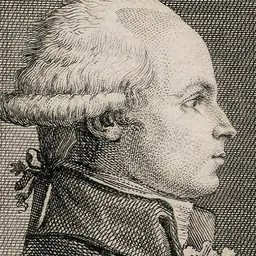
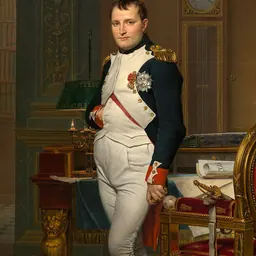
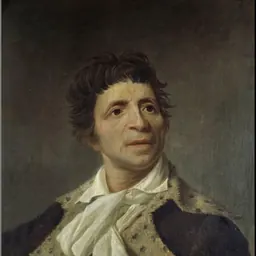
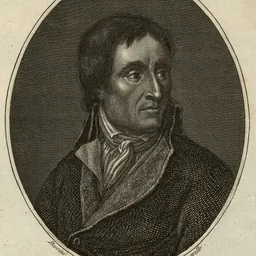
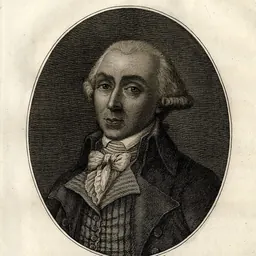



Related people
Same field, nearest in time

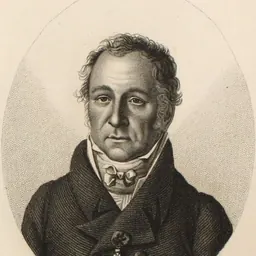

Contemporaries
People whose lives overlapped Marc-Antoine Jullien's
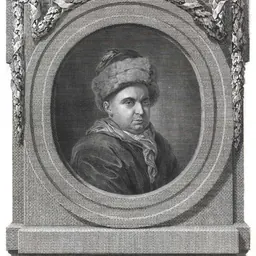




Frequently asked questions
Who was Marc-Antoine Jullien?
French politician (1744–1821)
When was Marc-Antoine Jullien born?
Marc-Antoine Jullien was born on 18 April 1744 in Bourg-de-Péage.
When did Marc-Antoine Jullien die?
Marc-Antoine Jullien died on 27 September 1821 in Chatuzange-le-Goubet.
What was Marc-Antoine Jullien's occupation?
Marc-Antoine Jullien was a politician and member of parliament.
What nationality was Marc-Antoine Jullien?
Marc-Antoine Jullien was French.
Sources & further reading
· Wikipedia: Marc-Antoine Jullien
· DBpedia: Marc-Antoine Jullien
Cite this page
APA: Biography.guide. (2026). Marc-Antoine Jullien. https://biography.guide/marc-antoine-jullien/
MLA: "Marc-Antoine Jullien." Biography.guide, https://biography.guide/marc-antoine-jullien/.
Chicago: "Marc-Antoine Jullien." Biography.guide. https://biography.guide/marc-antoine-jullien/.
Data last updated: 2026-09-20 · Spot an error? Report a correction.
Page generated 2026-09-27 05:26 UTC