
About Erode Venkatappa Ramasamy
Lived 1879 – 1973 (aged 94). Erode Venkatappa Ramasamy was an Indian politician.
Erode Venkatappa Ramasamy (17 September 187924 December 1973), commonly known as Periyar, was an Indian social activist and politician. He was the organiser of the Self-Respect Movement and Dravidar Kazhagam and is considered the architect of Dravidian politics, as well as a leading figure of left-wing politics in India.
Periyar joined the Indian National Congress in 1919 and participated in the Vaikom Satyagraha, during which he was imprisoned twice. He resigned from the Congress in 1925. From 1929 to 1932, he toured British Malaya, Europe and the Soviet Union which later influenced his Self-Respect Movement in favour of caste equality. In 1939, he became the head of the Justice Party, which he transformed into a social organisation named Dravidar Kazhagam in 1944. The party later split, with one group led by C. N. Annadurai forming the Dravida Munnetra Kazhagam (DMK) in 1949. While continuing the Self-Respect Movement, he advocated for an independent Dravida Nadu (land of the Dravidians).
Periyar promoted the principles of rationalism, self-respect, women's rights and eradication of caste. He opposed the exploitation and marginalisation of the non-Brahmin Dravidian people of South India and the imposition of what he considered Indo-Aryan India. Since 2021, the Indian state of Tamil Nadu celebrates his birth anniversary as 'Social Justice Day'.
Biography
Early years Erode Venkata Ramasamy was born on 17 September 1879 to a Kannada speaking Balija merchant family in Erode, then a part of the Coimbatore district of the Madras Presidency. Ramasamy's father was Venkatappa Nayakar (or Venkata), and his mother was Chinnathyee Muthammal. He had one elder brother named Krishnaswamy and two sisters named Kannamma and Ponnuthoy.
Periyar married when he was 19, and had a daughter who lived for only 5 months. His first wife, Nagammai, died in 1933. Periyar married for a second time in July 1948. His second wife, Maniammai, continued Periyar's social work after his death in 1973, and his ideas then were advocated by Dravidar Kazhagam.
In 1929, Periyar announced the deletion of his caste title Naicker from his name at the First Provincial Self-Respect Conference of Chengalpattu. He could speak three Dravidian languages: Kannada, Telugu and Tamil. Periyar attended school for five years after which he joined his father's trade at the age of 12. He used to listen to Tamil Vaishnavite gurus who gave discourses in his house enjoying his father's hospitality. At a young age, he began questioning the apparent contradictions in the Hindu mythological stories.
Kashi pilgrimage Incident In 1904, Periyar went on a pilgrimage to Kashi to visit the revered Shiva temple of Kashi Vishwanath. left
However, one particular alleged incident in Kasi had a profound impact on Periyar's ideology and future work. At the worship site, there were free meals offered to guests. To Periyar's shock, he was refused meals at choultries, which exclusively fed Brahmins. Due to extreme hunger, Periyar felt compelled to enter one of the eateries disguised as a Brahmin with a sacred thread on his bare chest, but was betrayed by his moustache. The gatekeeper at the temple concluded that Periyar was not a Brahmin, as Brahmins were not permitted by the Hindu shastras to have moustaches. He not only prevented Periyar's entry but also pushed him rudely into the street.
Member of Congress (1919–1925)
Periyar joined the Indian National Congress in 1919 after quitting his business and resigning from public posts. He held the chairmanship of Erode Municipality and wholeheartedly undertook constructive programmes spreading the use of Khadi, picketing toddy shops, boycotting shops selling foreign cloth, and eradicating untouchability. In 1921, Periyar courted imprisonment for picketing toddy shops in Erode. When his wife as well as his sister joined the agitation, it gained momentum, and the administration was forced to come to a compromise. He was again arrested during the Non-Cooperation movement and the Temperance movement. In 1922, Periyar was elected the President of the Madras Presidency Congress Committee during the Tirupur session, where he advocated strongly for reservation in government jobs and education. His attempts were defeated in the Congress party due to discrimination and indifference, which led to his leaving the party in 1925.
Vaikom Satyagraha (1924–1925)
Vaikom Satyagraha was a nonviolent agitation for access to the prohibited public environs of the Vaikom Temple in the Kingdom of Travancore by the Congress Party. The Kingdom of Travancore was known for its rigid and oppressive caste system and hence Swami Vivekananda called Travancore a "lunatic asylum".
In Vaikom, a small town in Kerala state, then Travancore, there were strict laws of untouchability in and around the temple area. Dalits, also known as Harijans, were not allowed into the close streets around and leading to the temple, let alone inside it. Anti-caste feelings were growing and in 1924 Vaikom was chosen as a suitable place for an organised Satyagraha. Under his guidance a movement had already begun with the aim of giving all castes the right to enter the temples. Thus, agitations and demonstrations took place.
Periyar was invited to lead the movement as he was the President of the Madras Presidency Congress. On 14 April, Periyar and his wife Nagamma arrived in Vaikom. They were immediately arrested and imprisoned for participation. Periyar and his followers continued to give support to the movement until it was withdrawn during which he was arrested again.
The way in which the Vaikom Satyagraha events have been recorded provides a clue to the image of the respective organisers. In an article entitled Gandhi and Ambedkar, A Study in Leadership, Eleanor Zelliot relates the 'Vaikom Satyagraha', including Gandhi's negotiations with the temple authorities in relation to the event. Furthermore, the editor of Periyar's Thoughts states that Brahmins purposely suppressed news about Periyar's participation. A leading Congress magazine, Young India, in its extensive reports on Vaikom never mentions Periyar. In 1925 the Madras Presidency Congress passed a unanimous resolution hailing Periyar as Vaikom Veerar or Hero of Vaikom in the Kanchipuram Session.
Self-Respect Movement
Periyar and his followers campaigned constantly to influence and pressure the government to take measures to remove social inequality (abolish untouchability, manual scavenging system etc.) even while other nationalist forerunners focused on the struggle for political independence. The Self-Respect Movement was described from the beginning as "dedicated to the goal of giving non-Brahmins a sense of pride based on their Dravidian past". He questioned what he felt was the subjugation of non-Brahmin Dravidians as Brahmins enjoyed gifts and donations from non-Brahmins but opposed and discriminated against non-Brahmins in cultural and religious matters. He rebelled against Brahmin dominance and gender and caste inequality in Tamil Nadu.
In 1952, the Periyar Self-Respect Movement Institution was registered with a list of objectives of the institution which may be quoted as follows: for the diffusion of useful knowledge of political education; to allow people to live a life of freedom from slavery to anything against reason and self respect; to do away with needless customs, meaningless ceremonies, and blind superstitious beliefs in society; to put an end to the present social system in which caste, religion, community and traditional occupations based on the accident of birth, have chained the mass of the people and created "superior" and "inferior" classes ... and to give people equal rights; to completely eradicate untouchability and to establish a united society based on brother/sisterhood; to give equal rights to women; to prevent child marriages and marriages based on law favourable to one sect, to conduct and encourage love marriages, widow marriages, inter caste and inter-religious marriages and to have the marriages registered under the Civil Law; and to establish and maintain homes for orphans and widows and to run educational institutions. The Self-Respect Movement began to grow fast and received the sympathy of the heads of the Justice Party from the beginning. In May 1929, a conference of Self-Respect Volunteers was held at Pattukkotai under the presidency of S. Guruswami. K. V. Alagiriswami took charge as the head of the volunteer band. Conferences followed in succession throughout the Tamil districts of the former Madras Presidency. A Self-Respect training school was opened at Erode, the home town of Periyar. The object was not just to introduce social reform but to bring about a social revolution to foster a new spirit and build a new society.
International travel (1929–1932) Between 1929 and 1935, under the strain of the Great Depression, political thinking worldwide received a jolt from the spread of international communism. Indian political parties, movements and considerable sections of leadership were also affected by inter-continental ideologies. The Self-Respect Movement also came under the influence of the leftist philosophies and institutions. Periyar, after establishing the Self-Respect Movement as an independent institution, began to look for ways to strengthen it politically and socially. To accomplish this, he studied the history and politics of different countries, and personally observed these systems at work. Immediately after his return, Periyar, in alliance with the enthusiastic communist, M. Singaravelar, began to work out a socio-political scheme incorporating socialist and self-respect ideals. This marked a crucial stage of development in the Self-Respect Movement which got politicised and found its compatibility in Tamil Nadu. Tamil nationalists, the Justice Party under Sir A. T. Panneerselvam, and Periyar organised anti-Hindi protests in 1938 which ended with numerous arrests by the Rajaji government.
During the same year, the slogan "Tamil Nadu for Tamilians" was first used by Periyar in protest against the introduction of Hindi in schools. He claimed that the introduction of Hindi was a dangerous mechanism used by the Aryans to infiltrate Dravidian culture. There were recurrent anti-Hindi agitations in 1948, 1952 and 1965.
As President of the Justice Party (1938–1944)
A political party known as the South Indian Libertarian Federation (commonly referred to as Justice Party) was founded in 1916, principally to oppose the economic and political power of the Brahmin groups. The party's goal was to render social justice to the non-Brahmin groups. To gain the support of the masses, non-Brahmin politicians began propagating an ideology of equality among non-Brahmin castes. Brahmanical priesthood and Sanskritic social class-value hierarchy were blamed for the existence of inequalities among non-Brahmin caste groups.
In 1937, when the government required that Hindi be taught in the school system, Periyar organised opposition to this policy through the Justice Party. After 1937, the Dravidian movement derived considerable support from the student community. In later years, opposition to Hindi played a big role in the politics of Tamil Nadu. The fear of the Hindi language had its origin in the conflict between Brahmins and non-Brahmins. To the Tamils, acceptance of Hindi in the school system was a form of bondage. When the Justice Party weakened in the absence of mass support, Periyar took over the leadership of the party after being jailed for opposing Hindi in 1939. Under his tutelage the party prospered, but the party's conservative members, most of whom were rich and educated, withdrew from active participation.
Split with Annadurai
B. R. Ambedkar with Periyar when they met in connection with a Buddhist conference in Rangoon, Myanmar, in 1954In 1949, Periyar's chief lieutenant, Conjeevaram Natarajan Annadurai, established a separate association called the Dravida Munnetra Kazhagam (DMK), or Dravidian Progressive Federation. Periyar was convinced that individuals and movements that undertake the task of eradicating the social evils in the Indian sub-continent have to pursue the goal with devotion and dedication without deviating from the path and with uncompromising zeal. Thus, if they contest elections aiming to assume political power, they would lose vigour and a sense of purpose. But among his followers, there were those who had a different view, wanting to enter into politics and have a share in running the government. Thus, when Periyar married Maniammai on 9 July 1948, they quit the Dravidar Kazhagam, stating that Periyar married Maniammayar who was the daughter of Kanagasabhai when he was 70 and she 32. Those who parted company with Periyar joined the DMK. Though the DMK split from the Dravidar Kazhagam, the organisation made efforts to carry on Periyar's Self-Respect Movement to villagers and urban students. The DMK advocated the thesis that the Tamil language was much richer than Sanskrit and Hindi in content, and thus was a key which opened the door to subjects to be learned.
Later years
In 1956, despite warnings from P. Kakkan, the President of the Tamil Nadu Congress Committee, Periyar organised a procession to the Marina to burn pictures of the Hindu God Rama. Periyar was subsequently arrested and confined to prison. Periyar viewed reasoning as a special tool. According to him, all were blessed with this tool, but very few used it. Thus Periyar used reasoning with respect to subjects of social interest in his presentations to his audiences.
Rationalism
The bedrock of Periyar's principles and the movements that he started was rationalism. He thought that an insignificant minority in society was exploiting the majority and trying to keep it in a subordinate position forever. He wanted the exploited to sit up and think about their position, and use their reason to realise that they were being exploited by a handful of people. If they started thinking, they would realise that they were human beings like the rest, that birth did not and should not endow superiority over others and that they must awaken themselves and do everything possible to improve their own lot.
Periyar also blamed the capitalists for their control of machinery, creating difficulties for the workers. According to his philosophy, rationalism, which ought to lead the way to a peaceful life for all, had resulted in causing poverty and anxiety among the people due to dominating forces. He stated that there is no use to simply acquiring titles or amassing wealth if one lacks self-respect or scientific knowledge. An example he gave was the West sending messages to the planets, while the Tamil society in India were sending rice and cereals to their dead forefathers through the Brahmins. He added that "any opposition not based on rationalism, science, or experience will one day or another, reveal the fraud, selfishness, lies and conspiracies".
Periyar's foremost appeal to people was to develop self-respect. He preached that the Brahmins had monopolised and cheated other communities for decades and deprived them of self-respect. He stated that most Brahmins claimed to belong to a "superior" community with the reserved privilege of being in charge of temples and performing archanas. He felt that they were trying to reassert their control over religion by using their superior caste status to claim the exclusive privilege to touch idols or enter the sanctum sanctorum.
Periyar fought against the orthodox traditions of marriage as suppression of women in Tamil Nadu and throughout the Indian sub-continent. Though arranged marriages were meant to enable a couple to live together throughout life, it was manipulated to enslave women. Much worse was the practice of child marriages practised throughout India at the time. It was believed that it would be a sin to marry after puberty. Another practice, which is prevalent today, is the dowry system where the bride's family is supposed to give the husband a huge payment for the bride. The purpose of this was to assist the newly wedded couple financially, but in many instances dowries were misused by bridegrooms. The outcome of this abuse turned to the exploitation of the bride's parents wealth, and in certain circumstances, led to dowry deaths. There have been hundreds of thousands of cases where wives have been murdered, mutilated, and burned alive because the father of the bride was unable to make the dowry payment to the husband. Periyar fiercely stood up against this abuse meted out against women.
Women in India also did not have rights to their families' or husbands' property. Periyar fought fiercely for this and also advocated for women to have the right to separate or divorce their husbands under reasonable circumstances.
He criticised the hypocrisy of chastity for women and argued that it should either apply also to men, or not at all for both genders. While fighting against this, Periyar advocated getting rid of the Devadasi system. In his view it was an example of a list of degradations of women, attaching them to temples for the entertainment of others, and as temple prostitutes. Further, for the liberation of women, Periyar pushed for their right to have an education and to join the armed services and the police force.
According to biographer M.D. Gopalakrishnan, Periyar and his movement achieved a better status for women in Tamil society. Periyar held that, in matters of education and employment, there should be no difference between men and women. Gopalakrishnan states that Periyar's influence in the State departments and even the centre made it possible for women to join police departments and the army. Periyar also spoke out against child marriage. Periyar's philosophy did not differentiate social and political service. According to him, the first duty of a government is to run the social organisation efficiently, and the philosophy of religion was to organise the social system. Periyar stated that while Christian and Islamic religions were fulfilling this role, the Hindu religion remained totally unsuitable for social progress. He argued that the government was not for the people, but, in a "topsy-turvy" manner, the people were for the government. He attributed this situation to the state of the social system contrived for the advantage of a small group of people. He further advocated for the modernisation of villages by providing public facilities such as schools, libraries, radio stations, roads, bus transport, and police stations.
Periyar felt that a small number of cunning people created caste distinctions to dominate Indian society, so he emphasised that individuals must first develop self-respect and learn to analyse propositions rationally. According to Periyar, a self-respecting rationalist would readily realise that the caste system had been stifling self-respect and therefore he or she would strive to get rid of this menace.
Periyar stated that the caste system in South India is, due to Indo-Aryan influence, linked with the arrival of Brahmins from the north. Ancient Tamil Nadu (part of Tamilakkam) had a different stratification of society in four or five regions (Tinai), determined by natural surroundings and adequate means of living. Periyar also argued that birds, animals, and worms, which are considered to be devoid of rationalism do not create castes, or differences of high and low in their own species. But man, considered to be a rational being, was suffering from these because of religion and discrimination.
The Samathuvapuram (Equality Village) social equality system introduced by the Government of Tamil Nadu in the late 1990s is named after Periyar.
Tamil language and writing
Periyar claimed that Tamil, Telugu, Malayalam, and Kannada came from the same mother language of Old Tamil. He explained that the Tamil language is called by four different names since it is spoken in four different Dravidian states. Nevertheless, current understanding of Dravidian languages contradicts such claims. For example, the currently known classification of Dravidian languages provides the following distinct classes: Southern (including Tamil–Malayalam, Kannada and Tulu); Central (including Telugu–Kui and Kolami–Parji); and, Northern (including Kurukh–Malto and Brahui).
With relation to writing, Periyar stated that using the Tamil script about the arts, which are useful to the people in their life and foster knowledge, talent and courage, and propagating them among the masses, will enlighten the people. Further, he explained that it will enrich the language, and thus it can be regarded as a zeal for Tamil. Periyar also stated that if words of North Indian origin (Sanskrit) are removed from Telugu, Kannada, and Malayalam, only Tamil will be left. On the Brahmin usage of Tamil, he stated that the Tamil spoken by the Andhras and the Malayali people was far better than the Tamil spoken by the Brahmins. Periyar believed that Tamil language will make the Dravidian people unite under the banner of Tamil culture, and that it will make the Kannadigas, Andhras and the Malayalees be vigilant. With regards to a Dravidian alliance under a common umbrella language, Periyar stated that "a time will come for unity. This will go on until there is an end to the North Indian domination. We shall reclaim an independent sovereign state for us".
At the same time, Periyar was also known to have made controversial remarks on the Tamil language and people from time to time. On one occasion, he referred to the Tamil people as "barbarians" and the Tamil language as the "language of barbarians". However, Anita Diehl explains that Periyar made these remarks on Tamil because it had no respective feminine verbal forms.
Periyar's ideas on Tamil alphabet reforms included those such as the reasons for the vowel 'ஈ' (i) having a cursive and looped representation of the short form 'இ' (I). In stone inscriptions from 400 or 500 years ago, many Tamil letters are found in other shapes. As a matter of necessity and advantage to cope with printing technology, Periyar thought that it was sensible to change a few letters, reduce the number of letters, and alter a few signs. He further explained that the older and more divine a language and its letters were said to be, the more they needed reform. Because of changes brought about by means of modern transport and international contact, and happenings that have attracted words and products from many countries, foreign words and their pronunciations have been assimilated into Tamil quite easily. Just as a few compound characters have separate signs to indicate their length as in ' கா ', ' கே ' (kA:, kE:), Periyar questioned why other compound characters like ' கி ', ' கீ ', 'கு ', ' கூ ' (kI, ki:, kU, ku:) (indicated integrally as of now), shouldn't also have separate signs. Further, changing the shape of letters, creating new symbols and adding new letters and similarly, dropping those that are redundant, were quite essential according to Periyar. Thus, the glory and excellence of a language and its script depend on how easily they can be understood or learned and on nothing else"
On caste, he believed that the Kural illustrates how Vedic laws of Manu were against the Sudras and other communities of the Dravidian race. On the other hand, Periyar opined that the ethics from the Kural was comparable to the Christian Bible. The Dravidar Kazhagam adopted the Thirukkural and advocated that Thiruvalluvar's Kural alone was enough to educate the people of the country. Periyar became very concerned about the growing North Indian domination over the south which appeared to him no different from foreign domination. He wanted to secure the fruits of labour of the Dravidians to the Dravidians, and lamented that fields such as political, economic, industrial, social, art, and spiritual were dominated by the north for the benefit of the North Indians. Thus, with the approach of independence from Britain, this fear that North India would take the place of Britain to dominate South India became more and more intense.
Periyar was clear about the concept of a separate nation, comprising Tamil areas, that is part of the then existing Madras Presidency with adjoining areas into a federation guaranteeing protection of minorities, including religious, linguistic, and cultural freedom of the people. A separatist conference was held in June 1940 at Kanchipuram when Periyar released the map of the proposed Dravida Nadu, but failed to get British approval. On the contrary, Periyar received sympathy and support from people such as Bhimrao Ramji Ambedkar and Muhammad Ali Jinnah for his views on the Congress, and for his opposition to Hindi. They then decided to convene a movement to resist the Congress.
The concept of Dravida Nadu was later modified down to Tamil Nadu. This led to a proposal for a union of the Tamil people of not only South India but including those of Ceylon as well. In 1953, Periyar helped to preserve Madras as the capital of Tamil Nadu, which later was the name he substituted for the more general Dravida Nadu. In 1955 Periyar threatened to burn the national flag, but on Chief Minister Kamaraj's pledge that Hindi should not be made compulsory, he postponed the action.
Advocacy of such a nation became illegal when separatist demands were banned by law in 1957. Regardless of these measures, a Dravida Nadu Separation Day was observed on 17 September 1960 resulting in numerous arrests. However, Periyar resumed his campaign in 1968. He wrote an editorial on 'Tamil Nadu for Tamilians' in which he stated, that by nationalism only Brahmins had prospered and nationalism had been developed to abolish the rights of Tamils. He advocated that there was need to establish a Tamil Nadu Freedom Organization and that it was necessary to work towards it.
Anti-Brahmanism vs. Anti-Brahmin In 1920, when the Justice Party came to power, Brahmins occupied about 70 per cent of the high level posts in the government. After reservation was introduced by the Justice Party, it reversed this trend, allowing non-Brahmins to rise in the government of the Madras Presidency. of the population, over government jobs, judiciary and the Madras University. Furthermore, Periyar stated that:
"Our Dravidian movement does not exist against the Brahmins or the Bania. If anyone thinks so, I would only pity him. But we will not tolerate the ways in which Brahminism and Baniaism is degrading Dravidanadu. Whatever support they may have from the government, neither myself nor my movement will be of cowardice".
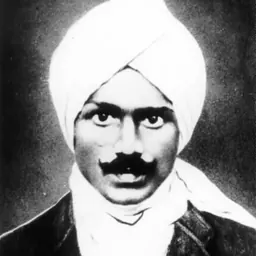
Periyar also criticised Subramanya Bharathi in the journal Ticutar for portraying Mother Tamil as a sister of Sanskrit in his poems:
"They say Bharati is an immortal poet ... Even if a rat dies in an akrakāram, they would declare it to be immortal. ... of Tamilnadu praises him. Why should this be so? Supposedly because he sang fulsome praises of Tamil and Tamilnadu. What else could he sing? His own mother tongue, Sanskrit, has been dead for years. What other language did he know? He cannot sing in Sanskrit. ... He says Tamilnadu is the land of Aryas."
However, Ramaswamy did make incendiary statements towards the encouragement of violence against the Brahmin community: "Pambaium parpanaium partha parpanai adi" (If you see a snake and a Brahmin, beat the Brahmin). Periyar also claimed, on several occasions, that to eliminate the caste system, driving away the Brahmins was crucial.
In October 1957, he supposedly called upon his followers to kill Brahmins and set fire to their houses. On 3 November 1957, Dravidar Kazhagam held a convention in Thanjavur under Periyar's leadership and demanded that the Government of India delete provisions from the Constitution dealing with religious freedom (which, they believed, gave protection to the caste system and particularly to Brahmins), and if they failed to do so the copies of the Constitution would be burnt, and portraits and statues of Mahatma Gandhi would be broken; if it produced no results, the Dravidar Kazhagam members would be asked to kill Brahmins and burn their residential localities. In 1973, he again called to "kill Tamil Brahmins" in a speech in Karaikudi.
Views on Jews
Periyar believed that south Indians, especially Tamils, were a separate race and the Brahmins who came from the north were intruders and possibly Jews.
In a rally organised on 29 December 1938 (during the Anti-Hindi agitation of 1937—40) an address from Periyar was read out that he had sent from jail. In it he called the Brahmins 'mosquitos', 'bugs' and 'Jews', and said that the abolition of the reign of priests was more urgent than the abolition of zamindari.
In an article published in his magazine Kudi Arasu on 20 March 1938, he had written:
"The Jews are only interested in themselves, and nobody else. They somehow contrive to have the rulers in their pocket, participate in governance and conspire to torture and suck the lives out of other citizens in order that they live (in comfort). Are they not comparable to the Brahmins who too have no responsibility but have the rulers in their pocket, have entered the ruling dispensation and been lording over (all of us)?"
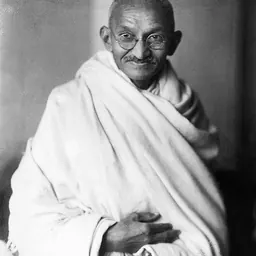
Comparisons with Gandhi In the Vaikom Satyagraha of 1924, Periyar and Gandhi both cooperated and confronted each other in socio-political action. Periyar and his followers emphasised the difference in point of view between Gandhi and himself on the social issues, such as fighting the Untouchability Laws and eradication of the caste system.
According to the booklet "Gandhi and Periyar", Periyar wrote in his paper Kudi Arasu in 1925, reporting on the fact that Gandhi opposed resolutions for the maintaining of caste and Untouchability Laws which would spoil his efforts to bring about Hindu-Muslim unity. From this, Gandhi learned the need for pleasing the Brahmins if anything was to be achieved.
Periyar in his references to Gandhi used opportunities to present Gandhi as, on principle, serving the interests of the Brahmins. In 1927, Periyar and Gandhi met at Bangalore to discuss this matter. The main difference between them came out when Periyar stood for the total eradication of Hinduism to which Gandhi objected saying that Hinduism is not fixed in doctrines but can be changed. In the Kudi Arasu, Periyar explained that:
"With all his good qualities, Gandhi did not bring the people forward from foolish and evil ways. His murderer was an educated man. Therefore nobody can say this is a time of high culture. If you eat poison, you will die. If electricity hits the body, you will die. If you oppose the Brahmin, you will die. Gandhi did not advocate the eradication of Varnasrama Dharma structure, but sees in it a task for the humanisation of society and social change possible within its structure. The consequence of this would be continued high-caste leadership. Gandhi adapted Brahmins to social change without depriving them of their leadership". In a book on revolution published in 1961, Periyar stated: "be of help to people. Do not use treachery or deceit. Speak the truth and do not cheat. That indeed is service to God."
On Hinduism, Periyar believed that it was a religion with no distinctive sacred book (Bhagawad Gita) or origins, but an imaginary faith preaching the "superiority" of the Brahmins, the inferiority of the Shudras, and the untouchability of the Dalits (Panchamas). In 1955 Periyar was arrested for his public action of burning pictures of Rama in public places as a symbolic protest against the Indo-Aryan domination and degradation of the Dravidian leadership according to the Ramayana epic. Periyar also shoed images of Krishna and Rama, stating that they were Aryan gods that considered the Dravidian Shudras to be "sons of prostitutes".
Periyar was also critical of Christianity and Islam. He said "It will be more difficult to abolish Islam and Christianity from society", and "What was said 2000 years ago can not be relevant today". He added that "Heaven in all religion is a way of collecting money. Can you accept Christ according to reason?".
However, Periyar also praised Islam and the prophet Muhammad. At the rally in Tiruchi, Periyar said:
"Muslims are following the ancient philosophies of the Dravidians. The Arabic word for Dravidian religion is Islam. When Brahmanism was imposed in this country, it was Muhammad Nabi who opposed it, by instilling the Dravidian religion's policies as Islam in the minds of the people"
Periyar viewed Christianity as similar to the monotheistic faith of Islam. He explained that the Christian faith says that there can be only one God which has no name or shape. Periyar took an interest in Martin Luther - both he and his followers wanted to liken him and his role to that of the European reformer. Thus Christian views, as expressed for example in The Precepts of Jesus (1820) by Ram Mohan Roy, had at least an indirect influence on Periyar.
Periyar also found Buddhism a basis for his philosophy, though he did not accept that religion. It was again an alternative in the search for self-respect and the object was to get liberation from the discrimination of Hinduism. The fact that Buddha denied the classical Hindu concepts of Brahman, "god" and Atman soul, appealed to Periyar and so also the fact that Buddha-Bodhi could be interpreted as wisdom, sense and that early Buddhism thus advocated reason or enlightenment. Periyar linked this interpretation with his rationalist concepts. The search for basis began in the course of the movement and was intensified soon after independence. It was again an experiment in the search for self-respect and the object was to get liberation from the shudrahood of Hinduism. Periyar stated that what he was propagating could be found in the teachings of Buddha given 2000 years ago and wanted to revive them as an independent movement. Periyar claimed that Buddha Vihars at Srirangam, Kanchi, Palani and Tirupati were converted into Hindu temples.
Though certain members supported the resolution, a faction in the Justice Party known as the "Ginger Group" opposed the resolution and eventually voted it down. Periyar, who was then an observer in the Justice Party, criticised Munuswamy Naidu, saying: At a time when non-Brahmins in other parties were gradually coming over to the Justice Party, being fed up with the Brahmin's methods and ways of dealing with political questions, it was nothing short of folly to think of admitting him into the ranks of the Justice Party.
False claim of award In 2021, the Madurai Bench of the Madras High Court directed the state government to remove a false information from school and college syllabus that claimed that the UNESCO had conferred the title "Socrates of South-East Asia" on Periyar.
T. M. Krishna A controversy surrounded the vocalist and Periyar during the Sangita Kalanidhi award where Periyar was accused of calling for "a genocide of Brahmins".
Jawaharlal Nehru's comments about Periyar
In his letter to K. Kamaraj dated 5 November 1957, Jawaharlal Nehru expressed his displeasure against Periyar for his anti-Brahmin campaign, which called upon people to stab and kill Brahmins.
Views on Tamil Language and Culture Periyar's views on Tamil language and culture have been a source of controversy and debate. While he advocated for the Tamil script to be simplified and promoted rationalist ideals through the Tamil language, he often criticised traditional Tamil literature, especially Sangam-era texts, for reinforcing caste hierarchies and glorifying kingship.
He was particularly critical of what he saw as the deification of Tamil language ("Tamil̲a Teyvamākki koṇṭatu") and promoted the use of English as a tool for scientific and modern development. Some of his speeches reportedly described Tamil as a "barbaric" or "undeveloped" language when compared to English, which drew backlash from Tamil cultural nationalists.
Periyar also advocated for replacing classical Tamil names with modern or rational alternatives and supported simplified script reforms. Critics argue that this stance undermined the linguistic pride central to Tamil identity movements.
Allegations of Caste Bias Periyar was born into a Kannada-speaking Naidu (Balija) family, and although he fiercely criticised Brahmin hegemony, some critics from within the Tamil nationalist and Dravidianist factions have accused him of harbouring implicit biases in favour of his own caste and linguistic community. Notably, his critiques were often directed disproportionately at Tamil Brahmins, while relatively sparing Telugu Brahmins and other Telugu-speaking dominant castes.
Tamil nationalist ideologues have occasionally accused Periyar of promoting anti-Tamil rhetoric under the guise of rationalism and modernism, suggesting that his Telugu background may have influenced his critical stance on Tamil culture. However, many scholars argue that Periyar's positions were rooted in his rationalist and anti-caste ideology, rather than ethnic or linguistic favouritism.
Marriage to Maniammai In 1949, Periyar married Maniammai (also known as Annai E.V.R. Maniammai), a woman several decades younger than him. The marriage took place when Periyar was 70 years old and Maniammai was in her early 30s. This union was met with considerable criticism both inside and outside the Dravidian movement.
Critics argued that the marriage contradicted Periyar's earlier positions on social reform and celibacy, accusing him of moral hypocrisy. The most notable dissent came from C.N. Annadurai, Periyar's protégé and the founder of the Dravida Munnetra Kazhagam (DMK), who distanced himself from Periyar following the marriage. Annadurai remarked, “We respected Periyar as a father figure, but how can a father marry his own daughter?” After Periyar's death in 1973, Maniammai took over the leadership of the Dravidar Kazhagam.
Legacy
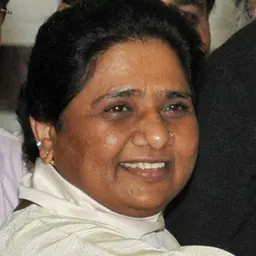
After the death of Periyar in 1973, conferences were held throughout Tamil Nadu for a week in January 1974. The same year Periyar's wife, Maniyammai, the new head of the Dravidar Kazhagam, set fire to the effigies of Gods Rama, Sita and Lakshmana at Periyar Thidal, Madras. This was in retaliation to the Ramaleela celebrations where effigies of Ravana, Kumbakarna and Indrajit were burnt in New Delhi. For this act she was imprisoned. During the 1974 May Day meetings held at different places in Tamil Nadu, a resolution urging the Government to preserve 80 per cent such as C. N. Annadurai and M. Karunanidhi of the Dravida Munnetra Kazhagam''' (DMK), Vaiko, the founder of the Marumalarchi Dravida Munnetra Kazhagam (MDMK), S. Ramadoss, the founder of the Pattali Makkal Katchi (PMK), Thol. Thirumavalavan, the founder of the Viduthalai Chiruthaigal Katchi (VCK), and Dravidar Kazhagam's K. Veeramani. Nationally, Periyar is an ideological icon for Bahujan Samaj Party and its founder Kanshi Ram. Other political figures influenced by Periyar include former Chief Minister of Uttar Pradesh Mayawati. Periyar's life and teachings have also influenced writers and poets such as Kavignar Inkulab, and Bharathidasan and actors such as Kamal Haasan, Vijay and Sathyaraj. Noted Tamil Comedian N. S. Krishnan was a close friend and follower of Periyar. W. P. A. Soundarapandian Nadar was a close confidant of Periyar and encouraged Nadars to be a part of the Self-Respect Movement. A writer from Uttar Pradesh, Lalai Singh Yadav translated Periyar's notable works into Hindi.
In popular culture
Sathyaraj and Khushboo Sundar starred in a government-sponsored film Periyar released in 2007. Directed by Gnana Rajasekaran, the film was screened in Malaysia on 1 May 2007 and was screened at the Goa International Film Festival in November that year. Sathyaraj reprised his role as Periyar in the film Kalavadiya Pozhudugal directed by Thangar Bachan which released in 2017.
Don’t just read it —
keep it.
Full-length biographies made to live with: read them, listen on the way to work, watch them tonight.
- E-book
- Audio
- Video
Instant download · yours to keep · every purchase keeps this site free
Important facts
Family & relationships
People in Erode Venkatappa Ramasamy's life
Named in this biography and alive at the same time




Related people
Same field, nearest in time





Contemporaries
People whose lives overlapped Erode Venkatappa Ramasamy's



Frequently asked questions
Who was Erode Venkatappa Ramasamy?
Indian social reformer (1879-1973)
When was Erode Venkatappa Ramasamy born?
Erode Venkatappa Ramasamy was born on 17 September 1879 in Erode.
When did Erode Venkatappa Ramasamy die?
Erode Venkatappa Ramasamy died on 24 December 1973 in Vellore.
What was Erode Venkatappa Ramasamy's occupation?
Erode Venkatappa Ramasamy was a politician.
What nationality was Erode Venkatappa Ramasamy?
Erode Venkatappa Ramasamy was Indian.
Sources & further reading
· Wikipedia: Erode Venkatappa Ramasamy
Cite this page
APA: Biography.guide. (2026). Erode Venkatappa Ramasamy. https://biography.guide/erode-venkatappa-ramasamy/
MLA: "Erode Venkatappa Ramasamy." Biography.guide, https://biography.guide/erode-venkatappa-ramasamy/.
Chicago: "Erode Venkatappa Ramasamy." Biography.guide. https://biography.guide/erode-venkatappa-ramasamy/.
Data last updated: 2026-09-20 · Spot an error? Report a correction.
Page generated 2026-09-27 05:25 UTC