
Subramanya Bharathi
Tamil poet, social reformer, fighter for Indian freedom & women's rights
About Subramanya Bharathi
Lived 1882 – 1921 (aged 38). Subramanya Bharathi was an Indian poet, journalist, autobiographer and writer.
Subramania Bharati (born Chinnaswami Subramaniyan; 11 December 1882 – 11 September 1921) was an Indian writer, poet, composer, journalist, teacher, Indian independence activist, social reformer, and polyglot. He was bestowed the title Bharati for his poetry and was a pioneer of modern Tamil poetry. He is popularly known by his title Bharati or Bharatiyar and also by the other title "Mahakavi Bharati" ("the great poet Bharati"). His works included patriotic songs composed during the Indian Independence movement. He fought for the emancipation of women, against child marriage, opposed the caste system, and advocated reforms of the society and religion.
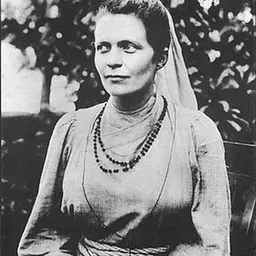
Born in Ettayapuram, in the Tirunelveli district (present-day Thoothukudi) in 1882, Bharati had his early education in Tirunelveli. He later lived in Varanasi for sometime where he was exposed to Hindu theology and new languages. He worked as a journalist with many newspapers, including Swadesamitran, The Hindu, Bala Bharata, Vijaya, Chakravarthini and India. He considered Sister Nivedita, a disciple of Swami Vivekananda, as his guru.
In 1908, the British Government issued an arrest warrant for Bharati which pushed him to live in exile in the French-controlled Pondicherry for about ten years until 1918. He was attacked by an Indian elephant at Thiruvallikeni Parthasarathy Temple whom he fed daily and died a few months later on 11 September 1921.
Bharati was well-versed in several languages and had a deep passion for Tamil. His works covered political, social and spiritual themes. Songs and poems composed by Bharati are widely used in Tamil literature, music and daily life. His works include Panjali Sabatham, Kannan Paatu, Kuyil Paatu, Paapa Paatu, Chinnanchriu Kiliye, Vinayagar Nanmanimalai and Tamil translations of Patanjali's Yoga Sutra and Bhagavat Gita. Bharati was the first poet whose literature was nationalized in 1949.
Early life
Subramaniyan was born on 11 December 1882 in a Tamil Brahmin Iyer family in the town of Ettayapuram in Tirunelveli district, Madras Presidency (present day Thoothukudi district, Tamil Nadu) to Chinnaswami Iyer and Lakshmi Ammal. He was called as Subbaiah by his parents. His mother died in 1887 when he was five years old and he was brought up by his father and his grandmother.
Subramaniyan's father wanted him to learn English and Maths and become an engineer. From a young age, Subramaniyan was inclined towards music and poetry. At the age of 11, he was given the title of "Bharati" (meaning blessed by the goddess of learning Saraswati) for his excellence in poetry. In 1897, at the age of 15, he married Chellamma, who was then seven years old. His father died when he was sixteen.
Bharati participated in the Indian National Congress meeting held in Surat in 1907 along with V.O. Chidambaram Pillai and Mandayam Srinivachariar.
In Pondicherry, Bharati edited and published the weekly journal India, a Tamil daily Vijaya, an English monthly Bala Bharatham and a local weekly Suryodayam. The British tried to ban Bharati's publications and the newspapers India and Vijaya were banned in British India in 1909.
Death Bharati was badly affected by the imprisonments and struggled from ill health. In 1920, a general amnesty was issued which finally removed restrictions on his movements. He delivered his last speech at Karungalpalayam Library in Erode on the topic Man is Immortal. He was struck by a temple elephant named Lavanya at the Thiruvallikeni Parthasarathy Temple whom he used to feed often. When he fed a coconut to the elephant, the elephant attacked him. Although he survived the incident, his health deteriorated. A few months later, he died in the early morning on 11 September 1921. Though Bharati was considered a great poet and nationalist, it was recorded that only 14 people attended his funeral. He is known by the nickname "Mahakavi" ("The Great Poet"). Bharati used simple words and rhythms, unlike the previous century works in Tamil, which had complex vocabulary. He also proposed novel ideas and techniques in his poems. He used a metre called Nondi Chindu in most of his works, which was earlier used by Gopalakrisnha Bharathiar.
Bharati's poetry expressed progressive and reformist ideals. His poetry was a forerunner to modern Tamil poetry in different aspects and combined classical and contemporary elements. He penned thousands of verses on diverse topics like Indian Nationalism, love, children, nature, glory of the Tamil language, and odes to prominent freedom fighters. He fought for the emancipation of women, against child marriage, vehemently opposed the caste system, and stood for reforming society and religion. His poems were the first to be nationalized in India in 1949.
His works include Panjali Sabatham, Kannan Paatu, Kuyil Paatu, Paapa Paatu, Chinnanchriu Kiliye and Vinayagar Nanmanimalai. He also translated Patanjali's Yoga Sutra and Bhagavat Gita to Tamil. The house in which he was born in Ettayapuram and the house where he lived in Puducherry are maintained as memorial houses. A statue of Bharati, a memorial complex and a photo exhibition related to his life history are on display at Etayapuram, his birthplace.
In 1960, India Post issued a commemorative stamp on Bharati. The Subramanyam Bharti Award was constituted in 1987 to award contributions to literature. The award is conferred annually by the Ministry of Human Resource Development of Government of India. In 2021, Government of Tamil Nadu instituted a yearly "Bharati young poet Award". Statutes of Bharati include the Indian Parliament and Marina Beach facade in Chennai. Roads are named after him include Bharathiar road in Coimbatore and Subramaniam Bharti Marg in New Delhi. Several educational institutions are named after him including Bharathiar University, a state university, which was established in 1982 at Coimbatore. On 11 September 2021, on the 100th death anniversary of Bharati, then Indian prime minister Narendra Modi announced the establishment of a Subramania Bharati chair of Tamil Studies at the Banaras Hindu University.
In popular culture A Tamil film titled Bharathi was made in the year 2000 on the life of the poet by Gnana Rajasekaran, which won National Film Award for Best Feature Film in Tamil. The movie Kappalottiya Thamizhan based on the life of V. O. Chidambaram Pillai also chronicles the life of Bharati. The musical duo Hiphop Tamizha use a caricature of Bharati as a part of their logo. Many of the poems written by Bharati are used in various films in the form of songs. Phrases or lines from his poems are also used as film titles.
Don’t just read it —
keep it.
Full-length biographies made to live with: read them, listen on the way to work, watch them tonight.
- E-book
- Audio
- Video
Instant download · yours to keep · every purchase keeps this site free
Important facts
People in Subramanya Bharathi's life
Named in this biography and alive at the same time

Related people
Same field, nearest in time

Contemporaries
People whose lives overlapped Subramanya Bharathi's


Frequently asked questions
Who was Subramanya Bharathi?
Tamil poet, social reformer, fighter for Indian freedom & women's rights
When was Subramanya Bharathi born?
Subramanya Bharathi was born on 11 December 1882 in Ettayapuram.
When did Subramanya Bharathi die?
Subramanya Bharathi died on 12 September 1921 in Chennai.
What was Subramanya Bharathi's occupation?
Subramanya Bharathi was a poet, journalist, autobiographer and writer.
What nationality was Subramanya Bharathi?
Subramanya Bharathi was Indian.
Sources & further reading
· Wikipedia: Subramanya Bharathi
Cite this page
APA: Biography.guide. (2026). Subramanya Bharathi. https://biography.guide/subramanya-bharathi/
MLA: "Subramanya Bharathi." Biography.guide, https://biography.guide/subramanya-bharathi/.
Chicago: "Subramanya Bharathi." Biography.guide. https://biography.guide/subramanya-bharathi/.
Data last updated: 2026-09-27 · Spot an error? Report a correction.
Page generated 2026-09-27 05:17 UTC