
About Erich Apel
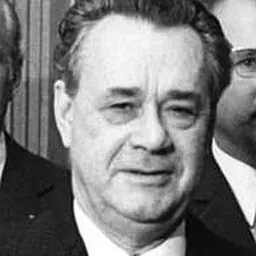
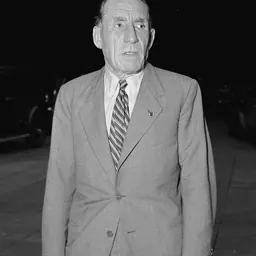
Lived 1917 – 1965 (aged 48). Erich Apel was a German politician and economist.
Erich Apel (3 October 1917 – 3 December 1965) worked during World War Two as a rocket engineer at the Peenemünde Army Research Center in Nazi Germany. After his return from the Soviet Union, where he had forcibly worked for rocketry development under the Operation Osoaviakhim until 1952, he became an East German party official. During the later 1950s, he was increasingly involved in economic policy, serving from 1958 as head of the German Democratic Republic's Economics Commission in the Politburo. He was seen as a reformer. However, economic reform rapidly fell off the agenda after October 1964 when Nikita Khrushchev fell from power in Moscow.
Apel served as president of the state planning commission between 1963 and 1965. His final project was to negotiate a trade deal with the Soviet Union. However, hours before he was due to sign the resulting agreement on behalf of the East German government, he killed himself.
Life Early years Erich Hans Apel was born in Judenbach, a small town in the Franconian Forest which had once benefited from its position as a staging post on a major trade route, but which had lost out commercially following the construction of a railway line providing a direct link from Leipzig to Nuremberg. Apel's father was a mechanical engineer: his mother worked in the garments industry. He attended school in nearby Sonneberg and Steinach, but left school in 1932 in order to embark on an apprenticeship at the Neuhaus porcelain factory in toolmaking and mechanical engineering. The ruling Nazi Party was popular in the region and in 1935 he joined the Deutsches Jungvolk youth organisation. However, it was found that the sixteen year old disrupted the "mind-numbingly dull drill exercises" (""), and he was thrown out after nine months because of his "negative attitude" to the quasi-military exercises in which the boys were expected to participate.
War years Directly after receiving his degree, in September 1939 Apel was conscripted into the army, becoming a member of Infantry Reserve Battalion 451, based in Gotha. Around this time World War II broke out. However, on 20 December 1939 Apel was ordered to the Weapons Agency's research facility at Peenemünde on Germany's northern coast. The head of the facility was the charismatic rocketry expert, Wernher von Braun. Apel seems to have been in his element. A contemporary later recalled that he worked from 07.30 until 17.30, like everyone else, but then in the evenings he retreated to his bedroom in a nearby hostel, in order to work on proposals for improvements. His speciality was the hydraulic systems for the rockets. He was tireless in his work of calculation, measuring and modelling.
Keeping the German workers on an island helped enforce the secrecy, but the German experts nevertheless received wages twice as high as those of their Soviet counterparts. Apel became head of a testing department. Seventy years later a colleague from those times remembered him as "sociable, but also a little distant. Not so proletarian, and always a bit 'the boss'" (""Er war gesellig, aber auch ein bisschen distanziert. Nicht so proletenhaft, immer auch ein bisschen 'Der Chef'"). There was no attempt to integrate the Germans into the Soviet research teams. Stalin never intended that they should remain permanently. The idea was to "milk" their knowledge until their Soviet counterparts had absorbed all the necessary knowledge. That point was reached by the end of 1948, after which the Germans on the island were restricted to "theoretical" research. That suited Apel well enough. He had found a new wife, Christa Metzner, the daughter of a German aircraft engineer from the Arado aircraft plant, whom he married in Gorodomlya. Information on his first marriage remains in short supply: Christa Apel said later that she believed Erich had married an Austrian woman around 1942, but the first marriage had ended in divorce because Apel's war work meant he was almost always away. It was frequently indicated that during his six years in the Soviet Union Apel became a communist, but in his bones it seems reasonable to conclude that he remained a political agnostic. working under Heinrich Rau. In July 1960 Apel became one of approximately 112 members of the powerful Party Central Committee. Under the Leninist constitutional structure in place, the Central Committee exercised a far tighter degree of control than government ministers or the National Parliament (Volkskammer). It was therefore by most reckoning a promotion when on 6 February 1958 Apel resigned his ministerial position and accepted a position as head of the newly created Economic Commission of the Central Committee's Politburo. There were other appointments which combined to stress his importance in the wider government project. In 1960 he received a doctorate in return for a dissertation on the so-called East German Chemistry Programme.
Death On 3 December 1965 Apel was due to sign a new economic agreement with the Soviet Union covering the period 1966–1970. Earlier that year he had traveled to Moscow with Walter Ulbricht to finalise the terms. More importantly, he had been over-ruled by Walter Ulbricht. There was no reply. Apel, while seated at his desk, had taken his own life. A 7.65 mm bullet from his service pistol lay at his feet. News of Apel's death was held back until after the Soviet signatory, Trade Minister Nikolai Patolichev had left town, later that day.
There were those who believed Apel had been murdered, in the context of an increasingly intense power struggle between Politburo members as Walter Ulbricht's period in power was seen to be coming to an end. Ulbricht himself ordered the Ministry for State Security to investigate Apel's death, though later commentators found the aspects of the investigation "uncharacteristically sloppy". On the other hand, West Berlin's mayor, Willy Brandt was never in doubt that Apel's death had been a suicide, performed in protest over the Soviet Union's continuing exploitation of East Germany. Brandt reacted with a cryptic prophesy: "He did not die quietly. We will all hear from him again, from what it was that made him do it." ("Er ist nicht schweigend gestorben. Wir alle werden noch von ihm hören, von dem, was ihn bewegte").
Awards and honours
1959 Patriotic Order of Merit in Silver 1963 Banner of Labor 1964 Patriotic Order of Merit in Gold
Publications (selection)
Durch sozialistische Rekonstruktion und Erhöhung der Arbeitsproduktivität zur Erfüllung des Siebenjahrplans, Berlin 1959 Das Chemieprogramm der Deutschen Demokratischen Republik. Ein wichtiger Faktor im ökonomischen Wettbewerb zwischen Sozialismus und Kapitalismus, Berlin 1960 Aktuelle Aufgaben zur Erhöhung der Qualität der Leitung der Volkswirtschaft durch die Verbesserung der komplexen Planung, insbesondere durch die Beachtung der Wechselwirkung zwischen Organisation und Technik und die Ausarbeitung der Pläne „Neue Technik“, Berlin 1961 Neue Fragen der Planung. Zur Rolle und zu den Aufgaben der zentralen staatlichen Planung im neuen ökonomischen System der Planung und Leitung der Volkswirtschaft, Berlin 1963 Aktuelle Fragen der ökonomischen Forschung, Berlin 1964 with Günter Mittag: Wissenschaftliche Führungstätigkeit – neue Rolle der VVB, Berlin 1964 with Günter Mittag: Ökonomische Gesetze des Sozialismus und neues ökonomisches System der Planung und Leitung der Volkswirtschaft, Berlin 1964 with Günter Mittag: Planmässige Wirtschaftsführung und ökonomische Hebel, Berlin 1964 with Günter Mittag: Fragen der Anwendung des neuen ökonomischen Systems der Planung und Leitung der Volkswirtschaft bei der Vorbereitung und Durchführung der Investitionen, Berlin 1965
Don’t just read it —
keep it.
Full-length biographies made to live with: read them, listen on the way to work, watch them tonight.
- E-book
- Audio
- Video
Instant download · yours to keep · every purchase keeps this site free
Important facts
People in Erich Apel's life
Named in this biography and alive at the same time


Related people
Same field, nearest in time






Contemporaries
People whose lives overlapped Erich Apel's

Frequently asked questions
Who was Erich Apel?
German politician and economist (1917-1965)
When was Erich Apel born?
Erich Apel was born on 3 October 1917 in Judenbach.
When did Erich Apel die?
Erich Apel died on 3 December 1965 in East Berlin.
What was Erich Apel's occupation?
Erich Apel was a politician and economist.
What nationality was Erich Apel?
Erich Apel was German.
Sources & further reading
Cite this page
APA: Biography.guide. (2026). Erich Apel. https://biography.guide/erich-apel/
MLA: "Erich Apel." Biography.guide, https://biography.guide/erich-apel/.
Chicago: "Erich Apel." Biography.guide. https://biography.guide/erich-apel/.
Data last updated: 2026-09-22 · Spot an error? Report a correction.
Page generated 2026-09-27 05:30 UTC