
Elliott H. Lieb
American mathematical physicist and professor of mathematics and physics at Princeton University
About Elliott H. Lieb
Born 1932. Elliott H. Lieb is an American mathematician, physicist and university teacher, known for AKLT model, Adiabatic accessibility and Artificial lattice.
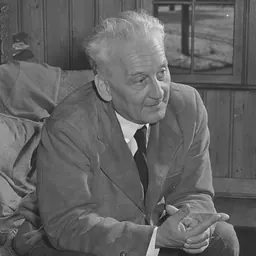
Elliott Hershel Lieb (born July 31, 1932) is an American mathematical physicist. He is a professor of mathematics and physics at Princeton University. Lieb's works pertain to the quantum and classical many-body problems, atomic structure, the theory of magnetism,
Lieb received his B.S. in physics from the Massachusetts Institute of Technology in 1953 and his PhD in mathematical physics from the University of Birmingham in England in 1956. Lieb was a Fulbright Fellow at Kyoto University, Japan (1956–1957), the Max Planck Medal of the German Physical Society (1992), the Boltzmann medal of the International Union of Pure and Applied Physics (1998), the Schock Prize (2001), the Henri Poincaré Prize of the International Association of Mathematical Physics (2003), and the Medal of the Erwin Schrödinger Institute for Mathematics and Physics (2021).
In 2022 Lieb was awarded the Medal for Exceptional Achievement in Research from the American Physical Society for ″major contributions to theoretical physics through obtaining exact solutions to important physical problems, which have impacted condensed matter physics, quantum information, statistical mechanics, and atomic physics″ and the Carl Friedrich Gauss Prize at the International Congress of Mathematicians ″for deep mathematical contributions of exceptional breadth which have shaped the fields of quantum mechanics, statistical mechanics, computational chemistry, and quantum information theory.″ Also in 2022 he received the Dirac Medal of the ICTP jointly with Joel Lebowitz and David Ruelle.
Lieb is a member of the U.S. National Academy of Sciences and has twice served (1982–1984 and 1997–1999) as the president of the International Association of Mathematical Physics. Lieb was awarded the Austrian Decoration for Science and Art in 2002. In 2012 he became a fellow of the American Mathematical Society and in 2013 a Foreign Member of the Royal Society.
In 2023 Lieb received Kyoto Prize in Basic Sciences for his achievements in many-body physics.
Works Lieb has made fundamental contributions to both theoretical physics and mathematics. Only some of them are outlined here. His main research papers are gathered in four Selecta volumes. His research is reviewed there in more than 50 chapters.
Statistical mechanics, soluble systems
Lieb is famous for many groundbreaking results in statistical mechanics concerning, in particular, soluble systems. His numerous works have been collected in the Selecta ″Statistical mechanics″
In the years 1997–99, Lieb provided a rigorous treatment of the increase of entropy in the second law of thermodynamics and adiabatic accessibility with Jakob Yngvason.
Many-body quantum systems and the stability of matter
In 1975, Lieb and Walter Thirring found a proof of the stability of matter that was shorter and more conceptual than that of Freeman Dyson and Andrew Lenard in 1967. Their argument is based on a new inequality in spectral theory, which became known as the Lieb-Thirring inequality. The latter has become a standard tool in the study of large fermionic systems, e.g. for (pseudo-)relativistic fermions in interaction with classical or quantized electromagnetic fields. On the mathematical side, the Lieb-Thirring inequality has also generated a huge interest in the spectral theory of Schrödinger operators. This fruitful research program has led to many important results that can be read in his Selecta ″The stability of matter : from atoms to stars″
Based on the original Dyson-Lenard theorem of stability of matter, Lieb together with Joel Lebowitz had already provided in 1973 the first proof of the existence of thermodynamic functions for quantum matter. With Heide Narnhofer he did the same for Jellium, also called the homogeneous electron gas, which is at the basis of most functionals in density functional theory.
In the 1970s, Lieb together with Barry Simon studied several nonlinear approximations of the many-body Schrödinger equation, in particular Hartree-Fock theory and the Thomas-Fermi model of atoms. They provided the first rigorous proof that the latter furnishes the leading order of the energy for large non-relativistic atoms. With Rafael Benguria and Haïm Brezis, he studied several variations of the Thomas-Fermi model.
The ionization problem in mathematical physics asks for a rigorous upper bound on the number of electrons that an atom with a given nuclear charge can bind. Experimental and numerical evidence seems to suggest that there can be at most one, or possibly two extra electrons. To prove this rigorously is an open problem. A similar question can be asked concerning molecules. Lieb proved a famous upper bound on the number of electrons a nucleus can bind. Moreover, together with Israel Michael Sigal, Barry Simon and Walter Thirring, he proved, for the first time, that the excess charge is asymptotically small compared to the nuclear charge.
Together with Jakob Yngvason, Lieb gave a rigorous proof of a formula for the ground state energy of dilute Bose gases. Subsequently, together with Robert Seiringer and Jakob Yngvason he studied the Gross-Pitaevskii equation for the ground state energy of dilute bosons in a trap, starting with many-body quantum mechanics. Lieb's works with Joseph Conlon and Horng-Tzer Yau and with Jan Philip Solovej on what is known as the law for bosons provide the first rigorous justification of Bogoliubov's pairing theory.
In quantum chemistry Lieb is famous for having provided in 1983 the first rigorous formulation of Density Functional Theory using tools of convex analysis. The universal Lieb functional gives the lowest energy of a Coulomb system with a given density profile, for mixed states. In 1980, he proved with Stephen Oxford the Lieb-Oxford inequality which provides an estimate on the lowest possible classical Coulomb energy at fixed density and was later used for calibration of some functionals such as PBE and SCAN. More recently, together with Mathieu Lewin and Robert Seiringer he gave the first rigorous justification of the Local-density approximation for slowly varying densities.
Analysis
In the 70s Lieb entered the mathematical fields of calculus of variations and partial differential equations, where he made fundamental contributions. An important theme was the quest of best constants in several inequalities of functional analysis, which he then used to rigorously study nonlinear quantum systems. His results in this direction are collected in the Selecta ″Inequalities″.
In a 1977 work, Lieb also proved the uniqueness (up to symmetries) of the ground state for the Choquard-Pekar equation, also called Schrödinger–Newton equation, which can describe a self gravitating object or an electron moving in a polarizable medium (polaron). With Lawrence Thomas he provided in 1997 a variational derivation of the Choquard-Pekar equation from a model in quantum field theory (the Fröhlich Hamiltonian). This had been solved earlier by Monroe Donsker and Srinivasa Varadhan using a probabilistic path integral method.
In another work with Herm Brascamp in 1976, Lieb extended the Prékopa-Leindler inequality to other types of convex combinations of two positive functions. He strengthened the inequality and the Brunn-Minkowski inequality by introducing the notion of essential addition.
Lieb also wrote influential papers on harmonic maps, among others with Frederick Almgren, Haïm Brezis and Jean-Michel Coron. In particular, Algrem and Lieb proved a bound on the number of singularities of energy minimizing harmonic maps.
Selected publications
Books Lieb, Elliott H.; Seiringer, Robert. The stability of matter in quantum mechanics. Cambridge University Press, 2010 Lieb, Elliott H.; Seiringer, Robert; Solovej, Jan Philip; Yngvason, Jakob. The mathematics of the Bose gas and its condensation. Oberwolfach Seminars, 34. Birkhäuser Verlag, Basel, 2005. viii+203 pp. ; 3-7643-7336-9
Other The Physics and Mathematics of Elliott Lieb. Edited by R. L. Frank, A. Laptev, M. Lewin and R. Seiringer. EMS Press, July 2022, 1372 pp.
Don’t just read it —
keep it.
Full-length biographies made to live with: read them, listen on the way to work, watch them tonight.
- E-book
- Audio
- Video
Instant download · yours to keep · every purchase keeps this site free
Important facts
more
Hubbard model, Lieb conjecture, Lieb's square ice constant, Lieb-Robinson bounds, Lieb–Liniger model, Lieb–Oxford inequality, Lieb–Thirring inequality, Schrödinger–Newton equation, Stability of matter, Strong Subadditivity of Quantum Entropy, Temperley–Lieb algebra, Trace inequalities, Wehrl entropyPeople in Elliott H. Lieb's life
Named in this biography and alive at the same time





Related people
Same field, nearest in time


Contemporaries
People whose lives overlapped Elliott H. Lieb's


Frequently asked questions
Who is Elliott H. Lieb?
American mathematical physicist and professor of mathematics and physics at Princeton University
When was Elliott H. Lieb born?
Elliott H. Lieb was born on 31 July 1932 in Boston.
What is Elliott H. Lieb's occupation?
Elliott H. Lieb is a mathematician, physicist and university teacher.
What is Elliott H. Lieb known for?
Elliott H. Lieb is known for AKLT model, Adiabatic accessibility, Artificial lattice, Borell–Brascamp–Lieb inequality, Brascamp–Lieb inequality and Brezis–Lieb lemma.
What nationality is Elliott H. Lieb?
Elliott H. Lieb is American.
Sources & further reading
Cite this page
APA: Biography.guide. (2026). Elliott H. Lieb. https://biography.guide/elliott-h-lieb/
MLA: "Elliott H. Lieb." Biography.guide, https://biography.guide/elliott-h-lieb/.
Chicago: "Elliott H. Lieb." Biography.guide. https://biography.guide/elliott-h-lieb/.
Data last updated: 2026-09-26 · Spot an error? Report a correction.
Page generated 2026-09-27 05:15 UTC