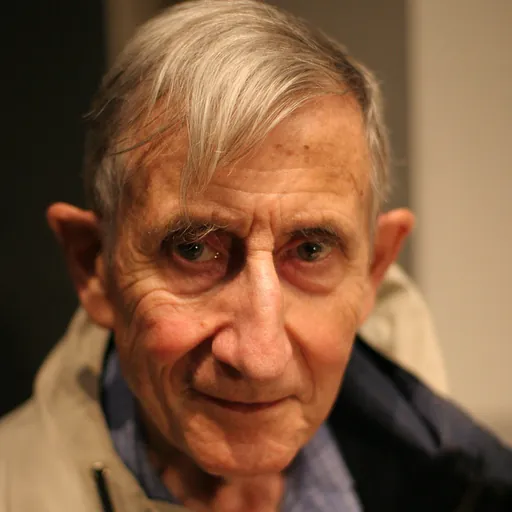
Freeman Dyson
Theoretical physicist and mathematician
About Freeman Dyson
Lived 1923 – 2020 (aged 96). Freeman Dyson was a British and American mathematician, theoretical physicist, nuclear physicist, statistician, physicist and university teacher, known for Anti-nuclear movement in the United States, Circular ensemble and Crank conjecture.
Biography Early life Dyson was born on 15 December 1923, in Crowthorne in Berkshire, England. He wrote a foreword to a treatise on psychic phenomena in which he concluded that "ESP is real... but cannot be tested with the clumsy tools of science".
Personal life and death Dyson married his first wife, the Swiss mathematician Verena Huber, on 11 August 1950. They had two children, Esther and George, before divorcing in 1958. In November 1958 he married Imme Jung, with whom he had four daughters.
Dyson died on 28 February 2020 at Penn Medicine Princeton Medical Center in Plainsboro Township, New Jersey, from complications following a fall. He was 96.
Concepts Biotechnology and genetic engineering
Dyson admitted his record as a prophet was mixed, but thought it is better to be wrong than vague, and that in meeting the world's material needs, technology must be beautiful and cheap.
Dyson coined the term "green technologies", based on biology instead of physics or chemistry, to describe new species of microorganisms and plants designed to meet human needs. He argued that such technologies would be based on solar power rather than the fossil fuels whose use he saw as part of what he calls "gray technologies" of industry. He believed that genetically engineered crops, which he described as green, can help end rural poverty, with a movement based in ethics to end the inequitable distribution of wealth on the planet.
The Origin of Life
Dyson favoured the dual origin theory: that life first formed as cells, then enzymes, and finally, much later, genes. This was first propounded by the Russian biochemist, Alexander Oparin. J. B. S. Haldane developed the same theory independently. In Dyson's version of the theory, life evolved in two stages, widely separated in time. Because of the biochemistry, he regards it as too unlikely that genes could have developed fully blown in one process. Current cells contain adenosine triphosphate or ATP and adenosine 5'-monophosphate or AMP, which greatly resemble each other but have completely different functions. ATP transports energy around the cell, and AMP is part of RNA and the genetic apparatus. Dyson proposed that in a primitive early cell containing ATP and AMP, RNA and replication came into existence only because of the similarity between AMP and RNA. He suggested that AMP was produced when ATP molecules lost two of their phosphate radicals, and then one cell somewhere performed Eigen's experiment and produced RNA.
There is no direct evidence for the dual origin theory, because once genes developed, they took over, obliterating all traces of the earlier forms of life. In the first origin, the cells were probably just drops of water held together by surface tension, teeming with enzymes and chemical reactions, and having a primitive kind of growth or replication. When the liquid drop became too big, it split into two drops. Many complex molecules formed in these "little city economies" and the probability that genes would eventually develop in them was much greater than in the prebiotic environment. Artist's concept of Dyson rings, forming a stable Dyson swarm, or "Dyson sphere"
Dyson sphere
In 1960 Dyson wrote a short paper for the journal Science titled "Search for Artificial Stellar Sources of Infrared Radiation". In it he speculated that a technologically advanced extraterrestrial civilization might surround its native star with artificial structures to maximize the capture of the star's energy. Eventually, the civilization would enclose the star, intercepting electromagnetic radiation with wavelengths from visible light downward and radiating waste heat outward as infrared radiation. One method of searching for extraterrestrial civilizations would be to look for large objects radiating in the infrared range of the electromagnetic spectrum.
Dyson conceived that such structures would be clouds of asteroid-sized space habitats, though science fiction writers have preferred a solid structure: either way, such an artifact is often called a Dyson sphere, although Dyson used the term "shell". Dyson said that he used the term "artificial biosphere" in the article to mean a habitat, not a shape. The general concept of such an energy-transferring shell had been created decades earlier by science fiction writer Olaf Stapledon in his 1937 novel Star Maker, a source which Dyson credited publicly.
Dyson tree
Dyson also proposed the creation of a Dyson tree, a genetically engineered plant capable of growing inside a comet. He suggested that comets could be engineered to contain hollow spaces filled with a breathable atmosphere, thus providing self-sustaining habitats for humanity in the outer Solar System.
Space colonies
Dyson was interested in space travel since he was a child, reading such science fiction classics as Olaf Stapledon's Star Maker. As a young man, he worked for General Atomics on the nuclear-powered Orion spacecraft. He hoped Project Orion would put men on Mars by 1965, and Saturn by 1970. For a quarter-century, Dyson was unhappy about how the government conducted space travel:
Dyson still hoped for cheap space travel, but was resigned to waiting for private entrepreneurs to develop something new and inexpensive.
Space exploration
Dyson's eternal intelligence
Dyson proposed that an immortal group of intelligent beings could escape the prospect of heat death by extending time to infinity while expending only a finite amount of energy. This is also known as the Dyson scenario.
Dyson's transform
His concept "Dyson's transform" led to one of the most important lemmas of Olivier Ramaré's theorem: that every even integer can be written as a sum of no more than six primes.
Dyson series
The Dyson series, the formal solution of an explicitly time-dependent Schrödinger equation by iteration, and the corresponding Dyson time-ordering operator an entity of basic importance in the mathematical formulation of quantum mechanics, are also named after Dyson.
Since originally taking an interest in climate studies in the 1970s, Dyson suggested that carbon dioxide levels in the atmosphere could be controlled by planting fast-growing trees. He calculated that it would take a trillion trees to remove all carbon from the atmosphere. In a 2014 interview he said, "What I'm convinced of is that we don't understand climate... It will take a lot of very hard work before that question is settled."
Dyson was a member of the academic advisory council of the Global Warming Policy Foundation.
Warfare and weapons At RAF Bomber Command, Dyson and colleagues proposed removing two gun turrets from Avro Lancaster bombers, to cut the catastrophic losses due to German fighters in the Battle of Berlin. A Lancaster without turrets could fly faster and be much more manoeuvrable.
On hearing the news of the bombing of Hiroshima:
In 1967, in his capacity as a military adviser, Dyson wrote an influential paper on the issue of possible US use of tactical nuclear weapons in the Vietnam War. When a general said in a meeting, "I think it might be a good idea to throw in a nuke now and then, just to keep the other side guessing..." Dyson became alarmed and obtained permission to write a report on the pros and cons of using such weapons from a purely military point of view. (This report, Tactical Nuclear Weapons in Southeast Asia, published by the Institute for Defense Analyses, was obtained, with some redactions, by the Nautilus Institute for Security and Sustainability under the Freedom of Information act in 2002.) It was sufficiently objective that both sides of the debate based their arguments on it. Dyson says that the report showed that, even from a narrow military point of view, the US was better off not using nuclear weapons.
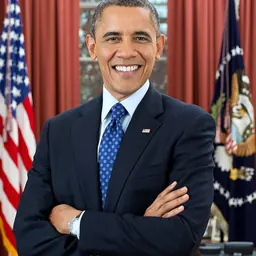
Dyson opposed the Vietnam War and the invasion of Iraq. He supported Barack Obama in the 2008 US presidential election and The New York Times described him as a political liberal. He was one of 29 leading US scientists who wrote Obama a strongly supportive letter about his administration's 2015 nuclear deal with Iran.
Science and religion Dyson was raised in what he described as a "watered-down Church of England Christianity". He was a nondenominational Christian and attended various churches, from Presbyterian to Roman Catholic. Regarding doctrinal or Christological issues, he said, "I am neither a saint nor a theologian. To me, good works are more important than theology." Dyson was elected to the United States National Academy of Sciences in 1964. Dyson was awarded the Dannie Heineman Prize for Mathematical Physics in 1965, Lorentz Medal in 1966, Max Planck Medal in 1969, the J. Robert Oppenheimer Memorial Prize in 1970, In 1986, Dyson received the Golden Plate Award of the American Academy of Achievement. In 1989, Dyson was elected as an Honorary Fellow of Trinity College, University of Cambridge. In 2018, Dyson received the first Presidential Science and Humanism Award from the American University of Beirut.
Don’t just read it —
keep it.
Full-length biographies made to live with: read them, listen on the way to work, watch them tonight.
- E-book
- Audio
- Video
Instant download · yours to keep · every purchase keeps this site free
Important facts
more
Project Orion (nuclear propulsion), Quantum electrodynamics, Random matrix, Rank of a partition, Stability of matter, TRIGAFamily & relationships
People in Freeman Dyson's life
Named in this biography and alive at the same time






Related people
Same field, nearest in time
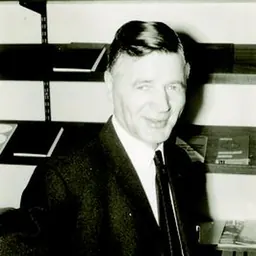
Contemporaries
People whose lives overlapped Freeman Dyson's
Frequently asked questions
Who was Freeman Dyson?
theoretical physicist and mathematician (1923–2020)
When was Freeman Dyson born?
Freeman Dyson was born on 15 December 1923 in Crowthorne.
When did Freeman Dyson die?
Freeman Dyson died on 28 February 2020 in Princeton.
What was Freeman Dyson's occupation?
Freeman Dyson was a mathematician, theoretical physicist, nuclear physicist, statistician, physicist and university teacher.
What was Freeman Dyson known for?
Freeman Dyson was known for Anti-nuclear movement in the United States, Circular ensemble, Crank conjecture, Crank of a partition, Dyson sphere and Helios (propulsion system).
What nationality was Freeman Dyson?
Freeman Dyson was British and American.
Sources & further reading
Cite this page
APA: Biography.guide. (2026). Freeman Dyson. https://biography.guide/freeman-dyson/
MLA: "Freeman Dyson." Biography.guide, https://biography.guide/freeman-dyson/.
Chicago: "Freeman Dyson." Biography.guide. https://biography.guide/freeman-dyson/.
Data last updated: 2026-09-22 · Spot an error? Report a correction.
Portrait: Wikimedia Commons · author & licence
Page generated 2026-09-27 05:03 UTC