
About Alexander Oparin
Lived 1894 – 1980 (aged 86). Alexander Oparin was a Russian biochemist and chemist, known for Abiogenesis and Coacervate.
Life Oparin was born in Uglich in 1894 into a merchant family. He and his parents soon moved to Kokayevo, a nearby village. Oparin had an older brother, , who became an economist.
Oparin graduated from the Moscow State University in 1917 and became a professor of biochemistry there in 1927. Many of his early papers were about plant enzymes and their role in metabolism. His first experimental studies were devoted to the chemistry of respiration. In them, he showed that chlorogenic acid is an essential component of redox reactions in the cell. In 1924 he put forward a hypothesis suggesting that life on Earth developed through a gradual chemical evolution of carbon-based molecules in the Earth's primordial soup. In 1935, along with academician Aleksei Bach, he founded the Biochemistry Institute of the Soviet Academy of Sciences. However, according to cytologist :
From 1942 to 1960, Oparin headed the Department of Plant Biochemistry at Moscow State University, where he gave lectures on general biochemistry, technical biochemistry, and special courses on enzymology and the problem of the origin of life.
Oparin died in Moscow on 21 April 1980, and was interred in Novodevichy Cemetery in Moscow.
Oparin became Hero of Socialist Labour in 1969, received the Lenin Prize in 1974, and was awarded the Lomonosov Gold Medal in 1979 "for outstanding achievements in biochemistry". He was also a five-time recipient of the Order of Lenin.
Theory of the origin of life
Although Oparin's started out reviewing various panspermia theories, including those of Hermann von Helmholtz and William Thomson (Lord Kelvin), introduced heat (to provide reflux) and electrical energy (sparks, to simulate lightning) into a mixture of several simple components that would be present in a reducing atmosphere. Within a fairly short period of time a variety of familiar organic compounds, such as amino acids, were synthesised. The compounds that formed were somewhat more complex than the molecules present at the beginning of the experiment.
The influence of dialectical materialism on Oparin's theory The Communist Party's official interpretation of Marxism, dialectical materialism, fit Oparin's speculation on the origins of life as 'a flow, an exchange, a dialectical unity'. This notion was re-enforced by Oparin's association with Lysenko.
Major works Oparin, A. I. Proiskhozhdenie zhizni. Moscow: Izd. Moskovskii Rabochii, 1924. English translations: Oparin, A. I. "The origin of life", translation by Ann Synge. In: Bernal, J. D. (ed.), The origin of life, Weidenfeld & Nicolson, London, 1967, p. 199–234. Google, Valencia University. Oparin, A. I. The Origin and Development of Life (NASA TTF-488). Washington: D.C.L GPO, 1968. Oparin, A. I. Vozniknovenie zhizni na zemle. Moscow: Izd. Akad. Nauk SSSR, 1936. English translations: Oparin, A. I. The Origin of Life, 1st ed., New York: Macmillan, 1938. Oparin, A. I. The Origin of Life, 2nd ed., New York: Dover, 1953, reprinted in 2003, Google. Oparin, A. I. The Origin of Life on the Earth, 3rd ed., New York: Academic Press, 1957, BHL Oparin, A., Fesenkov, V. Life in the Universe. Moscow: USSR Academy of Sciences publisher, 3rd edition, 1956. English translation: Oparin, A., and V. Fesenkov. Life in the Universe. New York: Twayne Publishers (1961). "The External Factors in Enzyme Interactions Within a Plant Cell" "Life, Its Nature, Origin and Evolution" "The History of the Theory of Genesis and Evolution of Life"
Don’t just read it —
keep it.
Full-length biographies made to live with: read them, listen on the way to work, watch them tonight.
- E-book
- Audio
- Video
Instant download · yours to keep · every purchase keeps this site free
Important facts
People in Alexander Oparin's life
Named in this biography and alive at the same time

Related people
Same field, nearest in time
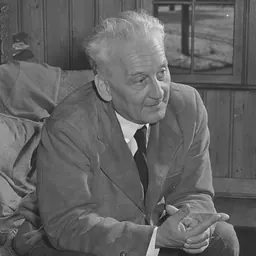
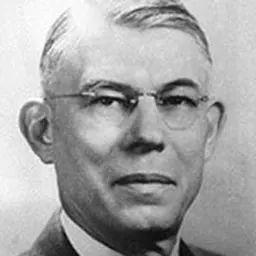

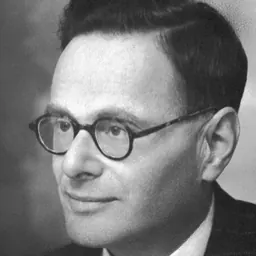

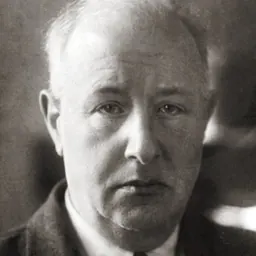
Contemporaries
People whose lives overlapped Alexander Oparin's


Frequently asked questions
Who was Alexander Oparin?
Soviet biochemist (1894-1980)
When was Alexander Oparin born?
Alexander Oparin was born on 2 March 1894 in Uglich.
When did Alexander Oparin die?
Alexander Oparin died on 21 April 1980 in Moscow.
What was Alexander Oparin's occupation?
Alexander Oparin was a biochemist and chemist.
What was Alexander Oparin known for?
Alexander Oparin was known for Abiogenesis and Coacervate.
What nationality was Alexander Oparin?
Alexander Oparin was Russian.
Sources & further reading
Cite this page
APA: Biography.guide. (2026). Alexander Oparin. https://biography.guide/alexander-oparin/
MLA: "Alexander Oparin." Biography.guide, https://biography.guide/alexander-oparin/.
Chicago: "Alexander Oparin." Biography.guide. https://biography.guide/alexander-oparin/.
Data last updated: 2026-09-20 · Spot an error? Report a correction.
Page generated 2026-09-27 05:20 UTC