
About Olaf Stapledon
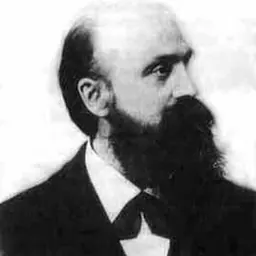
Lived 1886 – 1950 (aged 64). Olaf Stapledon was a British paramedic, philosopher, writer, science fiction writer, peace activist and novelist.
William Olaf Stapledon (10 May 1886 – 6 September 1950) was an English philosopher and author of science fiction. In 2014, he was inducted into the Science Fiction and Fantasy Hall of Fame.
Stapledon was born in Cheshire, but he lived in Port Said, Egypt throughout his early childhood. Following his college studies, he worked in shipping offices in Liverpool and Port Said from 1910 to 1912. During the First World War, he served as a conscientious objector. His wartime experiences influenced his pacifist beliefs. Stapledon was awarded a PhD degree in philosophy from the University of Liverpool in 1925 and used his doctoral thesis as the basis for his first published prose book, A Modern Theory of Ethics (1929).
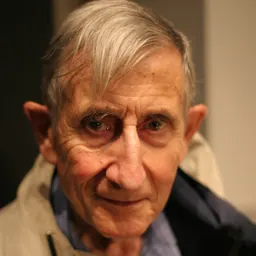
Ideas such as a supermind composed of many individual consciousnesses form a recurring theme in his work. Star Maker (1937) contains the first known description of what are now called Dyson spheres. Freeman Dyson credits the novel with giving him the idea, even stating in an interview that "Stapledon sphere" would be a more appropriate name. Last and First Men (1930) features early descriptions of genetic engineering and terraforming. Sirius (1944) describes a dog whose intelligence is increased to the level of a human being's. Stapledon's work also refers to then-contemporary intellectual fashions (e.g. the belief in extrasensory perception). Stapledon is sometimes considered an intellectual forerunner of the contemporary transhumanist movement.
Life Stapledon was born in Seacombe, Wallasey, on the Wirral Peninsula in Cheshire, the only son of William Clibbett Stapledon and Emmeline Miller. The first six years of his life were spent with his parents at Port Said, Egypt. He was educated at Abbotsholme School in Derbyshire and Balliol College, Oxford, where he acquired a BA degree in Modern History (Second Class) in 1909, promoted to an MA (Oxon) in 1913. After a brief stint as a teacher at Manchester Grammar School he worked in shipping offices in Liverpool and Port Said from 1910 to 1912. From 1912 to 1915 Stapledon worked with the Liverpool branch of the Workers' Educational Association.
As a pacifist Stapledon was involved in a number of peace-advocacy organisations, such as the Peace Pledge Union. In August 1939 he addressed a meeting of the Women's International League for Peace and Freedom. For the duration of the Second World War Stapledon abandoned his pacifism and supported the war effort. He supported implementing the recommendations of the Beveridge Report and spoke at the first public meeting of the Left Book Club's "Readers' and Writers' Group".
Other organizations which Stapledon was involved with include the H.G. Wells Society, League of Nations Union, the 1941 Committee, the Progressive League and the British Interplanetary Society.
Some commentators have called Stapledon a Marxist, although Stapledon distanced himself from the label stating that "I am not a Marxist, but I have learned much from Marxists, and I am not anti-Marxist", though he did refer to himself as a socialist. He held membership of the Merseyside branch of the Fabian Society.
After 1945 Stapledon travelled widely on lecture tours. Arthur C. Clarke, as Chairman of the British Interplanetary Society, invited him to give a talk on the social and biological aspects of space exploration. He also travelled internationally, visiting the Netherlands, Sweden and France, and in 1948 he spoke at the World Congress of Intellectuals for Peace in Wrocław, Poland. He attended the Conference for World Peace held in New York City in 1949, the only Briton to be granted a visa to do so. In 1950 he became involved with the anti-apartheid movement. After a week of lectures in Paris, he cancelled a projected trip to Yugoslavia and returned to his home in Caldy, where he died very suddenly of a heart attack.
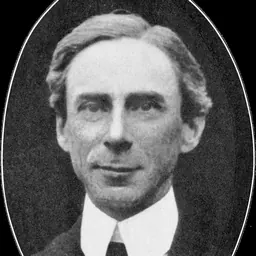
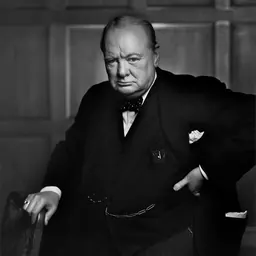
Works Stapledon's fiction often presents the strivings of some intelligence that is beaten down by an indifferent universe and its inhabitants who, through no fault of their own, fail to comprehend its lofty yearnings. It is filled with protagonists who are tormented by the conflict between their "higher" and "lower" impulses. Brian Aldiss, Stanisław Lem, Bertrand Russell, John Gloag, Naomi Mitchison, C. S. Lewis, Vernor Vinge, John Maynard Smith and indirectly influenced many others, contributing many ideas to the world of science fiction. Clarke wrote: Hugh Walpole, Arnold Bennett, Virginia Woolf (Stapledon maintained a correspondence with Woolf) and Winston Churchill. In contrast, Stapledon's philosophy repelled C. S. Lewis, whose Cosmic Trilogy was written partly in response to what Lewis saw as amorality, although Lewis admired Stapledon's inventiveness and described him as "a corking good writer". In fact Stapledon was an agnostic who was hostile to religious institutions, but not to religious yearnings, a fact that set him at odds with H. G. Wells in their correspondence.
Together with his philosophy lectureship at the University of Liverpool, which now houses the Olaf Stapledon archive, Stapledon lectured in English literature, industrial history and psychology. He wrote many non-fiction books on political and ethical subjects, in which he advocated the growth of "spiritual values", which he defined as those values expressive of a yearning for greater awareness of the self in a larger context ("personality-in-community"). His philosophy was strongly influenced by Spinoza.
Among some members of the contemporary transhumanist movement, Stapledon is sometimes seen as an ideological predecessor, with certain aspects of his philosophy and storytelling viewed as early examples of transhumanist ideals.
In 2017 a multimedia adaptation of Last and First Men by Oscar-nominated Icelandic composer Jóhann Jóhannsson was released, featuring narration by Tilda Swinton and a live score performed by the BBC Philharmonic.
In 2019, Justin McDonald and Kate Hodgson wrote, produced, and starred in a short film adaptation of Stapledon's "A Modern Magician." Directed by Mark Heller, the film also featured the voice of Brian Cox. It was the first-ever live-action adaptation of any of Stapledon's literary works.
Don’t just read it —
keep it.
Full-length biographies made to live with: read them, listen on the way to work, watch them tonight.
- E-book
- Audio
- Video
Instant download · yours to keep · every purchase keeps this site free
Important facts
People in Olaf Stapledon's life
Named in this biography and alive at the same time


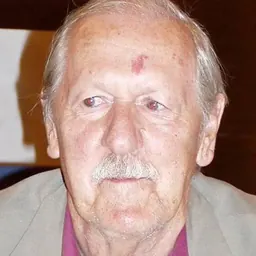

Related people
Same field, nearest in time





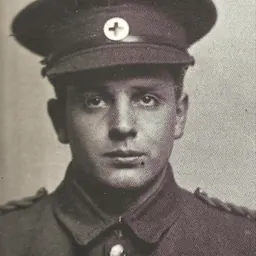
Contemporaries
People whose lives overlapped Olaf Stapledon's
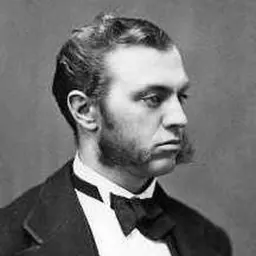



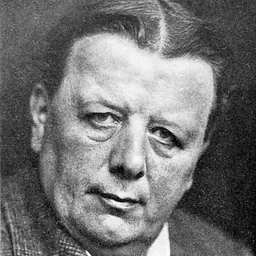
Frequently asked questions
Who was Olaf Stapledon?
British novelist and philosopher (1886–1950)
When was Olaf Stapledon born?
Olaf Stapledon was born on 10 May 1886 in Seacombe, Wallasey.
When did Olaf Stapledon die?
Olaf Stapledon died on 6 September 1950 in Caldy.
What was Olaf Stapledon's occupation?
Olaf Stapledon was a paramedic, philosopher, writer, science fiction writer, peace activist and novelist.
What nationality was Olaf Stapledon?
Olaf Stapledon was British.
Sources & further reading
Cite this page
APA: Biography.guide. (2026). Olaf Stapledon. https://biography.guide/olaf-stapledon/
MLA: "Olaf Stapledon." Biography.guide, https://biography.guide/olaf-stapledon/.
Chicago: "Olaf Stapledon." Biography.guide. https://biography.guide/olaf-stapledon/.
Data last updated: 2026-09-20 · Spot an error? Report a correction.
Page generated 2026-09-27 05:32 UTC