
About Éléonore Duplay
Lived 1768 – 1832 (aged 63–64). Éléonore Duplay was a French painter.
Éléonore Duplay (1768, Paris – 26 July 1832, Paris), called Cornélie, after Cornelia Africana of Ancient Rome, was the daughter of Maurice Duplay, a master carpenter, and Françoise-Éléonore Vaugeois. She was the eldest of five children (four girls and a boy) and was born in 1768, two years after her parents' marriage, in Paris, where she would live all her life. During the Revolution, she studied painting under Jean-Baptiste Regnault.
Relationship with Maximilien Robespierre According to her sister, Élisabeth Le Bas, who married Philippe Le Bas of the Committee of General Security, she was "promised" to Maximilien Robespierre, whose political opinions she shared. He said of her, "âme virile, elle saurait mourir comme elle sait aimer" ("noble soul, she would know how to die as well as she knows how to love"). They often walked together in the Champs-Élysées or the woods of Versailles or Issy, although her siblings and parents were more often than not present for these walks as well. Many contemporaries and historians have suggested that she may have been his mistress, including Vilate, a juror on the Revolutionary Tribunal, who said, that Robespierre "lived maritally with the eldest daughter of his hosts", in reference to Éléonore. This, however, is contested by Robespierre's younger sister, Charlotte, who asserts that any notions of marriage or romance were purely on Éléonore's side and that Robespierre thought his younger brother ought to marry her rather than himself. Robespierre biographer, Peter McPhee, also supports a platonic view of the two, suggesting that if feelings were there, they were not acted upon. After his death she wore black for the rest of her life, never marrying, and was known as la Veuve Robespierre (the Widow Robespierre).
Post Revolutionary Life
Though guilty of no crime, she was imprisoned with her sister Élisabeth and her six-week-old nephew, Philippe Le Bas fils after 9 Thermidor (27 July 1794). Élisabeth would later write in her memoir: and elsewhere: They would not be released until 18 Frimaire Year III (8 December 1794).
Éléonore Duplay died on 26 July 1832, at the age of 64, and was buried in Père Lachaise Cemetery, where her grave may still be seen in the 34th division.
Don’t just read it —
keep it.
Full-length biographies made to live with: read them, listen on the way to work, watch them tonight.
- E-book
- Audio
- Video
Instant download · yours to keep · every purchase keeps this site free
Important facts
People in Éléonore Duplay's life
Named in this biography and alive at the same time
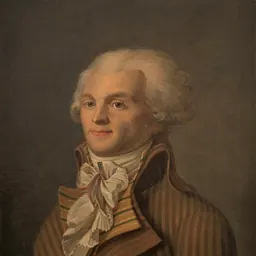


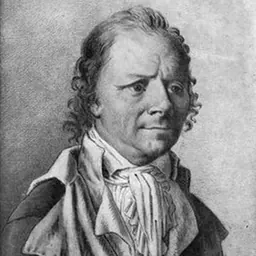

Related people
Same field, nearest in time


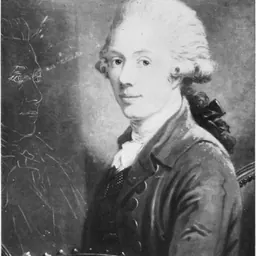
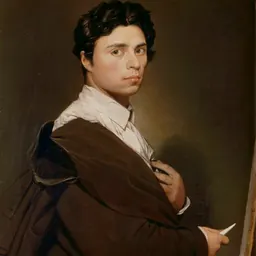

Contemporaries
People whose lives overlapped Éléonore Duplay's



Frequently asked questions
Who was Éléonore Duplay?
French revolutionary (1768-1832)
When was Éléonore Duplay born?
Éléonore Duplay was born in 1768 in Paris.
When did Éléonore Duplay die?
Éléonore Duplay died on 26 July 1832 in Paris.
What was Éléonore Duplay's occupation?
Éléonore Duplay was a painter.
What nationality was Éléonore Duplay?
Éléonore Duplay was French.
Sources & further reading
Cite this page
APA: Biography.guide. (2026). Éléonore Duplay. https://biography.guide/eleonore-duplay/
MLA: "Éléonore Duplay." Biography.guide, https://biography.guide/eleonore-duplay/.
Chicago: "Éléonore Duplay." Biography.guide. https://biography.guide/eleonore-duplay/.
Data last updated: 2026-09-20 · Spot an error? Report a correction.
Page generated 2026-09-27 05:28 UTC