
About Edward Radford
Lived 1831 – 1920 (aged 88–89). Edward Radford was a British painter.
Edward Radford (1 May 1831 – 9 June 1920) was an English-born architect and painter who was active in England, Canada, and the United States during the mid-late 19th century. He is best known for his architectural work in Toronto and New York City and his watercolour works of classical and genre scenes.
Early life Radford was born in Devonport, Devon on 22 April 1831, the son of William Radford (1790-1865), a civil engineer, and was educated at Tredegar Square Grammar School, Bow, London. His elder brother was the architect George Kent Radford (1826-1908).
Biography Radford began his career as an indentured pupil of Thomas Wickstead, a civil engineer, and while in London assisted his brother George who was then employed as an engineer on the construction of the Regent's Canal. Both brothers were practising architecture together in London from 1853 or earlier, and operated an office at 11 Buckingham Street, Strand, London.
Radford emigrated to Canada in 1854 with his brother and would remain in Toronto for the next six years. They formed a partnership in Toronto in early 1856, and in 1858 the brothers designed the Anglican church St. Paul's, Bloor Street. By August 1858 their collaboration had ended and Edward was working under his own name. In 1859 Edward submitted a entry in the competition for the Parliament and Departmental Buildings in Ottawa, Ontario, but his design was not premiated.
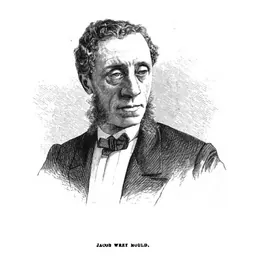
In early 1861 Radford moved to Cincinnati, Ohio and served with the 11th Ohio Battery during the American Civil War and by 1863 he was working as assistant to William Tinsley, a leading architect in Cincinnati. In 1865 Radford moved to New York City and re-entered into partnership with his brother George, where they worked under the architects Jacob Wrey Mould and Calvert Vaux in designing the structure of the Metropolitan Museum of Art (1868) and the first purpose-built structure of the American Museum of Natural History (1877). Mould described Edward Radford as “an engineer of high scientific attainments to whom we entrusted the constructive portions of the iron work [i. e. the steel structure] of the building”. thumb
Radford returned to London in 1885, where he became an Associate of the Royal Watercolour Society and frequently exhibited his paintings at the Royal Academy in London. Radford died at Southwick, Co. Sussex, near Brighton, England on 9 June 1920.
Main works St. Paul's, Bloor Street, Toronto (1860) Metropolitan Museum of Art, New York City (1868), in partnership with G.K. Radford, under Jacob Wrey Mould and Calvert Vaux American Museum of Natural History, New York City (1877), in partnership with G.K. Radford, under Jacob Wrey Mould and Calvert Vaux
Don’t just read it —
keep it.
Full-length biographies made to live with: read them, listen on the way to work, watch them tonight.
- E-book
- Audio
- Video
Instant download · yours to keep · every purchase keeps this site free
Important facts
People in Edward Radford's life
Named in this biography and alive at the same time


Related people
Same field, nearest in time

Contemporaries
People whose lives overlapped Edward Radford's




Frequently asked questions
Who was Edward Radford?
English watercolorist (1831–1920)
When was Edward Radford born?
Edward Radford was born in 1831.
When did Edward Radford die?
Edward Radford died in 1920.
What was Edward Radford's occupation?
Edward Radford was a painter.
What nationality was Edward Radford?
Edward Radford was British.
Sources & further reading
Cite this page
APA: Biography.guide. (2026). Edward Radford. https://biography.guide/edward-radford/
MLA: "Edward Radford." Biography.guide, https://biography.guide/edward-radford/.
Chicago: "Edward Radford." Biography.guide. https://biography.guide/edward-radford/.
Data last updated: 2026-09-20 · Spot an error? Report a correction.
Page generated 2026-09-27 05:03 UTC