
About Edward Morris Bowman
Lived 1848 – 1913 (aged 64–65). Edward Morris Bowman was an organist and musician.
Edward Morris Bowman (18 July 1848 – 27 August 1913) was an American organist, conductor, composer, and music educator. A native of Barnard, Vermont, he grew up in Barnard and Canton, New York. In the latter town he attended St. Lawrence University where he graduated in 1865. Prior to this he began working as an organist at the age of 14, and in 1866-1867 he was organist of Trinity Church in Manhattan. In New York he studied with William Mason and John Paul Morgan.
From 1867-1887 Bowman was a prominent organist and choirmaster in St. Louis, Missouri. During this period he twice took sabbaticals form his work in St. Louis to further his education with European master musicians. After leaving Missouri, he held organist and choirmaster positions at First Baptist Peddie Memorial Church, Newark, New Jersey (1887-1894), Baptist Temple, Brooklyn (1894-1906), and Calvary Church, Manhattan (1906-1913). In 1884 he founded the American College of Musicians. He was head of the music department at Vassar College from 1891-1895. He was elected president of the Music Teachers National Association three times, was a founding member of the American Guild of Organists, and was appointed an Associate of the Royal College of Organists.
Early life in Vermont and New York
The son of Joseph Bowman and his wife Asenath Bowman (née Burroughs), Edward Morris Bowman was born in Barnard, Vermont on 18 July 1848. He was a descendant of Nathaniel Bowman on his father's side, and Richard Warren and Elizabeth Tilley on his mother's side. As a boy he learned to read music in the singing school operated by Moses Cheney (1776-1856), and began piano lessons at the age of ten.
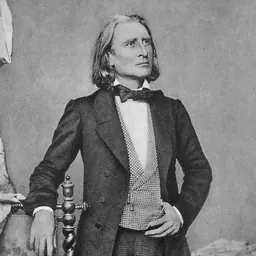
At the time of the 1860 United States census, Bowman was living with his family in Canton, New York. In St. Louis he served as organist at Union Methodist Church (located at 104 Locust Street) from 1867-1869, and Second Presbyterian Church (SPC) from 1870-1872. From 1872-1874 he went to Europe to further his music education. He studied first in Berlin with Franz Bendel (piano), August Haupt (organ), and Eduard Rohde (organ). After completing his studies in Germany he traveled to Rome where he was able to spend several hours with Franz Liszt who listened to him play and giving him feedback. From there he went to Paris where he studied under Édouard Batiste. In 1881 he took another trip to Europe where he pursued further studies in Paris with Alexandre Guilmant and in London with Frederick Bridge, George Alexander Macfarren, and Edmund Hart Turpin. He was made an Associate of the Royal College of Organists.
Later life and career Bowman remained the organist and choirmaster at SBC until his resignation in 1887. In 1884 he founded the American College of Musicians, and served as its first president until 1893 when he was succeeded by . He left St. Louis in 1887 to become the organist and choirmaster at First Baptist Peddie Memorial Church in Newark, New Jersey. He held that post until 1894; during which time he concurrently served as the head of the music department at Vassar College from 1891–1895. In 1896 he was a founding member of the American Guild of Organists.
In 1894 he became the organist and choirmaster at Baptist Temple in Brooklyn where he founded a large chorus and orchestra.
In 1904 Bowman returned to St. Louis to give two organ recitals at Festival Hall as part of the Louisiana Purchase Exposition. He also taught piano and organ in New York out of a studio in Steinway Hall. His notable students included concert pianist and composer Lolita Cabrera Gainsborg and organist and composer Anice Terhune. He served multiple terms as president of the Music Teachers National Association;
Bowman died at his home in Flatbush in New York City on 27 August 1913.
Composer Bowman composed the music to the Christian hymns "Our Father in heaven we hallow Thy Name", "There is a happy land", and "We have heard the joyful sound". He also wrote and published songs, including "Bonnie Annie Drew" and "Sky Lark" among others.
Notes and references
Don’t just read it —
keep it.
Full-length biographies made to live with: read them, listen on the way to work, watch them tonight.
- E-book
- Audio
- Video
Instant download · yours to keep · every purchase keeps this site free
Important facts
People in Edward Morris Bowman's life
Named in this biography and alive at the same time




Related people
Same field, nearest in time

Contemporaries
People whose lives overlapped Edward Morris Bowman's




Frequently asked questions
Who was Edward Morris Bowman?
organist, conductor, composer, and music educator
When was Edward Morris Bowman born?
Edward Morris Bowman was born on 18 July 1848.
When did Edward Morris Bowman die?
Edward Morris Bowman died in 1913.
What was Edward Morris Bowman's occupation?
Edward Morris Bowman was an organist and musician.
Sources & further reading
· Wikipedia: Edward Morris Bowman
· DBpedia: Edward Morris Bowman
Cite this page
APA: Biography.guide. (2026). Edward Morris Bowman. https://biography.guide/edward-morris-bowman/
MLA: "Edward Morris Bowman." Biography.guide, https://biography.guide/edward-morris-bowman/.
Chicago: "Edward Morris Bowman." Biography.guide. https://biography.guide/edward-morris-bowman/.
Data last updated: 2026-09-20 · Spot an error? Report a correction.
Page generated 2026-09-27 05:23 UTC