
About Walford Davies
Lived 1869 – 1941 (aged 71). Walford Davies was a British organist, composer and university teacher.
Major Sir Henry Walford Davies (6 September 1869 – 11 March 1941) was a renowned English composer, organist, and educator who was Master of the King's Music from 1934 until 1941. He was also a music adviser to the British Broadcasting Corporation, for which he gave commended talks on music between 1924 and 1941.
His most widely known works are the Royal Air Force March Past, God Be In My Head, and Solemn Melody.
Life and career
Early years Henry Walford Davies was born in Oswestry, Shropshire. He was the seventh of nine children of John Whitridge Davies and Susan, née Gregory, and the youngest of four surviving sons. His father, although an accountant by profession, was an amateur musician who founded and conducted a choral society at Oswestry and was choirmaster of Christ Church Congregational church: at which Walford was a chorister, and at which Walford's siblings, Charlie and Harold, later held the post of organist. Harold Davies was professor of music at the University of Adelaide from 1919 to 1947. In 1882 Walford was accepted as a chorister at St George's Chapel, Windsor Castle, by the organist, Sir George Elvey.
When his voice broke in 1885 Davies left the choir and was appointed organist of the Royal Chapel of All Saints, Windsor Great Park and was secretary to Elvey's successor, Walter Parratt, and Dean (later Archbishop) Randall Davidson. Other universities followed suit later. |group= n Davies entered for the Cambridge bachelor of music examinations in 1889, but his exercise (a cantata, The Future, to words by Matthew Arnold) failed. With the encouragement of Charles Villiers Stanford, professor of music at Cambridge, Davies made a second attempt, which was successful, and he graduated in 1891. His teachers there were Hubert Parry and (for a single term) Stanford for composition, and W. S. Rockstro (counterpoint), Herbert Sharpe (piano) and Haydn Inwards (violin). While still at the RCM he was organist of St George's Church, Campden Hill, for three months, and St Anne's Church, Soho for a year until 1891, when he resigned for health reasons.
National reputation In May 1898 Davies was appointed organist and director of the choir at the Temple Church in the City of London, a post he retained until 1923. The work was also given in Australia and the US.
During the First World War, Davies joined the Committee for Music in War Time under Parry's chairmanship, organised concerts for the troops in France and musical events for the Fight for Right movement. Since 1930 his Solemn Melody has been frequently performed as mourning music on Remembrance Sunday at The Cenotaph, Whitehall.
1919–41
In 1919 Davies accepted the professorship of music at University College, Aberystwyth, together with the post of director of music for the University of Wales and chairman of the National Council of Music. Here, in the words of his biographer Henry Ley, he "laboured unceasingly for the musical enlightenment of the principality",
In 1924 he gave the Cramb lectures at the University of Glasgow, gave his first broadcast talk for the BBC, and was appointed Gresham professor of music at the University of London.
Davies wrote his famous piece God Be In My Head at Witham Hall, in Lincolnshire, which was the home of a friend. Davies and his wife, who was secretary of the Windsor and Eton Choral Society, were the godparents of Bridget Lyons, and the wife of the choral educator Peter Stanley Lyons (who was subsequently the Headmaster of Witham Hall School). who was Vice-Provost of Eton College. | Colles wrote that Davies's regular listeners felt a proprietorial interest in him, recording one of them as remarking, "He always seemed to come right into the room with us." Although The Times and others continued to favour the old spelling, Davies's appointment was officially gazetted as "Master of the Music". |group= n As musical adviser to the BBC Davies moved from London to Bristol when the BBC Symphony Orchestra and the corporation's music administration moved there on the outbreak of the Second World War in 1939. Festal Overture, Op. 31 (1909) Symphony [No. 2] in G, Op. 32 (1911) Suite, Parthenia, Op. 34 (1911) Suite in C after Wordsworth, Op. 37 (1912) Conversations for piano and orchestra, Op. 43 (1914) Royal Air Force March Past (1918, jointly with George Dyson) Memorial Melody (1919) A Memorial Suite, Op. 50 (1923) A Children's Symphony, for small orchestra, Op. 53 (1927) Memorial Melody in C (1936) Big Ben Looks On, orchestral fantasy (1937)
Choral and vocal
Hymn Tunes
Temple for the hymn 'O King enthroned on high' by John Brownlie (hymnist) 1857-1925 (New English Hymnal #421). Oswald's Tree (Oswestry, his place of birth) for the hymn 'Great Shepherd of they people, hear' by John Newton 1725-1807 (Hymns Ancient & Modern New Standard #164).
Chamber music
Notes, references and sources
Don’t just read it —
keep it.
Full-length biographies made to live with: read them, listen on the way to work, watch them tonight.
- E-book
- Audio
- Video
Instant download · yours to keep · every purchase keeps this site free
Important facts
People in Walford Davies's life
Named in this biography and alive at the same time




Related people
Same field, nearest in time
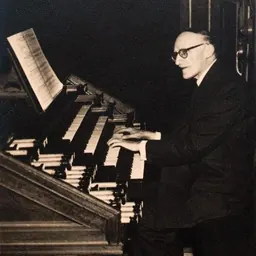
Contemporaries
People whose lives overlapped Walford Davies's





Frequently asked questions
Who was Walford Davies?
British composer (1869–1941)
When was Walford Davies born?
Walford Davies was born on 6 September 1869 in Oswestry.
When did Walford Davies die?
Walford Davies died on 11 March 1941 in Wrington.
What was Walford Davies's occupation?
Walford Davies was an organist, composer and university teacher.
What nationality was Walford Davies?
Walford Davies was British.
Sources & further reading
Cite this page
APA: Biography.guide. (2026). Walford Davies. https://biography.guide/walford-davies/
MLA: "Walford Davies." Biography.guide, https://biography.guide/walford-davies/.
Chicago: "Walford Davies." Biography.guide. https://biography.guide/walford-davies/.
Data last updated: 2026-09-20 · Spot an error? Report a correction.
Page generated 2026-09-27 05:26 UTC