
George Alexander Macfarren
British composer and musicologist
About George Alexander Macfarren
Lived 1813 – 1887 (aged 74). George Alexander Macfarren was a British composer, conductor, musicologist, music educator, music theorist and university teacher.
Sir George Alexander Macfarren (2 March 181331 October 1887) was an English composer and musicologist.
Life
George Alexander Macfarren was born in London on 2 March 1813 to George Macfarren, a dancing-master, dramatic author and journalist, who later became the editor of the Musical World, and Elizabeth Macfarren, née Jackson. At the age of seven, Macfarren was sent to Dr Nicholas's school in Ealing, where his father was dancing-master; the school numbered among its alumni John Henry Newman and Thomas Henry Huxley. His health was poor, however, and his eyesight weak, He was withdrawn from the school in 1823 to undergo a course of eye treatment. One amanuensis was composer Oliveria Prescott.
On 27 September 1844, Macfarren married Clarina Thalia Andrae, Her singing translation for the finale text of Beethoven's Symphony No. 9, the "Ode to Joy", became its most popular translation in England. She also composed for piano. Emma Maria Macfarren, the wife of another brother, John, was also a pianist and composer.
Macfarren was knighted in 1883. and died on 31 October 1887, at his house in Hamilton Terrace, St John's Wood.
Musical career Macfarren began to study music when he was fourteen, under Charles Lucas. In 1829, at the age of sixteen, he entered the Royal Academy of Music, where he studied composition under Cipriani Potter as well as piano under William Henry Holmes and trombone with John Smithies. In his first year at the academy, Macfarren composed his first work, the Symphony in F minor.
From 1834 to 1836 Macfarren taught at the academy without a professorship; he was appointed a professor in 1837. He resigned in 1847 when his espousal of Alfred Day's new theory of harmony became a source of dispute between him and the rest of the academy's faculty. He succeeded Sir William Sterndale Bennett as principal of the academy in 1876. again succeeding Bennett. and a textbook on counterpoint (1881).
His overture "Chevy Chace" was performed on 26 October 1843 by the Leipzig Gewandhaus Orchestra conducted by Felix Mendelssohn.
Mendelssohn had heard it performed in London and wrote to the composer that he "liked it very much". After the Leipzig concert Mendelssohn wrote again to say "Your overture went very well, and was most cordially and unanimously received by the public, the orchestra playing it with true delight and enthusiasm".
Richard Wagner also admired the peculiar and wildly passionate character of the piece (which he described as the "Steeple Chase by MacFarrinc" in his diary). Wagner also described the overture's composer as "a pompous, melancholy Scotsman".
The "Chevy Chace" overture and two of his symphonies have been recorded.
Among Macfarren's operas were King Charles II, produced at the Princess's Theatre in 1849 (Natalia Macfarren made her operatic debut in this production), A recording by Victorian Opera was recorded in 2011. A recording of the two act chamber opera The Soldier's Legacy of 1864, scored for four soloists, piano and harmonium, was issued in 2023.
His oratorios brought him some popular and critical success. The most enduringly successful of these, St John the Baptist, was first performed in 1873 at the Bristol Festival. The Resurrection premiered in 1876, Joseph in 1877 and King David in 1883. Other chamber works include a piano trio in E minor, a piano quintet in G minor, sonatas for flute and violin, and three piano sonatas. Macfarren also composed for the concertina, a squeezebox button-accordion. His composition Romance and Allegro agitato for concertina, violin, viola, cello, and double bass was first performed by Richard Blagrove in 1854. Other compositions for concertina include the Barcarole (1856) and Violetta – A Romance (1859), both for concertina and piano. Macfarren also wrote an arrangement for the concertina and seven other instruments, of the second movement from Mendelssohn’s Italian symphony.
Compositions (selective list)
Orchestral 1828 – Symphony No. 1 in C (fp. Royal Academy of Music, London, September 1830) 1831 – Symphony No. 2 in D minor (fp. Royal Academy of Music, London, December 1831) 1832 – Symphony No. 3 in E minor 1832 – Overture in E-flat (fp. Royal Academy of Music, London, 26 June 1833) 1833 – Symphony No. 4 in F minor (fp. Society of British Musicians, London, 27 October 1834) 1833 – Symphony No. 5 in A minor 1834 – The Merchant of Venice, overture (fp. Society of British Musicians, London, October 1835) 1835 – Piano Concerto in C minor (fp. Society of British Musicians, London, 2 November 1835) 1835 – Concerto for Two Pianos in C major (jointly as a student with William Sterndale Bennett 1836 – Symphony No. 6 in B-flat 1836 – Romeo and Juliet, overture 1836 – Concertino in A, for cello and orchestra 1836 – Chevy Chace, overture (fp. Society of British Musicians, London, 7 January 1838) 1839–40 – Symphony No. 7 in C-sharp minor (fp. Philharmonic Society, London, 9 June 1845) 1842 – Don Carlos, overture 1845 – Symphony No. 8 in D 1856 – Hamlet, overture (fp. New Philharmonic Society, London, 23 April 1856) 1863 – Flute Concerto in G (fp. Hanover Square Rooms, London, 24 February 1864) 1873 – Violin Concerto in G minor (fp. Philharmonic Society, London, 12 May 1873) 1874 – Symphony No. 9 in E minor (fp. British Orchestral Society, London, 26 March 1874) 1874 – Festival Overture (fp. Liverpool Festival, 1874) 1875 – Idyll in Memory of Sterndale Bennett (fp. Philharmonic Society, London, 5 July 1875)
Choral and vocal 1853 – Lenora, cantata (fp. Exeter Hall, London, 25 April 1853) 1856 – May Day, cantata (fp. Bradford Festival, 28 August 1856) 1860 – Christmas, cantata (fp. Musical Society of London, 9 May 1860) 1867 - Two Songs with clarinet obbligato: 'A Widow Bird' (Shelley), 'Pack Clouds Away' (T. Heywood) 1842 – String Quartet No 3 in A major 1843-4 – Piano Quintet in G minor 1852 – String Quartet in G minor 1857 – Violin Sonata in E minor 1864 – Fantasia: Traditions of Shakespeare, variations for clarinet and piano 1872 – Religious March in E-flat major 1878 – String Quartet in G major 1880 – Piano Trio in A minor for flute, cello and piano 1883 – Flute Sonata
Piano 1842 – Piano Sonata No 1 in E-flat major (revised 1887) 1845 – Piano Sonata No 2 in A Ma cousine 1880 – Piano Sonata No 3 in G
Incidental music 1882 – Ajax (fp. Cambridge University, November 1882)
Reputation
During his lifetime, Macfarren's music met with a mixed reception; "his views were often considered dogmatic and reactionary, but, unlike Grove, his theoretical and analytical expertise was indisputable.". One contemporary called Macfarren "essentially a musical grammarian, engaged all his life long in settling the doctrine of the enclitic de." Those who thought highly of his work praised its originality and its tastefulness. According to a contemporary commentator, Macfarren "had great originality of thought and, as a composer, would probably have had still greater success if his early composition studies had been formed on the more modern lines to which he afterwards became so devotedly attached." Salome's dance in St John the Baptist was praised for its avoidance of the salacious: "The whole of the scene is very cleverly worked out, and the composer has avoided anything inappropriate in the music descriptive of the dance, that might be considered out of place in an oratorio." By the early twentieth century, Macfarren's works were no longer performed, a fact which the Worshipful Company of Musicians attributed to a lack of genius on Macfarren's part: "Never was more earnest composer, more prolific writer; never did man strive more zealously for the art of his country; yet Heaven had endowed him only with talent and not genius."
Modern commentators generally consider Macfarren to be "the most eminent representative" of conservatism in orchestration. His Ajax has been called "professionally composed if uninspiring" and his writing for trumpet singled out as "conventional ... although he does make liberal use of the out-of-tune harmonics, especially b [flat]', he rarely uses notes outside the harmonic series and rarely writes the first trumpet part above the first treble staff." Macfarren's music is "capable of graceful lyricism, [but] what may be a desire to avoid cliches in the songs leads him at times to an unexpected angularity of line that seems more awkward than fresh. However, Macfarren's St John the Baptist has been praised as "an original and imaginative piece in which the shadow of Mendelssohn, so prominent since the appearance of Elijah in 1846, is only occasionally perceptible."
Don’t just read it —
keep it.
Full-length biographies made to live with: read them, listen on the way to work, watch them tonight.
- E-book
- Audio
- Video
Instant download · yours to keep · every purchase keeps this site free
Important facts
People in George Alexander Macfarren's life
Named in this biography and alive at the same time

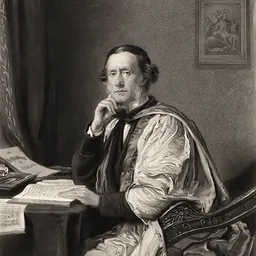


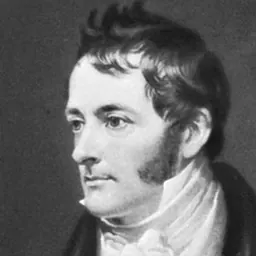
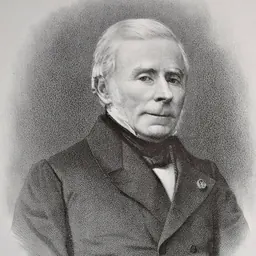

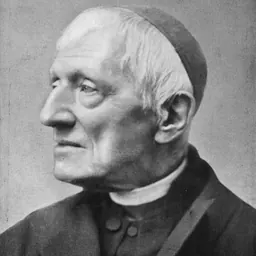
Related people
Same field, nearest in time


Contemporaries
People whose lives overlapped George Alexander Macfarren's




Frequently asked questions
Who was George Alexander Macfarren?
British composer and musicologist (1813–1887)
When was George Alexander Macfarren born?
George Alexander Macfarren was born on 2 March 1813 in London.
When did George Alexander Macfarren die?
George Alexander Macfarren died on 31 October 1887 in London.
What was George Alexander Macfarren's occupation?
George Alexander Macfarren was a composer, conductor, musicologist, music educator, music theorist and university teacher.
What nationality was George Alexander Macfarren?
George Alexander Macfarren was British.
Sources & further reading
· Wikipedia: George Alexander Macfarren
· DBpedia: George Alexander Macfarren
Cite this page
APA: Biography.guide. (2026). George Alexander Macfarren. https://biography.guide/george-alexander-macfarren/
MLA: "George Alexander Macfarren." Biography.guide, https://biography.guide/george-alexander-macfarren/.
Chicago: "George Alexander Macfarren." Biography.guide. https://biography.guide/george-alexander-macfarren/.
Data last updated: 2026-09-20 · Spot an error? Report a correction.
Page generated 2026-09-27 05:34 UTC