
About Aloÿs Claussmann
Lived 1850 – 1926 (aged 76). Aloÿs Claussmann was a French organist, composer, pianist and musician.
Aloÿs Claussmann (5 July 1850 – 7 November 1926) was a French organist, pianist and composer.
Biography Born in Uffholtz, Haut-Rhin (Alsace, France), Claussmann was a pupil of organist Eugène Gigout at the École Niedermeyer de Paris, where he obtained first prizes in piano and organ, before winning the Grand Prix of the Ministry of Fine Arts in 1872. The following year, he settled in Clermont-Ferrand, where he was appointed Kapellmeister of the Clermont-Ferrand Cathedral. The new Merklin organ was inaugurated in 1877 by Edmond Lemaigre, the first holder. Claussmann succeeded him in 1888 until his death in 1926.
A virtuoso interpreter, he chose to pursue his entire career in the Puy-de-Dôme area, while a Parisian position would have been readily accessible to him. He also founded the Conservatory of Clermont-Ferrand in 1909, directing it until his death.
Although he wrote many works for piano as well as chamber music and vocal music, it is to the organ that he reserved the essential and most characteristic of his production, with about 350 compositions, fully in the post-Romantic music that he celebrated with brilliance but yet with sensitivity. He fulfilled his duties as organist of the cathedral and assumed the function of director of the Conservatory, but he also performed well-known piano concertos with the city orchestra, which he occasionally directed.
The Alsatian origin of Claussmann makes his music a unique synthesis of French and German schools, influenced by the work of César Franck and Robert Schumann.
Works A total of 544 pieces have been identified: 350 organ pieces, 113 piano pieces, 62 songs (or mélodies), 22 violin or cello pieces. Henry Lemoine was his principal publisher from 1904 to 1924. Most of his organ works are still available.
Discography Toccata, 2 Scherzos, Minuetto, Méditation, Fantaisie héroïque, Cavatine de Raff, Antienne, and Mass for organ, by Hervé Désarbre at the historical John Abbey organ of Renaison (Mandala). Claussmann, pièces pour orgue, by François Clément on the organ of the city of Clermont-Ferrand (Art & Musique). Cortège triomphal by Willibald Guggenmos, on the organ of Wangen im Allgäu, Stadtpfarrkirche St. Martin (Psallitte). Pièce pour orgue by André Isoir at Hochfelden (ARDAM). Toccata, Op. 64, par Aitor Olea Juaristi, at the organ of Vasconia (Aarus). Works for piano: Sonate, Op. 45; Six pièces, Op 60; Caprice, Op. 47, par Stéphane Poyet (piano).
Don’t just read it —
keep it.
Full-length biographies made to live with: read them, listen on the way to work, watch them tonight.
- E-book
- Audio
- Video
Instant download · yours to keep · every purchase keeps this site free
Important facts
People in Aloÿs Claussmann's life
Named in this biography and alive at the same time


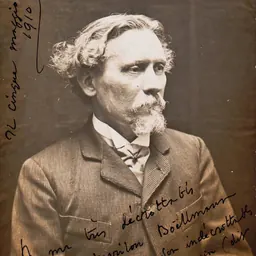




Related people
Same field, nearest in time
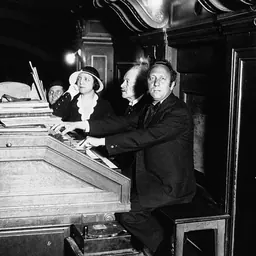
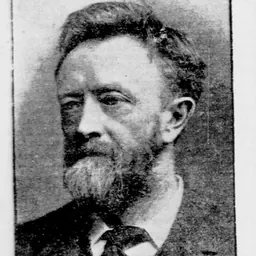
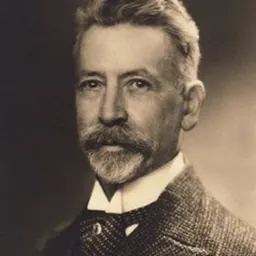

Contemporaries
People whose lives overlapped Aloÿs Claussmann's

Frequently asked questions
Who was Aloÿs Claussmann?
French organist (1850–1926)
When was Aloÿs Claussmann born?
Aloÿs Claussmann was born on 5 July 1850 in Uffholtz.
When did Aloÿs Claussmann die?
Aloÿs Claussmann died on 6 November 1926 in Clermont-Ferrand.
What was Aloÿs Claussmann's occupation?
Aloÿs Claussmann was an organist, composer, pianist and musician.
What nationality was Aloÿs Claussmann?
Aloÿs Claussmann was French.
Sources & further reading
Cite this page
APA: Biography.guide. (2026). Aloÿs Claussmann. https://biography.guide/aloys-claussmann/
MLA: "Aloÿs Claussmann." Biography.guide, https://biography.guide/aloys-claussmann/.
Chicago: "Aloÿs Claussmann." Biography.guide. https://biography.guide/aloys-claussmann/.
Data last updated: 2026-09-25 · Spot an error? Report a correction.
Page generated 2026-09-27 05:12 UTC