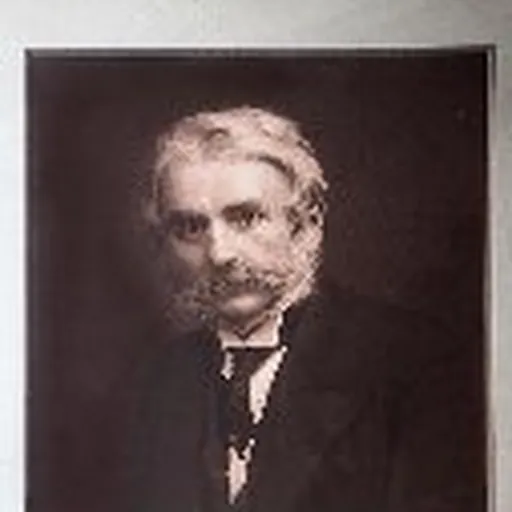
About Edward Fenwick Boyd
Lived 1810 – 1889 (aged 79). Edward Fenwick Boyd was an engineer and mining engineer.
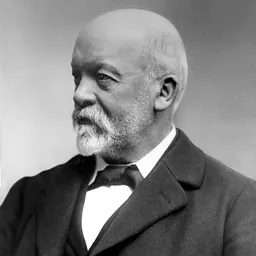
Edward Fenwick Boyd (30 August 1810 – 31 August 1889) was an English mining industrialist, of the armigerous Boyd banking family of County Durham, who from 1869 served as the fourth President of the North of England Institute of Mining and Mechanical Engineers (NEIMME), as which he oversaw the opening of the Nicholas Wood Memorial Hall and the Newcastle College of Physical Science.
Family
Edward Fenwick Boyd was born on 30 August 1810 at Moor House, Leamside, Durham.
He was the third son of the armigerous banker William Boyd Junior (1773 - 1855), and Esther (née Locke) Boyd (1777 - 1818).
Early life He was educated by Henry Atkinson at the High Bridge Robert Fenwick (b. 1851) of Rugby School, through whom he was the grandfather of Lieutenant Edward Fenwick Boyd (1890 - 1914). Lieutenant Edward Fenwick Boyd (1890 - 1914), of the 1st Battalion of the 5th Foot/Northumberland Fusiliers, for which he was mentioned in dispatches on 19 October 1914. was educated at Marlborough College and New College, Oxford. He was killed in action at Passchendaele on 18 November 1917, who is buried at Poelcapple British Cemetery brought about an awareness amongst miners and men working within this community of the need for a society with fixed rules and aims within the mining community in the hope of preventing such disasters. As a result, the South Shields Committee recommended the introduction of the compulsory registration of mine plans, a system of government inspections, the prohibiting of the employment of women and children below ground and the need for a better scientific education of the Mining Engineers. However, it was not until 1850 that legislation was passed requiring collieries to appoint inspectors. Mine plans were expected to be kept and produced and all fatal accidents were to now be reported to the Home Office. His dedication and hard working ethic resulted in his election as the fourth President of the NEIMME in 1869 following that of George Elliot. During his time in office he worked excessively on the opening of the Nicholas Wood Memorial Hall, which was to become the home of the Mining Institute, and pursued the work of Nicholas Wood in the foundation of the College of Physical College. It was believed by many that schooling was essential for men in this field as no other branch of engineering required such diversified training and practise as that of a Mining Engineer. With mines being sunk deeper, mining was growing increasingly more difficult and dangerous therefore the education and professionalization of this role was deemed to be more essential. Nicholas Wood drew up an outline for a possible course lasting three years, intending for it to be purely practical and industrial in character.
The offer was accepted and advanced by the promise that aid would be made permanent if a sum to ensure the continuance of the support could be obtained. As previously stated, with the more prosperous nature of society, it was decided by the committee to appeal to the public for £30,000 with the desire that the College should be opened at its earliest opportunity, October 1871.
Likewise, Professor John Young of the University of Glasgow commented on the education of a Mining Engineer as ‘one whom is credited sufficient knowledge of the conditions under which minerals occur in the earth and render him a reliable advisor, know the qualities of mineral so as to decide on the worth of any that maybe found, sufficient mechanical skills to conduct all the operations connected with the extraction of the mineral from the earth. They should be a Geologist and a Mineralogist as well as a Civil Engineer’ hence, the addition of Mining Engineering to the syllabus.
Opening of the Nicholas Wood Memorial Hall
Alongside the opening of the College of Physical Science, Boyd’s presidency was also recognised for his involvement in the opening of the Nicholas Wood Memorial Hall. The hall was erected in 1870, by public subscription, as a memorial to Nicholas Wood, the first President of the North of England Institute of Mining and Mechanical Engineers, after his death in December 1865. It was opened in July 1872 by the then President of the Mining Institute, Edward Fenwick Boyd, The Very Rev. the Dean of the Durham, the Mayor of Newcastle and numerous members of the town council.
It was erected primarily for the accommodation of the members of the coal trade as well as mining and Mechanical Engineers of the North of England and it has been the home of the Mining Institute ever since. It was designed and built in the height of the Gothic revival by architect A.M. Dunn and it contains a large marble statue of a seated Nicholas Wood, created by Mr Wyon, overlooking the library.
Later life The ending of Boyd’s presidency in 1872 did not see the end of him as a member of the Institution; he continued as a member of the council until 1882. In 1875, he joined forces with his son Robert Fenwick Boyd to produce a paper on "The Coal- Measures and Oil Produce of the United States of America". This venture took them to the United States of America to gather information on the origins and production of the mineral oil. This paper was the last of Edward Fenwick Boyd’s work to be read and disputed before the members of the Mining Institute before turning his focus and the remainder of his life to serving as a magistrate for the county. He devoted the rest of his time and health to the law and to county business. However, as his physical health began to deteriorate in 1883 he was forced to retire back to Moor House ending all activity in both the court room and the Institute and he was put under the care of his daughter until his death on 31 August 1889.
In addition to the published work of Edward Fenwick Boyd, his time as President of the Institute saw the opening of the College of Physical Science and the Nicholas Wood Memorial Hall; both of which were highly influential and significant projects. His involvement in projects such as these demonstrates his dedication and passion for the North of England Institute of Mining and Mechanical Engineers.
Don’t just read it —
keep it.
Full-length biographies made to live with: read them, listen on the way to work, watch them tonight.
- E-book
- Audio
- Video
Instant download · yours to keep · every purchase keeps this site free
Important facts
People in Edward Fenwick Boyd's life
Named in this biography and alive at the same time



Related people
Same field, nearest in time


Contemporaries
People whose lives overlapped Edward Fenwick Boyd's





Frequently asked questions
Who was Edward Fenwick Boyd?
British engineer
When was Edward Fenwick Boyd born?
Edward Fenwick Boyd was born on 30 August 1810 in Moor House.
When did Edward Fenwick Boyd die?
Edward Fenwick Boyd died on 31 August 1889 in Durham.
What was Edward Fenwick Boyd's occupation?
Edward Fenwick Boyd was an engineer and mining engineer.
Sources & further reading
· Wikipedia: Edward Fenwick Boyd
· DBpedia: Edward Fenwick Boyd
Cite this page
APA: Biography.guide. (2026). Edward Fenwick Boyd. https://biography.guide/edward-fenwick-boyd/
MLA: "Edward Fenwick Boyd." Biography.guide, https://biography.guide/edward-fenwick-boyd/.
Chicago: "Edward Fenwick Boyd." Biography.guide. https://biography.guide/edward-fenwick-boyd/.
Data last updated: 2026-09-24 · Spot an error? Report a correction.
Portrait: Wikimedia Commons · author & licence
Page generated 2026-09-27 05:08 UTC