
About Edouard De Bièfve
Lived 1808 – 1882 (aged 73). Edouard De Bièfve was a Belgian painter.
Édouard De Bièfve (4 December 1808 – 7 February 1882) was a Belgian history and portrait painter. He was one of the leading representatives of the romantic movement in Belgium and his work had an important influence on the development of history painting in Germany.
Life Edouard De Bièfve was born into a well-off and noble family in Brussels. He studied at the Academy of Fine Arts of Brussels and then continued his studies from 1828 to 1830 in the school of the Belgian history painter Joseph Paelinck, who had been a pupil of Jacques-Louis David. He went to Paris in 1831, where he became a follower of the new romantic movement. He frequented the studio of the French romantic sculptor David d'Angers. Sculpting and painting at the same time, he exhibited his works in Paris and also participated in exhibitions in Antwerp, Ghent and Brussels. His painting entitled Count Ugolino and his sons in the tower of Pisa was particularly well received when it was exhibited in 1836.
His romantic paintings on historic subjects got the attention of the government of the newly independent Belgian state which was looking to glorify its past as well as to foster a new cultural renaissance in Belgium. The government commissioned a work from him on a theme related to the revolt of the Spanish Netherlands against the Spanish rulers. The painting entitled the Compromise of the nobles depicts the moment when members of the lesser nobility in the Spanish Netherlands conclude a local covenant (the ‘compromise’) to petition the Regent Margaret of Parma on 5 April 1566 to moderate the repression of so-called heresy in the country. The painting was exhibited in 1841 together with a history painting – also commissioned by the Belgian government – entitled The Abdication of Charles V by the renowned Belgian romantic painter Louis Gallait. Both paintings were praised and were exhibited in many cities in Europe. They enjoyed a particularly enthusiastic reception in Germany where they formed an important impetus for the development of a German school of history painting. The painting also gained de Bièfve the patronage of Prince Frederick William of Prussia (the future Frederick III) who commissioned a painting entitled Rubens establishes peace between Spain and England. The kings of Bavaria and Wurtemberg followed suit and also ordered paintings from him. When the painting ordered by the King of Prussia was finally finished and exhibited in Brussels in 1848, the work met with negative criticism and was judged to be mediocre and historically inaccurate.
Work
Edouard De Bièfve mainly painted history paintings on unusually large canvasses. He belonged to the first wave of Belgian romantic painters who had typically trained in Paris where they had come into contact with the new romantic movement. Others in this group included Gustave Wappers, Louis Gallait, Ernest Slingeneyer, Nicaise de Keyser and other minor figures. They chose as the subject matter of their work important historical events in Belgium’s history which were regarded as key to the country’s national identity. Unlike their French models such as Delacroix, their work, though colourful, lacked true romantic zest and was quickly recuperated by the establishment which rewarded the artists with commissions and rewards. De Bièfve’s history paintings were no exception to this and they quickly became a form of national propaganda.
Edouard De Bièfve painted portraits and some orientalist paintings such as The Almeh, reflecting a growing interest in this subject matter in Europe at the time. The Almeh depicts an Egyptian dancing girl reclining on a couch. The painting caused quite a stir when it was exhibited at the Brussels Salon of 1842, 23 years prior to Manet's Olympia causing a similar scandal at the Paris Salon of 1865. It scandalized visitors of the Salon who felt it was flagrantly sexual. The English author Charlotte Brontë saw the controversial painting during a visit to Brussels and was so upset by it that she wrote at length about it in her final novel, Villette. The painting's fame was further boosted when a lithograph reproducing it was published under the title The Sultan's Favourite Songstress in Georg Ebers's book, Egypt: Descriptive, Historical, and Picturesque, (I, New York, 1878, p. 285).
Don’t just read it —
keep it.
Full-length biographies made to live with: read them, listen on the way to work, watch them tonight.
- E-book
- Audio
- Video
Instant download · yours to keep · every purchase keeps this site free
Important facts
People in Edouard De Bièfve's life
Named in this biography and alive at the same time
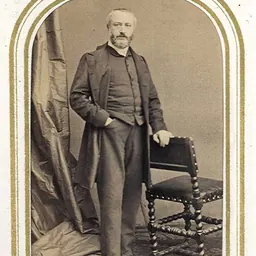

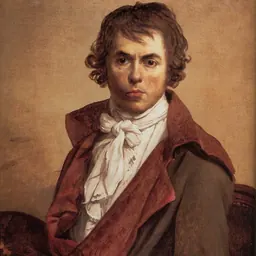
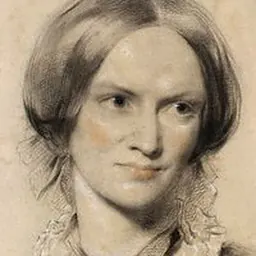



Related people
Same field, nearest in time
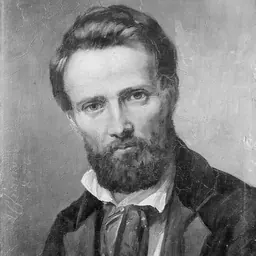

Contemporaries
People whose lives overlapped Edouard De Bièfve's






Frequently asked questions
Who was Edouard De Bièfve?
Belgian painter (1808-1882)
When was Edouard De Bièfve born?
Edouard De Bièfve was born on 4 December 1808 in Brussels.
When did Edouard De Bièfve die?
Edouard De Bièfve died on 7 February 1882 in Brussels.
What was Edouard De Bièfve's occupation?
Edouard De Bièfve was a painter.
What nationality was Edouard De Bièfve?
Edouard De Bièfve was Belgian.
Sources & further reading
· Wikipedia: Edouard De Bièfve
Cite this page
APA: Biography.guide. (2026). Edouard De Bièfve. https://biography.guide/edouard-de-biefve/
MLA: "Edouard De Bièfve." Biography.guide, https://biography.guide/edouard-de-biefve/.
Chicago: "Edouard De Bièfve." Biography.guide. https://biography.guide/edouard-de-biefve/.
Data last updated: 2026-09-20 · Spot an error? Report a correction.
Page generated 2026-09-27 05:19 UTC