
About Ernest Slingeneyer
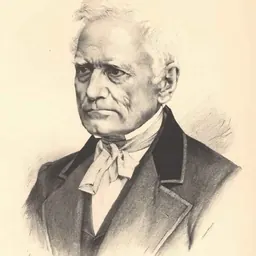
Lived 1820 – 1894 (aged 73). Ernest Slingeneyer was a Belgian painter, politician, history painter and portrait painter.
Ernest Slingeneyer, Ernest Isidore Hubert Slingeneyer or Ernst Slingeneyer (28 May 1820 – 27 April 1894) was a Belgian painter of history paintings, portraits, genre scenes and the occasional landscape. Slingeneyer is regarded as one of the last representatives of Romanticism in Belgian painting and of Academism in Romanticism in Belgian art. In his later career he was one of the leading representatives of Orientalism in Belgium. An excellent portraitist, Slingeneyer made portraits of historical figures as well as of well-known figures from his time. Slingeneyer was also a politician and was a member of the Belgian Chamber of Representatives for the Independists of Brussels, a coalition of personalities bound by their opposition to the Radicalist liberals. As a politician he promoted Academic art and agitated against new artistic currents as promoted by, amongst others, the Société Libre des Beaux-Arts in Brussels.
Life Ernest Slingeneyer was born in Lochristi as the second son of the tax collector Joannes Andreas Slingeneyer and Anna Marie Josephina Juliana Pauwels, a homemaker. The family moved in 1825 to Geraardsbergen and later to Antwerp. Destined for a military career, Slingeneyer met with his father's opposition to his wish to study art. In the end he was allowed to attend classes at the Academy of Fine Arts of Antwerp. Here he studied during the day painting under the leading Antwerp Romantic painter Gustaf Wappers while in the evening he took drawing classes. While still a student he exhibited a big canvas entitled The arrest of Louis, Count of Crécy which was received with critical acclaim. When a National Fund for the encouragement of historical painting art and sculpture was established by Royal Decree of 25 November 1839, Slingeneyer was quick to sign up for it. He was selected by the National Fund to paint various religious and historical subjects which he executed in an Academic and theatrical style. When The battle of Lepanto was finally finished and exhibited in 1848, it fell short of expectations in spite of its qualities in terms of composition and execution. This was likely a reflection of the public's growing disappointment with the historical school of painting promoted by the faculty and alumni of the Academy of Antwerp whereas the school of Brussels was gaining in prominence. The latter had abandoned Academism in favour of a Romanticism that was less theatrical and materialistic and more sentimental and elegant. This school was represented by Louis Gallait, a pupil of Paul Delaroche. Slingeneyer was advised by his critics to go to Paris to immerse himself in the new art movements there and to leave Antwerp for Brussels.
In 1842 Slingeneyer had become a member of the Masonic lodge Les Vrais Amis de l'Union in Brussels. Ernest Slingeneyer married on 11 October 1862 baroness Ernestine Thérèse Joséphine de Goeswin (Liège, 17 June 1830 – Brussels, 31 October 1909), a daughter of Baron Charles Eugène Ernest de Goeswin and Marie Charlotte Victoire de Cox de Hommelen. The couple had two children, Marie Jeanne Charlotte Léopoldine Ernestine (26 August 1864 – 13 April 1939) and André Charles Joseph Marie Luc (20 October 1866 – 11 December 1936).
Slingeneyer was honoured multiple times by the ruling monarchs of his time: in 1850 he was appointed by the Belgian king a Knight the Order of Leopold, a few years later the Portuguese queen decorated him with the Christ Order, in August 1857 King William III of the Netherlands appointed him a Knight in the order of the Dutch Lion, in 1863 he was made an Officer and in 1870 a Commander in the Order of Leopold of Belgium. At the end of his life he still received distinctions such as the Légion d'Honneur of France, and the order of Franz-Joseph of Austria, Charles III of Spain, Ernest of Saxon-Coburg, St. Michael of Bavaria and others. On 7 April 1870 he became an elected member of the Fine Arts class of the bilingual Royal Academy of Science, Letters and Fine Arts of Belgium. In 1884 he was director of his class. From 1871 to 1894 he was a member of the Board of Directors of the Royal Museums of Painting and Sculpture, of which from 1889 on he became a vice-chairman together with the Orientalist painter Jean-François Portaels.
A commercially astute artist, Slingeneyer was able to adapt to the changing taste of the moneyed class of Belgium, which initially was liberal and partly favorable to the French Revolution, and also in awe of the major maritime nations of the time. This explains the subjects from French, Dutch, Portuguese and English maritime history to which Slingeneyer returned repeatedly early in his career. Around the significant anniversaries of Belgium (1855 and 1880), there was an outpouring of Belgian national feeling, while the French-speaking establishment also showed considerable sympathy for the Flemish (often medieval) past. It is in this context that Slingeneyer painted his series of works of portraits and scenes of Flemish medieval heroes such Nicolaas Zannekin, Jacob van Artevelde, Jan Breydel, Frans Anneessens, the Battle of Roosebeke. etc.
Slingeneyer was also an excellent portrait painter. Further he created countless genre pieces with themes from the folk culture of Italy and North Africa, which are about the only works of Slingeneyer that can still count on the interest of today's collectors. The titles of some of these works are Souvenir of Carthage (1872), the Bedouin woman, the Proud fisherman, the Orange seller, the Young Algerian woman, etc.
As his work had already been left behind by artistic developments in Belgium and abroad during his lifetime, his work fell quickly into oblivion after his death.
Don’t just read it —
keep it.
Full-length biographies made to live with: read them, listen on the way to work, watch them tonight.
- E-book
- Audio
- Video
Instant download · yours to keep · every purchase keeps this site free
Important facts
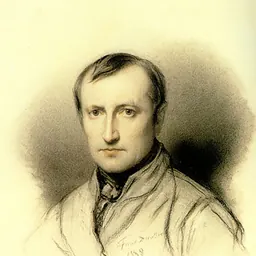
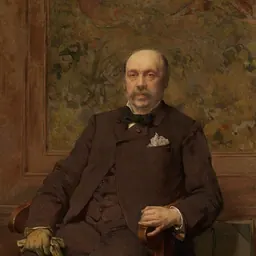
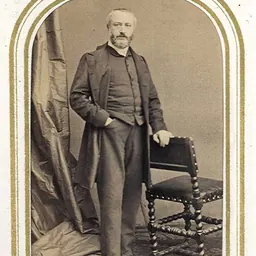
People in Ernest Slingeneyer's life
Named in this biography and alive at the same time
Related people
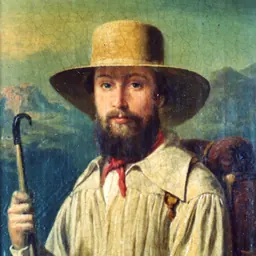
Same field, nearest in time


Contemporaries
People whose lives overlapped Ernest Slingeneyer's



Frequently asked questions
Who was Ernest Slingeneyer?
Belgian painter and politician (1820-1894)
When was Ernest Slingeneyer born?
Ernest Slingeneyer was born on 29 May 1820 in Lochristi.
When did Ernest Slingeneyer die?
Ernest Slingeneyer died on 27 April 1894 in Brussels metropolitan area.
What was Ernest Slingeneyer's occupation?
Ernest Slingeneyer was a painter, politician, history painter and portrait painter.
What nationality was Ernest Slingeneyer?
Ernest Slingeneyer was Belgian.
Sources & further reading
· Wikipedia: Ernest Slingeneyer
Cite this page
APA: Biography.guide. (2026). Ernest Slingeneyer. https://biography.guide/ernest-slingeneyer/
MLA: "Ernest Slingeneyer." Biography.guide, https://biography.guide/ernest-slingeneyer/.
Chicago: "Ernest Slingeneyer." Biography.guide. https://biography.guide/ernest-slingeneyer/.
Data last updated: 2026-09-20 · Spot an error? Report a correction.
Page generated 2026-09-27 05:34 UTC