
About Dmitry Khvostov
Lived 1757 – 1835 (aged 78). Dmitry Khvostov was a Russian writer, poet, linguist and translator.
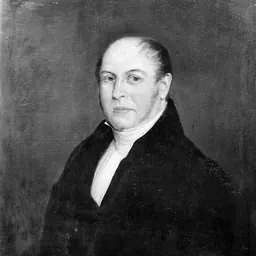
Count Dmitry Ivanovich Khvostov (, – ), was a Russian poet, representing the late period of classicism in Russian literature. Count Khvostov, as he was widely known, was an exceedingly prolific author of poems, fables, epigrams, etc., invariably archaic and pompous, making him an easy target for humourists and fellow poets (Pushkin among them) who ridiculed him relentlessly. In modern times much has been done to separate the comical myth from Khvostov's real legacy (with some fake 'Khvostovism' exposed) and give credit to an extraordinary poetry enthusiast (who was also an avid literary researcher and archivist), but the stereotype prevails and the name of Count Khvostov remains synonymous in Russia with wanton graphomania and self-important pomposity.
Biography Dmitry Ivanovich Khvostov was born in 1757 in Saint Petersburg, into a respected family of Russian aristocrats, the origins of which can be traced back to the 13th century. He received a fine education at home, studied in a private boarding-school, and then at Moscow University. In 1772 Khvostov joined the prestigious Preobrazhensky regiment (where he, admittedly, "rarely mounted a horse, save Pegasus"). After retirement in 1779 Khvostov served as an official in the Russian Senate 2nd department, where he later translated The Study on Finance by the French Finance minister Jacques Necker, for Prince Alexander Vyazemsky. In 1789 Khvostov married Princess A. I. Gorchakova, Alexander Suvorov's niece, and it was Suvorov, first a mentor, then a close friend and confidante, who in 1799 asked the King of Sardinia to grant the title of Count to his relative who three years later received official permission to use it and became Count Khvostov. Vasily Zhukovsky devoted the whole of his Arzamas inception speech to Khvostov's Fables. Pyotr Vyazemsky, Vasily Zhukovsky, Anton Delvig, Ivan Dmitriev, Alexander Voeykov, Nikolay Yazykov and Alexander Izmaylov all wrote epigrams on Khvostov. In a satire called A Singer in a Colloquy Konstantin Batyushkov presented Khvostov as the cossack ataman Platov, "a reader's tyrant" whose poetry was "his drum, unbearable for the ears." Pushkin in his "Ode to His Highness Count Dm. Iv. Khvostov" made fun of the latter's tendency to produce countless footnotes (which made the commentary pages longer than the verses themselves), warning Wilhelm Küchelbecker and Kondraty Ryleyev against falling into the same ode-ish stylistic trap. Konstantin Batyushkov wrote of Khvostov: "Generations will come and go, and simply for being so infamous, he will become quite famous."
Don’t just read it —
keep it.
Full-length biographies made to live with: read them, listen on the way to work, watch them tonight.
- E-book
- Audio
- Video
Instant download · yours to keep · every purchase keeps this site free
Important facts
People in Dmitry Khvostov's life
Named in this biography and alive at the same time

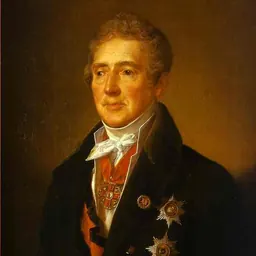
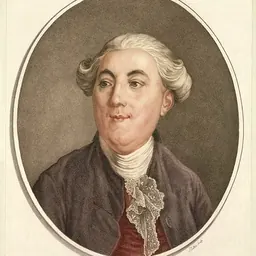
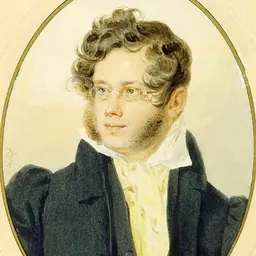
Related people
Same field, nearest in time
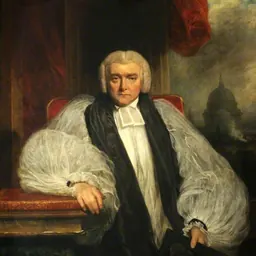



Contemporaries
People whose lives overlapped Dmitry Khvostov's




Frequently asked questions
Who was Dmitry Khvostov?
Russian poet
When was Dmitry Khvostov born?
Dmitry Khvostov was born on 19 July 1757 in Saint Petersburg.
When did Dmitry Khvostov die?
Dmitry Khvostov died on 22 October 1835 in Saint Petersburg.
What was Dmitry Khvostov's occupation?
Dmitry Khvostov was a writer, poet, linguist and translator.
What nationality was Dmitry Khvostov?
Dmitry Khvostov was Russian.
Sources & further reading
Cite this page
APA: Biography.guide. (2026). Dmitry Khvostov. https://biography.guide/dmitry-khvostov-writer/
MLA: "Dmitry Khvostov." Biography.guide, https://biography.guide/dmitry-khvostov-writer/.
Chicago: "Dmitry Khvostov." Biography.guide. https://biography.guide/dmitry-khvostov-writer/.
Data last updated: 2026-09-27 · Spot an error? Report a correction.
Page generated 2026-09-27 05:17 UTC