
About Konstantin Batyushkov
Lived 1787 – 1855 (aged 68). Konstantin Batyushkov was a Russian poet and writer.
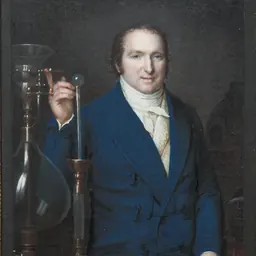
Konstantin Nikolayevich Batyushkov (; ) was a Russian poet, essayist and translator of the Romantic era. He also served in the diplomatic corps, spending an extended period in 1818 and 1819 as a secretary to the Russian diplomatic mission at Naples.
Biography
Early life Batyushkov was born into a noble family in Vologda. His mother, Alexandra Grigoryevna (née Berdyaeva), died in 1795 when he was six years old. He was sent to boarding schools in Saint Petersburg from 1797, where he studied French and Italian literature. His cousin, the poet and educator Mikhail Muravyov, guided his early reading and taught him Latin, introducing him to Tibullus and Horace. After recovering in Riga, he took part in the Russo-Swedish War of 1808–1809. Alexander Pushkin regarded Batyushkov as a formative influence on his own development as a poet.
Diplomatic service and illness In 1818, Batyushkov was appointed to the Russian diplomatic mission in Naples, where he also traveled to Venice and Rome. He returned in 1821, but his mental health had begun to deteriorate. By 1822, he was suffering severe episodes and attempted suicide three times while in Simferopol. He spent four years (1823–1828) at the Sonnenstein psychiatric facility in Saxony without improvement, then lived in Moscow until 1833. He spent his final twenty-two years in the care of a nephew in Vologda, where he died on 19 July 1855. He was buried at the Spaso-Prilutsky Monastery outside the city.
Legacy Alexander Pushkin compared Batyushkov's contribution to the Russian literary language to that of Petrarch in Italian literature. In 1830, Pushkin visited Batyushkov in Moscow, by which time Batyushkov could no longer recognize visitors. Pushkin's poem "God grant I don't go mad" (Не дай мне бог сойти с ума) has been linked to the impression left by this visit.
A monument by sculptor Vyacheslav Klykov and architect V. Snegirev stands at his grave at the Spaso-Prilutsky Monastery near Vologda. A memorial plaque was unveiled on the Fontanka embankment in Saint Petersburg on 29 May 2001. Batyushkov Street in Vologda, where he spent his final twenty-two years, is named in his honour, and a museum operates in the house where he lived.
A 2017 English-language edition, Writings from the Golden Age of Russian Poetry, translated by Peter France, was published by Columbia University Press.
Don’t just read it —
keep it.
Full-length biographies made to live with: read them, listen on the way to work, watch them tonight.
- E-book
- Audio
- Video
Instant download · yours to keep · every purchase keeps this site free
Important facts
People in Konstantin Batyushkov's life
Named in this biography and alive at the same time


Related people
Same field, nearest in time
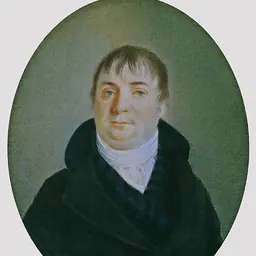
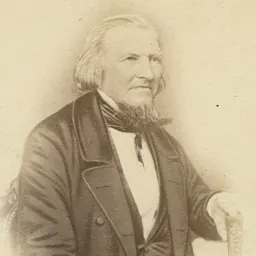
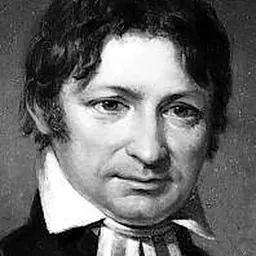
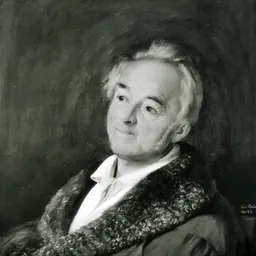
Contemporaries
People whose lives overlapped Konstantin Batyushkov's



Frequently asked questions
Who was Konstantin Batyushkov?
Russian poet, essayist and translator
When was Konstantin Batyushkov born?
Konstantin Batyushkov was born on 18 May 1787 in Vologda.
When did Konstantin Batyushkov die?
Konstantin Batyushkov died on 7 July 1855 in Vologda.
What was Konstantin Batyushkov's occupation?
Konstantin Batyushkov was a poet and writer.
What nationality was Konstantin Batyushkov?
Konstantin Batyushkov was Russian.
Sources & further reading
· Wikipedia: Konstantin Batyushkov
· DBpedia: Konstantin Batyushkov
Cite this page
APA: Biography.guide. (2026). Konstantin Batyushkov. https://biography.guide/konstantin-batyushkov/
MLA: "Konstantin Batyushkov." Biography.guide, https://biography.guide/konstantin-batyushkov/.
Chicago: "Konstantin Batyushkov." Biography.guide. https://biography.guide/konstantin-batyushkov/.
Data last updated: 2026-09-20 · Spot an error? Report a correction.
Page generated 2026-09-27 05:18 UTC