
About David Ruggles
Lived 1810 – 1849 (aged 39). David Ruggles was an American journalist and abolitionist.
The Disappointed Abolitionists by artist Edward Williams Clay and lithographer Henry R. Robinson, cartoon of Ruggles (center), with Isaac T. Hopper on his left and Barney Corse on his right, confronting John P. Darg in 1838
David Ruggles (March 15, 1810 – December 16, 1849) was an African-American abolitionist in New York who resisted slavery by his participation in a Committee of Vigilance, which worked on the Underground Railroad to help fugitive slaves reach free states. He was a printer in New York City during the 1830s, who also wrote numerous articles, and "was the prototype for black activist journalists of his time."
Early life Ruggles was born in Norwich, Connecticut, in 1810. His parents, David Sr. and Nancy Ruggles, were free African Americans. His father was born in Norwich in 1775 and worked as a journeyman blacksmith. His mother was born in 1785 in either Lyme or Norwich and worked as a caterer. Ruggles was the first of eight children.
His early education took place at religious charity schools in Norwich.
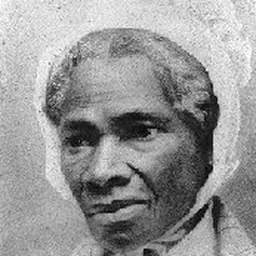
Bookstore and abolitionist organizing In 1826, at the age of sixteen, Ruggles moved to New York City, where he worked as a mariner before opening a grocery store. Nearby, other African-Americans ran grocery businesses in Golden Hill (John Street east of William Street), such as Mary Simpson (1752-March 18, 1836). After 1829, abolitionist Sojourner Truth (born Isabella ("Bell") Baumfree; c. 1797 – November 26, 1883) also lived in lower Manhattan. At first, he sold liquor, then embraced temperance. He became involved in anti-slavery and the free produce movement. He was a sales agent for and contributor to The Liberator and The Emancipator, abolitionist newspapers. Due to the selling of anti-slavery publications, Ruggle's store was eventually destroyed by a mob.
After closing the grocery, Ruggles opened the first African American-owned bookstore in the United States. The bookstore was located on Lispenard Street near St. John's park in what is today the Tribeca neighborhood. Ruggles's bookstore specialized in abolitionist and feminist literature, including works by African-American abolitionist Maria Stewart. He edited a New York journal called The Mirror of Liberty, and published a pamphlet called The Extinguisher. He also published "The Abrogation of the Seventh Commandment" in 1835, an appeal to northern women to confront husbands who kept enslaved black women as mistresses. New York had abolished slavery and stated that slaves voluntarily brought to the state by a master would automatically gain freedom after nine months of residence. On occasion, Ruggles went to private homes after learning that enslaved blacks were hidden there, to tell workers that they were free. He was criticized for his role in the well-publicized Darg case of 1838, in which Ruggles and other abolitionists sought freedom for Thomas Hughes, a slave accused of robbing his enslaver, a Virginia man named John P. Darg.
In October 1838, Ruggles assisted Frederick Douglass on his journey to freedom, and reunited Douglass with his fiancé Anna Murray. Rev. James Pennington, a self-emancipated slave, married Murray and Douglass in Ruggles's home shortly thereafter. Douglass's autobiography Narrative of the Life of Frederick Douglass explains: I had been in New York but a few days, when Mr. Ruggles sought me out, and very kindly took me to his boarding-house at the corner of Church and Lespenard Streets. Mr. Ruggles was then very deeply engaged in the memorable Darg case, as well as attending to a number of other fugitive slaves, devising ways and means for their successful escape; and, though watched and hemmed in on almost every side, he seemed to be more than a match for his enemies.
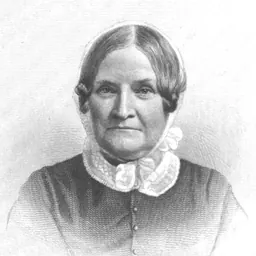
Later life Ruggles suffered from ill health, which intensified following the Darg case. In 1841, his father died, and Ruggles was ailing and almost blind. In 1842, Lydia Maria Child, a fellow abolitionist and friend, arranged for him to join a radical Utopian commune called the Ross Farm, operated by the Northampton Association of Education and Industry in Florence, Massachusetts.
Don’t just read it —
keep it.
Full-length biographies made to live with: read them, listen on the way to work, watch them tonight.
- E-book
- Audio
- Video
Instant download · yours to keep · every purchase keeps this site free
Important facts
People in David Ruggles's life
Named in this biography and alive at the same time




Related people
Same field, nearest in time

Contemporaries
People whose lives overlapped David Ruggles's



Frequently asked questions
Who was David Ruggles?
American abolitionist (1810-1849)
When was David Ruggles born?
David Ruggles was born on 15 March 1810 in Norwich.
When did David Ruggles die?
David Ruggles died on 16 December 1849 in Florence.
What was David Ruggles's occupation?
David Ruggles was a journalist and abolitionist.
What nationality was David Ruggles?
David Ruggles was American.
Sources & further reading
Cite this page
APA: Biography.guide. (2026). David Ruggles. https://biography.guide/david-ruggles/
MLA: "David Ruggles." Biography.guide, https://biography.guide/david-ruggles/.
Chicago: "David Ruggles." Biography.guide. https://biography.guide/david-ruggles/.
Data last updated: 2026-09-20 · Spot an error? Report a correction.
Page generated 2026-09-27 05:26 UTC