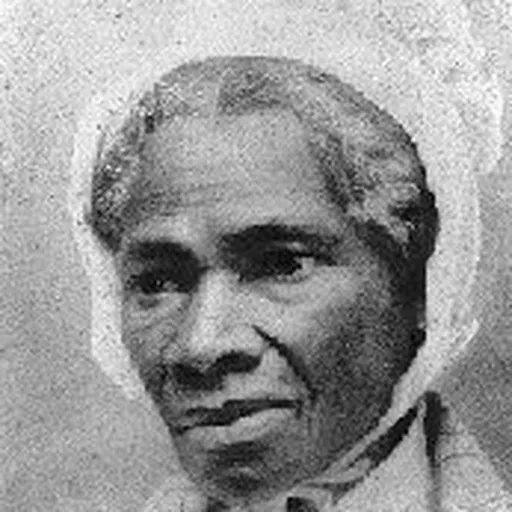
Sojourner Truth
Abolitionist and African-American activist for women's rights
About Sojourner Truth
Lived 1797 – 1883 (aged 85–86). Sojourner Truth was an American writer, abolitionist, women's rights activist, suffragist, religious leader and slave.
Sojourner Truth (; born Isabella Bomefree; November 26, 1883) was an American abolitionist and activist for African-American civil rights, women's rights, and alcohol temperance. Truth was born into slavery in Swartekill, New York, but escaped with her infant daughter to freedom in 1826. After going to court to recover her son in 1828, she became the first Black woman to win such a case against a white man.
Bomefree gave herself the name Sojourner Truth in 1843 after she became convinced that God had called her to leave the city and go into the countryside "testifying to the hope that was in her." Her best-known speech was delivered extemporaneously, in 1851, at the Ohio Women's Convention in Akron, Ohio. The speech became widely known during the Civil War by the title "Ain't I a Woman?", a variation of the original speech that was published in 1863 as being spoken in a stereotypical Black dialect, then more commonly spoken in the South. Sojourner Truth, however, grew up speaking Dutch as her first language.
During the Civil War, Truth helped recruit Black men into the Union army; after the war, she tried unsuccessfully to secure land grants from the federal government for formerly enslaved people (summarized as the promise of "forty acres and a mule"). She continued to fight on behalf of women and African Americans until her death. As her biographer Nell Irvin Painter wrote, "At a time when most Americans thought of slaves as male and women as white, Truth embodied a fact that still bears repeating: Among the blacks are women; among the women, there are blacks."
A memorial bust of Truth was unveiled in 2009 in Emancipation Hall in the U.S. Capitol Visitor Center. She is the first African American woman to have a statue in the Capitol building. In 2014, Truth was included in Smithsonian magazine's list of the "100 Most Significant Americans of All Time".
Early years
Sojourner Truth once estimated that she was born between 1797 and 1800. Truth was one of the 10 or 12 children born to James and Elizabeth Bomefree (later also given as Baumfree). Her father was a slave captured from what became Ghana, while her mother – nicknamed "Mau-Mau Bet" – was the daughter of slaves captured from the area of Guinea. Her father was nicknamed "Bomefree" (which, according to Truth, was Dutch for "tree"; compare boom boom, "tree") due to his tall stature. Colonel Hardenbergh bought James and Elizabeth Bomefree from slave traders and kept their family at his estate in a big hilly area called by the Dutch name Swartekill (just north of modern Rifton), in the town of Esopus, New York, north of New York City. When she was an infant, her five year old brother and three year old sister were sold to a different estate. Charles Hardenbergh inherited his father's estate and continued to own slaves as a part of that estate's property.
When Charles Hardenbergh died in 1806, nine-year-old Truth (known as Belle), was sold at an auction with a flock of sheep for $100 (~$ in ) to John Neely, near Kingston, New York. Until that time, Truth spoke only Dutch, and after learning English, she spoke with a Dutch accent and not a stereotypical dialect. She later described Neely as cruel and harsh, relating how he beat her daily and once even with a bundle of rods. In 1808 Neely sold her for $105 (~$ in ) to tavern keeper Martinus Schryver of Port Ewen, New York, who owned her for 18 months. Schryver then sold Truth in 1810 to John Dumont of West Park, New York.
Dumont raped her repeatedly, and considerable tension existed between Truth and Dumont's wife, Elizabeth Waring Dumont, who harassed her and made her life more difficult. Around 1815, Truth met and fell in love with a slave named Robert from a neighboring farm. Robert's owner (Charles Catton, Jr., a landscape painter) forbade their relationship; he did not want the slaves he owned to have children with people he did not own because he would not own the children. One day Robert sneaked over to see Truth. When Catton and his son found him, they savagely beat Robert until Dumont finally intervened. Truth never saw Robert again after that day and he died a few years later. The experience haunted Truth throughout her life. Truth eventually married an older enslaved man named Thomas. She bore five children: James, her firstborn, who died in childhood; Diana (1815), the result of a rape by John Dumont; and Peter (1821), Elizabeth (1825), and Sophia , all born after she and Thomas united.
She found her way to the home of Isaac and Maria Van Wagenen in New Paltz, who took her and her baby in. Isaac offered to buy her services for the remainder of the year (until the state's emancipation took effect), which Dumont accepted for $20. She lived there until the New York State Emancipation Act was approved a year later.
Truth learned that her son Peter, then five years old, had been sold by Dumont and then illegally resold to an owner in Alabama. The court documents related to this lawsuit were rediscovered by the staff at the New York State Archives . In 1829, she moved to New York City and joined the John Street Methodist Church.
In 1833, she was hired by Robert Matthews, also known as the Prophet Matthias, leader of a sect who identified with Judaism, went to work for him as a housekeeper in the communal settlement, and became a member of the group. In 1834, Matthews and Truth were charged with the murder of Elijah Pierson, but were acquitted due to lack of evidence and Truth's presentation of several letters confirming her reliability as a servant. The trial then focused on the reported beating of Matthews' daughter, of which he was found guilty and sentenced to three months and an additional thirty days for contempt of court. This event prompted Truth to leave the sect in 1835. She told her friends, "The Spirit calls me, and I must go", and left to make her way traveling and preaching about the abolition of slavery. Taking along only a few possessions in a pillowcase, she traveled north, working her way up through the Connecticut River Valley, towards Massachusetts. Like many others disappointed when the anticipated second coming did not arrive, Truth distanced herself from her Millerite friends for a time.
In 1844, she joined the Northampton Association of Education and Industry in Florence, Massachusetts. They lived on , raising livestock, running a sawmill, a gristmill, and a silk factory. Truth lived and worked in the community and oversaw the laundry, supervising both men and women. Robinson's recounting of the speech included no instance of the question "Ain't I a Woman?", nor did any of the other newspapers reporting of her speech at the time. Twelve years later, in May 1863, Gage published another, very different, version. In it, Truth's speech pattern appeared to have characteristics of Black slaves located in the southern United States, and the speech was vastly different from the one Robinson had reported. Gage's version of the speech became the most widely circulated version, and is known as "Ain't I a Woman?" because that question was repeated four times. It is highly unlikely that Truth's own speech pattern was like this, as she was born and raised in New York, and she spoke only upper New York State low-Dutch until she was nine years old.
In contrast to Robinson's report, Gage's 1863 version included Truth saying her 13 children were sold away from her into slavery. Truth is widely believed to have had five children, with one sold away, and was never known to boast more children. Gage's 1863 recollection of the convention conflicts with her own report directly after the convention: Gage wrote in 1851 that Akron in general and the press, in particular, were largely friendly to the woman's rights convention, but in 1863 she wrote that the convention leaders were fearful of the "mobbish" opponents. Other interracial gatherings of black and white abolitionist women had in fact been met with violence, including the burning of Pennsylvania Hall.
According to Frances Gage's recount in 1863, Truth argued, "That man over there says that women need to be helped into carriages, and lifted over ditches, and to have the best place everywhere. Nobody helps me any best place. And ain't I a woman?" Truth's "Ain't I a Woman" showed the lack of recognition that black women received during this time and whose lack of recognition will continue to be seen long after her time. "Black women, of course, were virtually invisible within the protracted campaign for woman suffrage", wrote Angela Davis, supporting Truth's argument that nobody gives her "any best place"; and not just her, but black women in general.
Over the next 10 years, Truth spoke before dozens, perhaps hundreds, of audiences. From 1851 to 1853, Truth worked with Marius Robinson, the editor of the Ohio Anti-Slavery Bugle, and traveled around that state speaking. In 1853, she spoke at a suffragist "mob convention" at the Broadway Tabernacle in New York City; that year she also met Harriet Beecher Stowe.
Abolitionist Convention – 1840s, Boston, Massachusetts: William Lloyd Garrison invited Sojourner Truth to give a speech at an annual antislavery convention. Wendell Phillips was supposed to speak after her, which made her nervous since he was known as such a good orator. So Truth sang a song, "I Am Pleading for My people", which was her own original composition sung to the tune of "Auld Lang Syne".
Mob Convention – September 7, 1853: At the convention, young men greeted her with "a perfect storm", hissing and groaning. In response, Truth said, "You may hiss as much as you please, but women will get their rights anyway. You can't stop us, neither".
American Equal Rights Association – May 9–10, 1867: Her speech was addressed to the American Equal Rights Association, and divided into three sessions. Sojourner was received with loud cheers instead of hisses, now that she had a better-formed reputation established. The Call had advertised her name as one of the main convention speakers.
On a mission Truth dedicated her life to fighting for a more equal society for African Americans and for women, including abolition, voting rights, and property rights. She was at the vanguard of efforts to address intersecting social justice issues. As historian Martha Jones wrote, "hen Black women like Truth spoke of rights, they mixed their ideas with challenges to slavery and to racism. Truth told her own stories, ones that suggested that a women's movement might take another direction, one that championed the broad interests of all humanity."
Truthalong with Stephen Symonds Foster and Abby Kelley Foster, Jonathan Walker, Marius Robinson, and Sallie Holleyreorganized the Michigan Anti-Slavery Society in 1853 in Adrian, Michigan. The state society was founded in 1836 in Ann Arbor, Michigan.
In 1856, Truth bought a neighboring lot in Northampton, but she did not keep the new property for long. On September 3, 1857, she sold all her possessions, new and old, to Daniel Ives and moved to Battle Creek, Michigan, where she rejoined former members of the Millerite movement who had formed the Seventh-day Adventist Church. Antislavery movements had begun early in Michigan and Ohio. Here, she also joined the nucleus of the Michigan abolitionists, the Progressive Friends, some who she had already met at national conventions. According to the 1860 census, her household in Harmonia included her daughter, Elizabeth Banks (age 35), and her grandsons James Caldwell (misspelled as "Colvin"; age 16) and Sammy Banks (age 8). In 1864, Truth was employed by the National Freedman's Relief Association in Washington, D.C., where she worked diligently to improve conditions for African-Americans. In October of that year, she was invited to the White House by President Abraham Lincoln. In 1865, while working at the Freedman's Hospital in Washington, Truth rode in the streetcars to help force their desegregation. Although Truth claimed to have written the words, it has been disputed (see "Marching Song of the First Arkansas").
In 1867, Truth moved from Harmonia to Battle Creek. In 1868, she traveled to western New York and visited with Amy Post, and continued traveling all over the East Coast. At a speaking engagement in Florence, Massachusetts, after she had just returned from a very tiring trip, when Truth was called upon to speak she stood up and said, "Children, I have come here like the rest of you, to hear what I have to say."
In 1870, Truth tried to secure land grants from the federal government to former enslaved people, a project she pursued for seven years without success. While in Washington, D.C., she had a meeting with President Ulysses S. Grant in the White House. In 1872, she returned to Battle Creek, became active in Grant's presidential re-election campaign, and even tried to vote on Election Day, but was turned away at the polling place. On November 28, 1883, her funeral was held at the Congregational-Presbyterian Church officiated by its pastor, the Reverend Reed Stuart. Some of the prominent citizens of Battle Creek acted as pall-bearers; nearly one thousand people attended the service. Truth was buried in the city's Oak Hill Cemetery.
Frederick Douglass offered a eulogy for her in Washington, D.C. "Venerable for age, distinguished for insight into human nature, remarkable for independence and courageous self-assertion, devoted to the welfare of her race, she has been for the last forty years an object of respect and admiration to social reformers everywhere."
Legacy Monuments and statues There have been many memorials erected in honor of Sojourner Truth, commemorating her life and work. These include memorial plaques, busts, and full-sized statues.
Michigan The first historical marker honoring Truth was established in Battle Creek in 1935, when a stone memorial was placed in Stone History Tower, in Monument Park. The State of Michigan further recognized her legacy by naming highway M-66 in Calhoun County the Sojourner Truth Memorial Highway, running from the county line south of Athens to Morgan Road in Pennfield Township, northeast of Battle Creek.
1999 marked the estimated bicentennial of Sojourner's birth. To honor the occasion, a larger-than-life sculpture of Sojourner Truth by Tina Allen was added to Monument Park in Battle Creek. The tall Sojourner monument is cast in bronze.
Ohio In 1981, an Ohio Historical Marker was unveiled on the site of the Universalist "Old Stone" Church in Akron where Sojourner Truth gave her "Ain't I a Woman?" speech on May 29, 1851. Sojourner Truth Legacy Plaza, which includes a statue of her by sculptor and Akron native Woodrow Nash, opened in Akron in 2024.
New York In 1862, American sculptor William Wetmore Story completed a marble statue, inspired by Sojourner Truth, named The Libyan Sibyl. The work won an award at the London World Exhibition. The original sculpture was gifted to the Metropolitan Museum of Art, in New York City, by the Erving Wolf Foundation in 1978.
In 1983, a plaque honoring Sojourner Truth was unveiled in front of the historic Ulster County Courthouse in Kingston, New York. The plaque was given by the Sojourner Truth Day Committee to commemorate the centennial of her death.
In 1990, New York Governor Mario Cuomo presented a two-foot statue of Sojourner Truth, made by New York sculptor Ruth Inge Hardison, to Nelson Mandela during his visit to New York City.
In 1998, on the 150th anniversary of the Seneca Falls Convention, a life-sized, terracotta statue of Truth by artists A. Lloyd Lillie, Jr., and Victoria Guerina was unveiled at the Women's Rights National Historical Park visitor center. Although Truth did not attend the convention, the statue marked Truth's famous 1851 speech in Akron, Ohio, and recognized her important role in the fight for women's suffrage.
In 2013, a bronze statue of Truth as an 11-year-old girl was installed at Port Ewen, New York, where Truth lived for several years while still enslaved. The sculpture was created by Trina Green, a sculptor in New Paltz, New York.
In 2015, the Klyne Esopus Museum installed a historical marker in Ulster Park, New York commemorating Truth's walk to freedom in 1826. She walked about 14 miles from Esopus, up what is now Floyd Ackert Road, to Rifton, New York.
In 2020, a statue was unveiled at the Walkway Over the Hudson park in Highland, New York. It was created by Yonkers sculptor Vinnie Bagwell, commissioned by the New York State Women's Suffrage Commission. The statue includes text, braille, and symbols. The folds of her skirt act as a canvas to depict Sojourner's life experiences, including images of a young enslaved mother comforting her child, a slavery sale sign, images of her abolitionist peers, and a poster for a women's suffrage march.
On August 26, 2020, on the 100th anniversary of the passage of the 19th Amendment to the U.S. Constitution, a statue honoring Truth, Elizabeth Cady Stanton, and Susan B. Anthony was unveiled in Central Park in New York City. The sculpture, entitled "Women's Rights Pioneers Monument", was created by American artist Meredith Bergmann. It is the first sculpture in Central Park to depict historical women. A statue to the fictional character Alice in Wonderland is the only other female figure depicted in the park. Original plans for the memorial included only Stanton and Anthony, but after critics raised objections to the lack of inclusion of women of color, Truth was added to the design.
On February 28, 2022, New York Governor Kathy Hochul dedicated Sojourner Truth State Park near the site of her birthplace.
California In 1999, Sojourner, a Mexican limestone statue of Sojourner Truth by sculptor Elizabeth Catlett, was unveiled in Sacramento, California on the corner of K and 13th Street. It was vandalized in 2013, where it was found smashed into pieces.
A bronze statue by San Diego, California, sculptor Manuelita Brown was dedicated on January 22, 2015, on the campus of the Thurgood Marshall College of Law at University of California, San Diego. The artist donated the sculpture to the college.
Massachusetts In 2002, the Sojourner Truth Memorial statue by Oregon sculptor Thomas "Jay" Warren was installed in Florence, Massachusetts, in a small park located on Pine Street and Park Street, on which she lived for ten years.
Washington, D.C.
In 2009, a bust of Sojourner Truth was installed in the U.S. Capitol. The bust was sculpted by noted artist Artis Lane. It is in Emancipation Hall of the U.S. Capitol Visitor Center. With this installation, Truth became the first black woman to be honored with a statue in the Capitol building.
Additional recognition
In regard to the magazine Ms., which began in 1972, Gloria Steinem has stated, "We were going to call it Sojourner, after Sojourner Truth, but that was perceived as a travel magazine.
Truth was posthumously inducted into the National Women's Hall of Fame in Seneca Falls, New York, in 1981. The original artwork was created by Jerry Pinkney, and features a double portrait of Truth. The stamp was part of the Black Heritage series. The first day of issue was February 4, 1986.
Truth was included in a monument of "Michigan Legal Milestones" erected by the State Bar of Michigan in 1987, honoring her historic court case.
The calendar of saints of the Episcopal Church remembers Sojourner Truth annually, together with Elizabeth Cady Stanton, Amelia Bloomer and Harriet Ross Tubman, on July 20. The calendar of saints of the Lutheran Church remembers Sojourner Truth together with Harriet Tubman on March 10.
In 1997, The NASA Mars Pathfinder mission's robotic rover was named Sojourner. The following year, S.T. Writes Home appeared on the web offering "Letters to Mom from Sojourner Truth", in which the Mars Pathfinder Rover at times echoes its namesake.
In 2002, Temple University scholar Molefi Kete Asante published a list of 100 Greatest African Americans, which includes Sojourner Truth.
In 2009 Truth was inducted into the National Abolition Hall of Fame, in Peterboro, New York.
In 2014, the asteroid 249521 Truth was named in her honor.
Truth was included in the Smithsonian Institution's list of the 100 Most Significant Americans, published 2014. Treasury Secretary Steve Mnuchin announced that plans for the $20 redesign, which was to feature Harriet Tubman, have been postponed.
On September 19, 2016, the U.S. Secretary of the Navy Ray Mabus announced the name of the last ship of a six-unit construction contract as USNS Sojourner Truth (T-AO 210). This ship will be part of the latest John Lewis-class of Fleet Replenishment Oilers named in honor of U.S. civil and human rights heroes currently under construction at General Dynamics NASSCO in San Diego, CA.
A Google Doodle was featured on February 1, 2019, in honor of Sojourner Truth. The doodle was showcased in Canada, United States, United Kingdom, Switzerland, Israel, Ireland and Germany.
For their first match of March 2019, the women of the United States women's national soccer team each wore a jersey with the name of a woman they were honoring on the back; Christen Press chose the name of Sojourner Truth.
Metro-North Railroad named its Shoreliner II passenger car, No. 6188, in honor of Sojourner Truth.
Works of art In 1892, Albion artist Frank Courter was commissioned by Frances Titus to paint the meeting between Truth and President Abraham Lincoln that occurred on October 29, 1864. She would later create a full-size statue of Truth, which was displayed in Sacramento, California.
In 1958, African-American artist John Biggers created the mural Contribution of Negro Woman to American Life and Education as his doctoral dissertation. Unveiled at the Blue Triangle Community Center (former YWCA) in Houston, Texas, it features Sojourner Truth, Harriet Tubman, and Phillis Wheatley.
Inspired by the work of pioneer women's historian Gerda Lerner, feminist artist Judy Chicago (Judith Sylvia Cohen) created the collaborative masterpiece The Dinner Party, a mixed-media art installation, between 1974 and 1979. The Sojourner Truth placesetting is one of 39. The Dinner Party was gifted in 2000 by the Elizabeth Sackler Foundation to the Elizabeth A. Sackler Center for Feminist Art, Brooklyn Museum in Brooklyn, New York City.
Feminist theorist and author bell hooks titled her first major work Ain't I a Woman? (1981) after Truth's "Ain't I a Woman?" speech.
African-American composer Gary Powell Nash composed In Memoriam: Sojourner Truth in 1992.
The Broadway musical The Civil War, which premiered in 1999, includes an abridged version of Truth's "Ain't I a Woman?" speech as a spoken-word segment. On the 1999 cast recording, the track was performed by Maya Angelou.
In 2018, a crocheted mural, Sojourner Truth: Ain't I A Woman?, was hung on display at the Akron Civic Theatre's outer wall at Lock 3 Park in Ohio. It was one of four projects in New York and North Carolina as part of the "Love Across the U.S.A.", spearheaded by fiber artist OLEK.
Libraries, schools, and buildings Sojourner Truth Library at New Paltz State University of New York was named in Truth's honor in 1971. In 1980, the Inter Cooperative Council at the University of Michigan and the residents of the then Lenny Bruce House rename it as Sojourner Truth House in her honor. Summit County, Ohio, dedicated the renovated Danner Press Building as the Sojourner Truth Building in Akron in 1991 and unveils the reinstalled Ohio Historical Marker on the building wall. The King's College, located inside the Empire State Building in New York City, names one of their houses "The House of Sojourner Truth" in 2004. In recognition that Truth and her parents were enslaved by people related to their first president, Rutgers University renamed its College Avenue Apartments to the Sojourner Truth Apartments. Sojourner–Douglass College in Baltimore, which closed in 2019, was named after Truth and Frederick Douglass. As of February 2020, elementary schools and K–12 schools in several states are named after Truth.
Organizations In 1969, the left-wing political group Sojourner Truth Organization was established. In 1996, visual artist and community activist Shonna McDaniels established the Sojourner Truth African American (Art) Heritage Museum in South Sacramento, California. It is also known as SOJO Museum. In 1998, Velma Laws Clay founded the Sojourner Truth Institute in Battle Creek, Michigan, to "expand the historical and biographical knowledge of Sojourner Truth's life work and carry on her mission by teaching, demonstrating and promoting projects that accentuate the ideals and principles for which she stood." Sojourner Truth Houses have been established in many U.S. cities to provide shelter and services to women facing homelessness or domestic abuse. Locations include: Boston, Massachusetts; Providence, Rhode Island; and Pittsburgh, Pennsylvania.
Study clubs Starting in 1895, numerous black civic associations adopted the name Sojourner Truth Club or similar titles to honor her.
Examples listing club names, places, years founded: Sojourner Truth Club, Birmingham, Alabama, 1895 Sojourner Truth Club, Battle Creek, Michigan, 1897 Sojourner Truth Club, Los Angeles, California, 1906 Sojourner Truth Club, Denver, Colorado, by 1916 Sojourner Truth Study Club, Omaha, Nebraska, by 1933 Sojourner Truth Study Club, St. Louis, Missouri, by 1938 Women's Sojourner Truth Study Club, Pasadena, California, by 1945 Sojourner Truth Political Study Club, Los Angeles, California, by 1946 Sojourner Truth Club, Richmond, Indiana, by 1974
Writings
Narrative of Sojourner Truth: A Northern Slave (1850). Dover Publications 1997 edition: Penguin Classics 1998 edition: . Introduction & notes by Nell Irvin Painter. University of Pennsylvania online edition (HTML format, one chapter per page) University of Virginia online edition (HTML format, 207 kB, entire book on one page)
Don’t just read it —
keep it.
Full-length biographies made to live with: read them, listen on the way to work, watch them tonight.
- E-book
- Audio
- Video
Instant download · yours to keep · every purchase keeps this site free
Important facts
People in Sojourner Truth's life
Named in this biography and alive at the same time


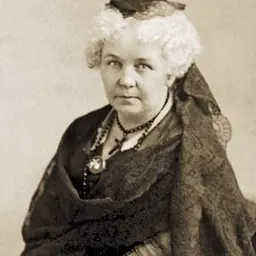

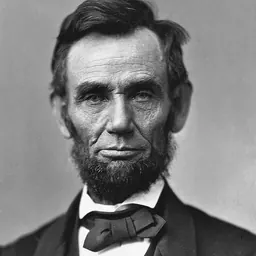

Related people
Same field, nearest in time



Contemporaries
People whose lives overlapped Sojourner Truth's





Frequently asked questions
Who was Sojourner Truth?
abolitionist and African-American activist for women's rights (1797–1883)
When was Sojourner Truth born?
Sojourner Truth was born in 1797 in Hurley, Rifton.
When did Sojourner Truth die?
Sojourner Truth died on 26 November 1883 in Battle Creek.
What was Sojourner Truth's occupation?
Sojourner Truth was a writer, abolitionist, women's rights activist, suffragist, religious leader and slave.
What nationality was Sojourner Truth?
Sojourner Truth was American.
Sources & further reading
Cite this page
APA: Biography.guide. (2026). Sojourner Truth. https://biography.guide/sojourner-truth/
MLA: "Sojourner Truth." Biography.guide, https://biography.guide/sojourner-truth/.
Chicago: "Sojourner Truth." Biography.guide. https://biography.guide/sojourner-truth/.
Data last updated: 2026-09-22 · Spot an error? Report a correction.
Portrait: Wikimedia Commons · author & licence
Page generated 2026-09-27 05:03 UTC