
Cornelius Lanczos
Hungarian mathematician and physicist
About Cornelius Lanczos
Lived 1893 – 1974 (aged 81). Cornelius Lanczos was a Hungarian, American and Irish mathematician, physicist, theoretical physicist and scientist, known for Lanczos algorithm, Lanczos approximation and Lanczos differentiator.
Cornelius (Cornel) Lanczos (, ; born as Kornél Lőwy, until 1906: Löwy (Lőwy) Kornél; February 2, 1893 – June 25, 1974) was a Hungarian, American, and later Irish mathematician and physicist. According to György Marx he was one of the Martians, a group of Hungarian scientific luminaries who immigrated to the United States to escape national socialism. He was remembered by his colleagues as an innovative scholar and an excellent educator. to Károly Lőwy and Adél Hahn. He grew up in relative comfort and attended a Catholic Gymnasium (high school). Between 1911 and 1916, he studied at the University of Budapest, where one of his professors in physics was Roland Eötvös, whose skills as an experimental physicist impressed him. In mathematics, his notable teacher was Lipót Fejér, then a young mathematician. Lanczos re-wrote Maxwell's equations of electromagnetism in terms of quaternions and applied a relativistic variational principle. Lanczos maintained his contact with Einstein for another 35 years, until the latter's death. This was later rediscovered by Willem Jacob van Stockum in 1938. It is one of the simplest known exact solutions in general relativity and is regarded as an important example, in part because it exhibits closed timelike curves.
Lanczos worked at the University of Frankfurt from 1924 to 1931, By the time he went to work with Einstein, Lanczos had already written multiple papers on relativity.
Following the seminal publication of Werner Heisenberg announcing the creation of his matrix formulation of quantum mechanics in 1925, Lanczos wrote a paper demonstrating how the new theory could be expressed in terms of linear integral equations. Carl Eckart independently reached the same conclusion, based on the work of Lanczos. This paper also helped Paul Dirac create his own formulation of quantum mechanics as a theory of linear transformations. Lanczos's 1926 paper was the earliest continuum-theoretic formulation of quantum mechanics; In 1972, at an event organized by the European Physical Society in Trieste, Italy, Bartel Leendert van der Waerden publicly recognized the significance of that paper, which correctly formulated the eigenvalue problem in terms of integration and even came close to introducing the Dirac -distribution. But van der Waerden was unaware that Lanczos was in the audience until Léon Rosenfeld urged the latter to come to the stage. (As a matter of fact, similar claims can be made for several other mathematicians, including Carl Friedrich Gauss.
In 1952, Lanczos examined the utility of the Chebyshev polynomials in approximating the solution of linear systems.
During the McCarthy era, Lanczos came under suspicion for possible communist links. Shortly after arriving he gave lectures on numerical methods, such as a new approximation for the gamma function he developed. He wrote many scientific papers and books during this period; he also became interested in some newly developed ideas in mathematical physics, notably Schwartz distributions and Sobolev spaces.
During his career, he was invited to lecture of various topics of mathematical physics at many different institutions. He published it shortly after moving to Los Angeles. Reprinted 2010 by Dover Publications. . An exposition of his investigations of ideas in the boundary between classical and numerical analysis illustrated by worked examples, topics covered include large scale linear systems, harmonic analysis, data analysis, numerical quadrature and power series expansions. The chapter on numerical quadrature was inspired by a number of problems posed by Schrödinger. Numbers without End, Edinburgh: Oliver & Boyd. 1968. Lectures given in honor of Selig Brodetsky. Based on a series of lectures given to mathematicians, physicists, chemists, engineers, and philosophers at North Carolina State University in 1968, Lanczos overviews the history of geometry from the time of the ancient Greeks up until the early twentieth century. He elaborates upon Euclidean geometry, tensor analysis, and the abstract vector spaces of Hilbert and Banach, and briefly describes projective geometry. In this book, Lanczos made use of his fluency in the German language as his grasp of to mathematics and physics discuss in detail the scientific publications of Albert Einstein during that time.
Articles Translated reprint Research Paper 2133. September 1949.
Don’t just read it —
keep it.
Full-length biographies made to live with: read them, listen on the way to work, watch them tonight.
- E-book
- Audio
- Video
Instant download · yours to keep · every purchase keeps this site free
Important facts
more
Van Stockum dustPeople in Cornelius Lanczos's life
Named in this biography and alive at the same time

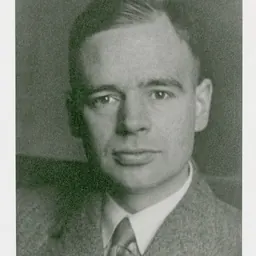

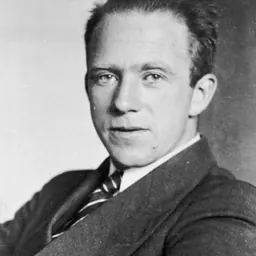

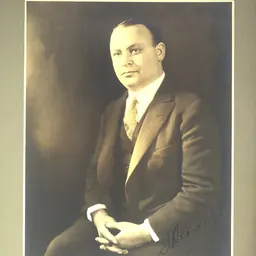
Related people
Same field, nearest in time

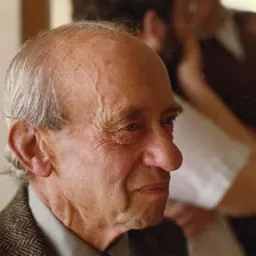
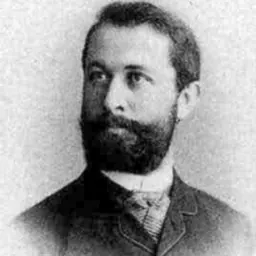
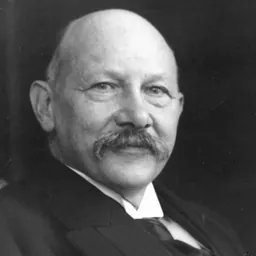
Contemporaries
People whose lives overlapped Cornelius Lanczos's

Frequently asked questions
Who was Cornelius Lanczos?
Hungarian mathematician and physicist (1893–1974)
When was Cornelius Lanczos born?
Cornelius Lanczos was born on 2 February 1893 in Székesfehérvár.
When did Cornelius Lanczos die?
Cornelius Lanczos died on 25 June 1974 in Budapest.
What was Cornelius Lanczos's occupation?
Cornelius Lanczos was a mathematician, physicist, theoretical physicist and scientist.
What was Cornelius Lanczos known for?
Cornelius Lanczos was known for Lanczos algorithm, Lanczos approximation, Lanczos differentiator, Lanczos resampling, Lanczos sigma factor and Lanczos tensor.
What nationality was Cornelius Lanczos?
Cornelius Lanczos was Hungarian, American and Irish.
Sources & further reading
· Wikipedia: Cornelius Lanczos
Cite this page
APA: Biography.guide. (2026). Cornelius Lanczos. https://biography.guide/cornelius-lanczos/
MLA: "Cornelius Lanczos." Biography.guide, https://biography.guide/cornelius-lanczos/.
Chicago: "Cornelius Lanczos." Biography.guide. https://biography.guide/cornelius-lanczos/.
Data last updated: 2026-09-20 · Spot an error? Report a correction.
Page generated 2026-09-27 05:09 UTC