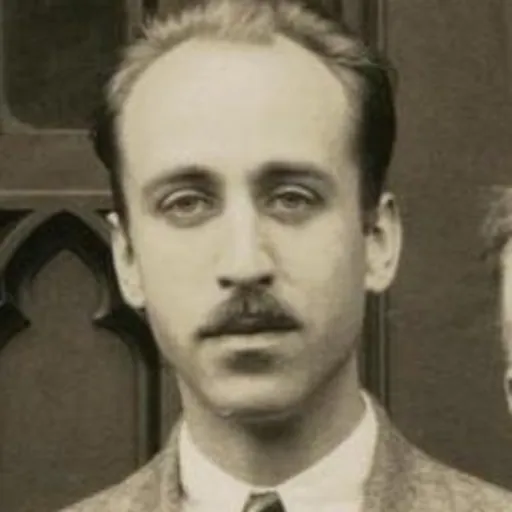
About Carl Eckart
Lived 1902 – 1973 (aged 71). Carl Eckart was an American physicist and university teacher, known for Acoustic streaming, Eckart conditions and Singular value decomposition.
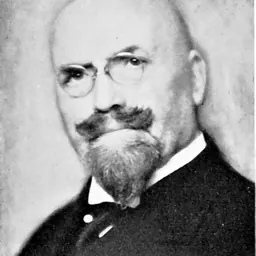
Carl Henry Eckart (May 4, 1902 – October 23, 1973) was an American physicist, physical oceanographer, geophysicist, and administrator. He co-developed the Wigner–Eckart theorem and is also known for the Eckart conditions in quantum mechanics, the Eckart–Young theorem in linear algebra, and his work on non-equilibrium thermodynamics and continuum mechanics, including a relativistic treatment.
Early life
Eckart was born an only child in St. Louis, Missouri, to a conservative family of German descent. He began college in 1919 at Washington University in St. Louis where he received his B.S. and M.S. degrees with a major in engineering from the McKelvey School of Engineering. Due to Arthur Compton, a physics faculty member and later Chancellor, Eckart was influenced to continue his education in physics at Princeton University, where he went in 1923 on an Edison Lamp Works Research Fellowship. Eckart was awarded his Ph.D. in 1925.
During his graduate studies, Eckart co-authored a paper with Karl Compton, brother of Arthur Compton on low-voltage arcs, particularly the oscillatory phenomena arising in the diffusion of electrons against low-voltage fields. He continued this line of work after receipt of his Ph.D. on a National Research Council Fellowship at the California Institute of Technology (Caltech) during the period 1925 to 1927. came to Caltech in the winter of 1925 and gave a lecture on his work. Born's lecture gave Eckart the impetus to investigate the possible general operator formalism for quantum mechanics. Working into early 1926, Eckart developed the formalism. When Erwin Schrödinger's first paper in the series of four on the wave mechanics formulation of quantum mechanics was published in January, Eckart soon realized that the matrix formulation and wave formulation of quantum mechanics were equivalent; he submitted his paper to the Proceedings of the National Academy of Sciences of the United States of America for publication. However, it was communicated on May 31, 1926, and Schrödinger's paper on the equivalence was received on March 18, 1926, thus giving him credit for the realization. In Munich, Eckart worked on the quantum mechanical behavior of simple oscillators using the Schrödinger equation and on operator calculus related to the matrix formulation of quantum mechanics. He also applied his work to the theory of electrons and the conductivity of metals using Fermi statistics, and he co-authored a paper on the subject with Sommerfeld and William V. Houston. Heisenberg's book on the physical principles of quantum mechanics. During the 1934–1935 academic year, Eckart took a sabbatical at the Institute for Advanced Study in New Jersey, as he also did in the academic years 1952-1953 and 1960–1961. However, in 1941, Eckart withdrew from the Committee because of his anti-atomic bomb sentiments. Carl Eckart Hydrodynamics of Oceans and Atmospheres (Pergamon Press, 1960)
Selected literature
Don’t just read it —
keep it.
Full-length biographies made to live with: read them, listen on the way to work, watch them tonight.
- E-book
- Audio
- Video
Instant download · yours to keep · every purchase keeps this site free
Important facts
People in Carl Eckart's life
Named in this biography and alive at the same time


Related people
Same field, nearest in time

Contemporaries
People whose lives overlapped Carl Eckart's




Frequently asked questions
Who was Carl Eckart?
American physicist (1902-1973)
When was Carl Eckart born?
Carl Eckart was born on 4 May 1902 in St. Louis.
When did Carl Eckart die?
Carl Eckart died on 23 October 1973 in La Jolla.
What was Carl Eckart's occupation?
Carl Eckart was a physicist and university teacher.
What was Carl Eckart known for?
Carl Eckart was known for Acoustic streaming, Eckart conditions, Singular value decomposition and Wigner–Eckart theorem.
What nationality was Carl Eckart?
Carl Eckart was American.
Sources & further reading
Cite this page
APA: Biography.guide. (2026). Carl Eckart. https://biography.guide/carl-eckart/
MLA: "Carl Eckart." Biography.guide, https://biography.guide/carl-eckart/.
Chicago: "Carl Eckart." Biography.guide. https://biography.guide/carl-eckart/.
Data last updated: 2026-09-22 · Spot an error? Report a correction.
Portrait: Wikimedia Commons · author & licence
Page generated 2026-09-27 05:01 UTC