
About Christian Friedrich Gottlieb Schwencke
Lived 1767 – 1822 (aged 55). Christian Friedrich Gottlieb Schwencke was a composer.
Christian Friedrich Gottlieb Schwencke (30 August 1767 – 27 October 1822) was a German composer, pianist and editor of musical works. From 1789 to 1822, he was Kantor at the Johanneum and director of church music in Hamburg, succeeding Carl Philipp Emanuel Bach. He was an early publisher of The Well-Tempered Clavier by Bach's father, Johann Sebastian Bach.
Life Schwenke was born in in the Harz mountains. His father Johann Gottlieb Schwencke was a military bassoonist and later a town musician in Hamburg. Christian Friedrich Gottlieb received musical education from him while attending the Johanneum and the in Hamburg. In 1779, he performed for the first time as a pianist in a concert given by his father. He was a boy singer in the church music directed by Carl Philipp Emanuel Bach. After his voice broke, he was a piano accompanist there. He thus became acquainted with compositions by his father Johann Sebastian Bach. From 1782, Schwencke continued his musical studies with Johann Philipp Kirnberger and Friedrich Wilhelm Marpurg in Berlin. He also performed as a piano and organ virtuoso. From 1787, he studied mathematics at the University of Leipzig, and continued at the University of Halle the following year. On 1 October 1789, he was elected to succeed C. P. E. Bach as Kantor of the Johanneum and music director in Hamburg.
Work Schwencke's compositions have survived only in part. He created cantatas and oratorios as well as instrumental music, two piano and one oboe concerto, six fugues for organ and piano and violin sonatas. His setting of the Lord's Prayer by Friedrich Gottlieb Klopstock, which was also performed at Klopstock's funeral, became nationally famous. He also set Klopstock's Der Frohsinn to music.
Schwencke owned several manuscript of Bach's works, and was an early publisher of his The Well-Tempered Clavier. In a manuscript of the work's first Prelude in C major that he made, and subsequently in the printed edition by N. Simrock, the composition includes an extra measure compared with Bach's autograph. It is unknown if Schwencke added this measure, or if he copied from now lost sources.
Don’t just read it —
keep it.
Full-length biographies made to live with: read them, listen on the way to work, watch them tonight.
- E-book
- Audio
- Video
Instant download · yours to keep · every purchase keeps this site free
Important facts
People in Christian Friedrich Gottlieb Schwencke's life
Named in this biography and alive at the same time
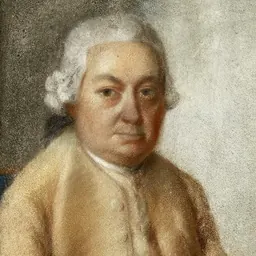


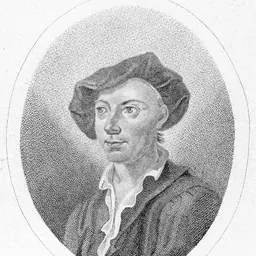
Related people
Same field, nearest in time


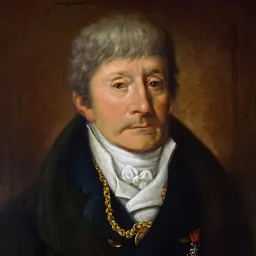
Contemporaries
People whose lives overlapped Christian Friedrich Gottlieb Schwencke's




Frequently asked questions
Who was Christian Friedrich Gottlieb Schwencke?
German composer (1767-1822)
When was Christian Friedrich Gottlieb Schwencke born?
Christian Friedrich Gottlieb Schwencke was born on 30 August 1767.
When did Christian Friedrich Gottlieb Schwencke die?
Christian Friedrich Gottlieb Schwencke died on 27 October 1822 in Hamburg.
What was Christian Friedrich Gottlieb Schwencke's occupation?
Christian Friedrich Gottlieb Schwencke was a composer.
What nationality was Christian Friedrich Gottlieb Schwencke?
Christian Friedrich Gottlieb Schwencke's recorded nationality: Kingdom of Hanover.
Sources & further reading
· Wikipedia: Christian Friedrich Gottlieb Schwencke
· DBpedia: Christian Friedrich Gottlieb Schwencke
Cite this page
APA: Biography.guide. (2026). Christian Friedrich Gottlieb Schwencke. https://biography.guide/christian-friedrich-gottlieb-schwencke/
MLA: "Christian Friedrich Gottlieb Schwencke." Biography.guide, https://biography.guide/christian-friedrich-gottlieb-schwencke/.
Chicago: "Christian Friedrich Gottlieb Schwencke." Biography.guide. https://biography.guide/christian-friedrich-gottlieb-schwencke/.
Data last updated: 2026-09-22 · Spot an error? Report a correction.
Page generated 2026-09-27 05:06 UTC