
About Friedrich Gottlieb Klopstock
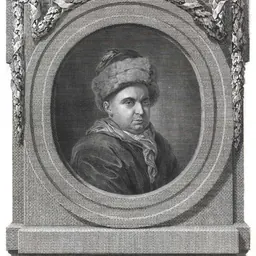
Lived 1724 – 1803 (aged 78). Friedrich Gottlieb Klopstock was a German poet, playwright, writer, linguist, in-home tutor and literary scholar.
Friedrich Gottlieb Klopstock (; 2 July 1724 – 14 March 1803) was a German poet. His best known works are the epic poem Der Messias ("The Messiah") and the poem Die Auferstehung ("The Resurrection"), with the latter set to music in the finale of Gustav Mahler's Symphony No. 2. One of his major contributions to German literature was to open it up to exploration outside of French models.
Biography Early life
Klopstock was born on 2 July 1724 at Quedlinburg, the eldest son of a lawyer. Both in his birthplace and on the estate of Friedeburg on the Saale, which his father later rented, he spent a happy childhood. Having been given more attention to his physical than to his mental development, he grew up strong and healthy and was considered an excellent horseman. In his thirteenth year, he returned to Quedlinburg and attended the gymnasium there, and in 1739 went on to the famous classical school named Schulpforta. Here he soon became adept in Greek and Latin versification, and wrote some meritorious idylls and odes in German. His original intention of making Henry the Fowler the hero of an epic was abandoned in favor of a religious epic, under the influence of Milton's Paradise Lost, with which he became acquainted through Bodmer's translation.
Depression and Messias Klopstock now relapsed into melancholy; new ideas failed him, and his poetry became more introspective. He continued to live and work in Copenhagen, however, and next, following Heinrich Wilhelm von Gerstenberg, turned his attention to northern mythology, which in his view should replace classical subjects in a new school of German poetry. In 1770, when King Christian VII dismissed Count Bernstorff from office, he retired with the latter to Hamburg but retained his pension, together with the rank of councillor of legation.
Klopstock published odes and hymns, including Der am Kreuz ist meine Liebe, which is in shortened and revised form part of the 2013 Catholic hymnal Gotteslob.
Prose In addition to Die Gelehrtenrepublik, he was also the author of Fragmente über Sprache und Dichtkunst (1779) and Grammatische Gespräche (1794), works in which he made important contributions to philology and to the history of German poetry.
Goethe's description Goethe in his autobiography recorded his personal impression of Klopstock: "He was of small stature, but well built. His manners were grave and decorous, but free from pedantry. His address was intelligent and pleasing. On the whole, one might have taken him for a diplomatist. He carried himself with the self-conscious dignity of a person who has a great moral mission to fulfil. He conversed with facility on various subjects, but rather avoided speaking of poetry and literary matters." In freeing German poetry from its exclusive interest in Alexandrine verse, he became the founder of a new era in German literature, so that Schiller and Goethe were artistically indebted to him. An 800-year-old oak tree where Klopstock spent time in Denmark was named after him.
Don’t just read it —
keep it.
Full-length biographies made to live with: read them, listen on the way to work, watch them tonight.
- E-book
- Audio
- Video
Instant download · yours to keep · every purchase keeps this site free
Important facts
People in Friedrich Gottlieb Klopstock's life
Named in this biography and alive at the same time
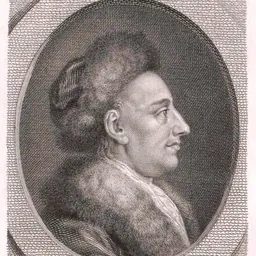
Related people
Same field, nearest in time

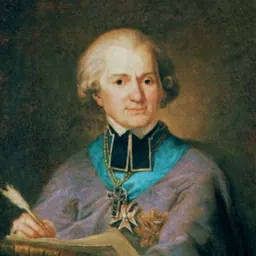

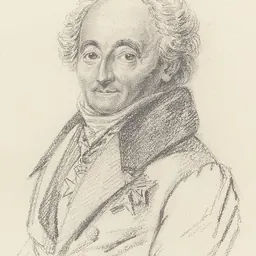
Contemporaries
People whose lives overlapped Friedrich Gottlieb Klopstock's



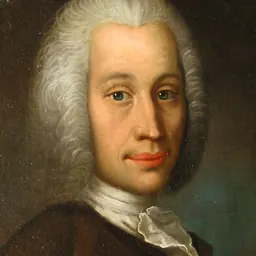
Frequently asked questions
Who was Friedrich Gottlieb Klopstock?
German poet, writer and linguist
When was Friedrich Gottlieb Klopstock born?
Friedrich Gottlieb Klopstock was born on 2 July 1724 in Quedlinburg.
When did Friedrich Gottlieb Klopstock die?
Friedrich Gottlieb Klopstock died on 14 March 1803 in Hamburg.
What was Friedrich Gottlieb Klopstock's occupation?
Friedrich Gottlieb Klopstock was a poet, playwright, writer, linguist, in-home tutor and literary scholar.
What nationality was Friedrich Gottlieb Klopstock?
Friedrich Gottlieb Klopstock was German.
Sources & further reading
· Wikipedia: Friedrich Gottlieb Klopstock
· DBpedia: Friedrich Gottlieb Klopstock
Cite this page
APA: Biography.guide. (2026). Friedrich Gottlieb Klopstock. https://biography.guide/friedrich-gottlieb-klopstock/
MLA: "Friedrich Gottlieb Klopstock." Biography.guide, https://biography.guide/friedrich-gottlieb-klopstock/.
Chicago: "Friedrich Gottlieb Klopstock." Biography.guide. https://biography.guide/friedrich-gottlieb-klopstock/.
Data last updated: 2026-09-20 · Spot an error? Report a correction.
Page generated 2026-09-27 05:22 UTC