
About Carlo Antonio Campioni
Lived 1720 – 1788 (aged 67). Carlo Antonio Campioni was an Italian composer.
Charles-Antoine Campion, italianized as Carlo Antonio Campioni (16 November 172012 April 1788 ), was a French-Italian composer who was born in the Duchy of Lorraine. He was a prolific composer and represented a link between Baroque compositional methods and those of the Classical style.
Life Early years and employment in Livorno Campion was born in Lunéville (Meurthe-et-Moselle) in Lorraine to Jacques and Charlotte Bruget. Not much is known about his early musical education in Lorraine, but he may have been a student of Henri Desmarets. Given that his father was serving in the Lorraine court, his family was transferred to Florence, Italy at the same time as the rise to the throne of the Tuscan Granduca (Grand Duke) Francis of Lorraine in 1737. During this period of time, he presumably came into contact with Giuseppe Tartini, who was Campion's teacher.
From 1752 to 1762, Campion was Chapel Master of the Cathedral in Livorno. He was fortunate to be friends with some aristocrats, and succeeded in having his opera (Venere placata, libretto by Marco Coltellini) performed for the celebration in Livorno (at the Avvalorati Academy) of the royal wedding of Joseph II and Princess Isabella of Parma in 1760.
Letter send by Charles-Antoine Campion to Giovanni Battista Martini on 15 December 1772. Part of "Carteggi" Collection of Museo Internazionale e Biblioteca della Musica, Bologna, Italy
Employment in Florence and international recognition The employment of Campion followed the idea and desire to rebuild the court's musical activities in Florence, which was intended to be reestablished by the Lorraines after the decline during the Reggenza period: an intention that became intensified with the new Grand Duke Peter Leopold. During his employment in Florence, Campion gained the respect of Italian and European cultural society for his taste and his collection of antique music. In the 1760s, he traveled abroad in order to promote the publication of his music. He printed his music in Amsterdam and Paris under his own supervision, and Walsh published his works in London.
Final years and the querelle with Ligniville In the 1770s, Campion was the protagonist of a harsh querelle with the Marquise Eugenio di Ligniville who was also from Lorraine and participated in the regeneration of the Florentine musical activities and supported the nomination of Campion to Master of the Unified Courts. Ligniville told the Grand Duke to not be satisfied by his superior musical status and accused Campion of not being able to manage the Capella, both economically and musically. This might have been an attempt to take Campion's job. He worked very often with sacred music, in which on the contrary demonstrates a very rigid approach to counterpoint. if not the cited Venere placata for the marriage of Josef II, and the incomplete Etruria fortunata, It is also important to mention the non-celebratory profane cantatas T'amo bell'idol mio, for voice and instruments (conserved at the Conservatory of Florence), Ancona: «Luciano Benincasa» library conserved a probable autograph of the epithalamic cantata for the Pichi family. Fiesole: in the library of the local music school (in the «Stefanelli» collection) was found the incomplete autograph of the cited Etruria fortunata, which is conserved in an elegant binding from the late 1700s. Berlin: Musikabteilung of Preußischer Kulturbesitz into Staatsbibliothek zu Berlin conserved the cited Requiem for Francis I from 1766.
Manuscripts of the first page of the third movement of the Sonata per clavicembalo n. 3 in D Major of Campion, conserved in the Ricasoli Collections at the University of Kentucky in Louisville, dated 1790
Manuscripts Manuscripts of his compositions are spread around the world. The greatest number are found in Italy, in the cited libraries in Florence, Ancona, and the following locations. Genoa (Paganini Conservatory), Rome (in the Lateran archive, in the «Doria Pamphill» Archive and in Giancarlo Bostirolla's private library), Bologna (International Museum and Music Library), Venice (Fondation of Ugo and Olga Levi, «Marciana» National Library, Torrefranca Collection of the Benedetto Marcello Conservatory),
Don’t just read it —
keep it.
Full-length biographies made to live with: read them, listen on the way to work, watch them tonight.
- E-book
- Audio
- Video
Instant download · yours to keep · every purchase keeps this site free
Important facts
People in Carlo Antonio Campioni's life
Named in this biography and alive at the same time
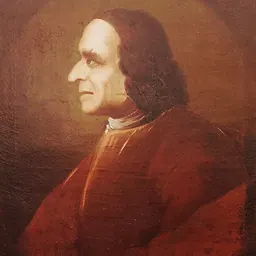





Related people
Same field, nearest in time
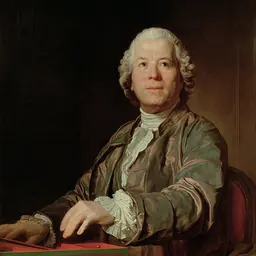
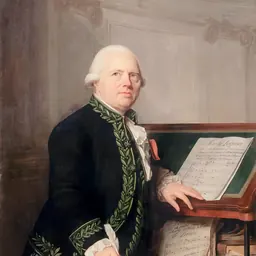
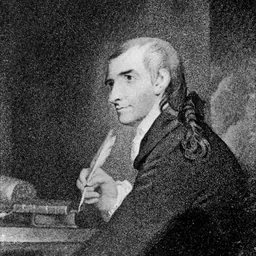

Contemporaries
People whose lives overlapped Carlo Antonio Campioni's



Frequently asked questions
Who was Carlo Antonio Campioni?
French-Italian composer
When was Carlo Antonio Campioni born?
Carlo Antonio Campioni was born on 16 November 1720 in Lunéville.
When did Carlo Antonio Campioni die?
Carlo Antonio Campioni died on 12 April 1788 in Florence.
What was Carlo Antonio Campioni's occupation?
Carlo Antonio Campioni was a composer.
What nationality was Carlo Antonio Campioni?
Carlo Antonio Campioni was Italian.
Sources & further reading
· Wikipedia: Carlo Antonio Campioni
· DBpedia: Charles-Antoine Campion
Cite this page
APA: Biography.guide. (2026). Carlo Antonio Campioni. https://biography.guide/carlo-antonio-campioni/
MLA: "Carlo Antonio Campioni." Biography.guide, https://biography.guide/carlo-antonio-campioni/.
Chicago: "Carlo Antonio Campioni." Biography.guide. https://biography.guide/carlo-antonio-campioni/.
Data last updated: 2026-09-20 · Spot an error? Report a correction.
Page generated 2026-09-27 04:59 UTC