
About Giuseppe Tartini
Lived 1692 – 1770 (aged 77). Giuseppe Tartini was an Italian composer, musicologist, music theorist, violinist and music educator.
Giuseppe Tartini (8 April 1692 – 26 February 1770) was an Italian composer and violinist of the Baroque era born in Pirano in the Republic of Venice (now Piran, Slovenia). Tartini was a prolific composer, composing over a hundred pieces for the violin, the majority of them violin concertos. He is best remembered for his Violin Sonata in G Minor (the Devil's Trill Sonata).
Early life
Tartini was born on 8 April 1692 in Pirano (today Piran in Slovenia), a town on the peninsula of Istria, in the Republic of Venice to Gianantonio – native of Florence – and Caterina Zangrando, a descendant of one of the oldest aristocratic Piranese families.
It appears Tartini's parents intended him to become a Franciscan friar and, in this way, he received basic musical training. Tartini studied violin first at the collegio delle Scuole Pie in Capodistria (today Koper).
Tartini's skill improved tremendously and, in 1721, he was appointed Maestro di Cappella at the Basilica di Sant'Antonio in Padua, with a contract that allowed him to play for other institutions if he wished. In Padua, he met and befriended fellow composer and theorist Francesco Antonio Vallotti. Between 1723 and 1725 he was in Prague, where he was master of the chapel of the Count Kinsky. a solo violin sonata that requires a number of technically demanding double stop trills and is difficult even by modern standards. According to a legend embroidered upon by Madame Blavatsky, Tartini was inspired to write the sonata by a dream in which the Devil appeared at the foot of his bed playing the violin.
Almost all of Tartini's works are violin concerto (at least 135) and violin sonatas (at least 100). Tartini's compositions include some sacred works such as a Miserere, composed between 1739 and 1741 at the request of Pope Clement XII, and a Stabat Mater, composed in 1769. He also composed trio sonatas and a sinfonia in A. Cataloguing Tartini's compositions is a challenge for scholars and editors. Tartini never dated his manuscripts, and revised works that had been completed or even published long before, making it difficult to determine when a work was written, when it was revised, and the extent of the revisions. The scholars Minos Dounias and Paul Brainard have attempted to divide Tartini's works into periods based entirely on the stylistic characteristics of the music.
Sixty-two manuscripts with compositions of Tartini are housed at the Biblioteca comunale Luciano Benincasa in Ancona.
Luigi Dallapiccola wrote a piece called Tartiniana based on various themes by Tartini.
Theoretical work In addition to his work as a composer, Tartini was a music theorist, of a very practical bent. He is credited with the discovery of sum and difference tones, an acoustical phenomenon of particular utility on string instruments (intonation of double-stops can be judged by careful listening to the difference tone, the "terzo suono"). He published his discoveries in a treatise "Trattato di musica secondo la vera scienza dell'armonia" (Padua, 1754). His treatise on ornamentation was eventually translated into French — though when its influence was rapidly waning, in 1771 — by a certain "P. Denis", whose introduction called it "unique"; indeed, it was the first published text devoted entirely to ornament and, though it was all but forgotten, as only the printed edition survived, has provided first-hand information on violin technique for modern historically informed performances, once it was published in English translation by Sol Babitz in 1956. Of greater assistance to such performance was Erwin Jacobi's published edition. In 1961, Jacobi published a tri-lingual edition consisting of the French (basis of the following two), English (translation by Cuthbert Girdlestone), plus Jacobi's own translation into German (Giuseppe Tartini. "Traité des agréments de la musique", trans. and ed. Erwin Jacobi. Celle: Hermann Moeck Verlag, 1961). Of significant import, Jacobi's edition also includes a facsimile of the original Italian found in Venice in 1957, copied in the hand of Giovanni Nicolai (one of Tartini's best-known students) and includes an opening section on bowing and a closing section on how to compose cadenzas not previously known. Another copy (though less complete) of the Italian original was found among manuscripts purchased by the University of California, Berkeley in 1958, a collection that also included numerous ornamented versions of slow movements of concertos and sonatas, written in Tartini's hand. Minnie Elmer analyzed these ornamented versions in her master's thesis at UC, Berkeley in 1959 (Minnie Elmer. "The Improvised Ornamentation of Giuseppe Tartini". Unpublished M.A. thesis. Berkeley, 1959).
Publications
Fictional portrayal Tartini is mentioned in Madame Blavatsky's "The Ensouled Violin", a short story included in the collection Nightmare Tales.
The folklore of the "Devil's violin", classically exemplified by a similar story told of Niccolò Paganini, is widespread; it is an instance of the deal with the devil. A modern variant is the country song The Devil Went Down to Georgia; the PBS segment on violin in its series "Art" was titled "Art of violin: the devil's instrument".
Tartini's The Devil's Trill is the signature work of a central character in Daniel Silva's The English Assassin. Anna Rolfe, the daughter of a Swiss banker, is a famous violinist and the sonata features prominently in the novel. The story of Tartini's inspirational dream is told. The story also forms the basis of the mystery novel, "The Devil's Trill," by violinist and author Gerald Elias, published by St. Martin's Press (2009), reissued by Level Best Books (2021), and made into an audiobook produced by Alison Larkin Presents (2017) with Elias performing the sonata.{Gerald Elias, 2026} 300914
Tartini's "The Devil's Trill" is also featured in the Japanese anime Descendants of Darkness (Yami no Matsuei). The three-part story is also named after the composition.
Don’t just read it —
keep it.
Full-length biographies made to live with: read them, listen on the way to work, watch them tonight.
- E-book
- Audio
- Video
Instant download · yours to keep · every purchase keeps this site free
Important facts
People in Giuseppe Tartini's life
Named in this biography and alive at the same time
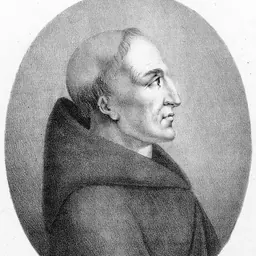
Related people
Same field, nearest in time



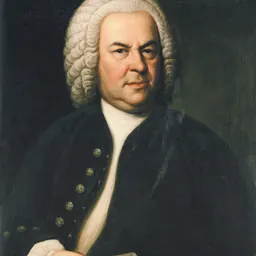

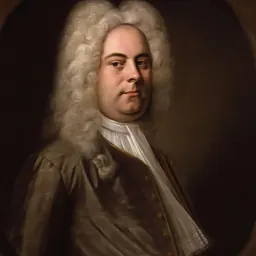
Contemporaries
People whose lives overlapped Giuseppe Tartini's




Frequently asked questions
Who was Giuseppe Tartini?
Italian composer and violinist (1692-1770)
When was Giuseppe Tartini born?
Giuseppe Tartini was born on 8 April 1692 in Piran.
When did Giuseppe Tartini die?
Giuseppe Tartini died on 26 February 1770 in Padua, Trieste.
What was Giuseppe Tartini's occupation?
Giuseppe Tartini was a composer, musicologist, music theorist, violinist and music educator.
What nationality was Giuseppe Tartini?
Giuseppe Tartini was Italian.
Sources & further reading
Cite this page
APA: Biography.guide. (2026). Giuseppe Tartini. https://biography.guide/giuseppe-tartini/
MLA: "Giuseppe Tartini." Biography.guide, https://biography.guide/giuseppe-tartini/.
Chicago: "Giuseppe Tartini." Biography.guide. https://biography.guide/giuseppe-tartini/.
Data last updated: 2026-09-25 · Spot an error? Report a correction.
Page generated 2026-09-27 05:12 UTC