
About Henri Desmarets
Lived 1661 – 1741 (aged 80). Henri Desmarets was a French composer, choreographer and musician.
Henri Desmarets (; February 1661 – 7 September 1741) was a French composer of the Baroque period primarily known for his stage works, although he also composed sacred music as well as secular cantatas, songs and instrumental works.
Biography
Early years and first successes
Henri Desmarets was born into a modest Paris household in February 1661. His mother, Madeleine née Frottier, came from a bourgeois Parisian family. His father, Hugues Desmarets was a huissier in the cavalry at the Grand Châtelet. Desmarets' childhood was marked by his father's death when he was eight years old, his mother's subsequent remarriage in 1670, and the death of his two siblings. In 1674, he entered into the service of King Louis XIV as a page and choir singer in the Chapelle Royale (Chapel Royal). According to Duron and Ferraton, he may have also previously sung as a choir boy in Saint-Germain l'Auxerrois which was the parish church of the kings of France. While in the service of the king, he received a general education as well as music training from Pierre Robert and Henry Du Mont. He is also thought to have received training from the court composer Jean-Baptiste Lully, who used the chapel pages as performers in his operas. By 1680 he had become an "ordinaire de la musique du roi" (court musician) and had composed the first of his grand motets (Te Deum 1678). The idyll-ballet which he composed in August 1682 to celebrate the birth of the king's grandson, the Duke of Burgundy, found great favour at court and the following year he entered the competition to select four maîtres (masters) of the Chapelle Royale. He was only 22 at the time and according to some accounts, the King had vetoed his selection after he had passed the first round on account of his youth.
After the competition, Desmarets petitioned the king to allow him to leave France for study with Italian composers, but Lully objected on the grounds that it would diminish his command of the French style. Desmarets remained at the court and made money by "ghost-writing" works for one of the composers who had won the competition, Nicolas Goupillet. Goupillet was dismissed from his post ten years later when the deception came to light. In the meantime, Desmarets continued to find favour with his own compositions, most notably his motet Beati quorum (1683); his divertissement, La Diane de Fontainebleau (1686) and his first full-length opera, Endymion (1686). The first performance of Endymion was in the king's private apartments at Versailles, performed in parts over six days. The Dauphine was so pleased with it that at her request it was performed again in its entirety at the court theatre ten days later.
Stage works Idylle sur la naissance du duc de Bourgogne, idyll-ballet, text by Antoinette Deshoulières, 1682 (music lost) Endymion, opera (tragédie en musique) in 5 acts and a prologue, first performed at Versailles in separate parts between 16 and 23 February 1686 (lost) La Diane de Fontainebleau, divertissement, libretto by Antoine Maurel, first performed at Fontainebleau 2 November 1686 Didon, opera (tragédie en musique) in 5 acts and a prologue, libretto by Louise-Geneviève Gillot de Saintonge, first performed at the Académie Royale de Musique 5 June 1693 (reprised 11 September in the presence of Louis, Grand Dauphin) Circé, opera (tragédie en musique) in 5 acts and a prologue, libretto by Louise-Geneviève Gillot de Saintonge, first performed at the Académie Royale de Musique on 1 October 1694 Théagène et Chariclée, opera (tragédie en musique) in 5 acts and a prologue, libretto by Joseph-François Duché de Vancy, first performed at the Académie Royale de Musique on 12 April 1695 Les amours de Momus, opéra-ballet in 3 acts and a prologue, story by Duché de Vancy, first performed at the Académie Royale de Musique on 12 June 1695 Vénus et Adonis, opera (tragédie en musique) in 5 acts and a prologue, libretto by Jean-Baptiste Rousseau, first performed at the Académie Royale de Musique on 28 July 1697 Les festes galantes, opéra-ballet in 3 acts and a prologue, story by Duché de Vancy, first performed at the Académie Royale de Musique on 10 May 1698 Divertissement celebrating the marriage of Philip V of Spain and Maria Luisa of Savoy, libretto by Louise-Geneviève Gillot de Saintonge, first performed in Barcelona in October 1701 (lost) Iphigénie en Tauride, opera (tragédie en musique) in 5 acts and a prologue (completed by Campra), libretto by Duché de Vancy and Antoine Danchet, first performed at the Académie Royale de Musique 6 May 1704 Renaud, ou La suite d’Armide, opera (tragédie en musique) in 5 acts and a prologue, libretto by Simon-Joseph Pellegrin, first performed 5 March 1722
Cantatas Le couronnement de la reine par la déesse Flore, text by Marchal, 1724 (music lost) Clytie, 1724 (music lost) Le lys heureux époux, text by Marchal, 1724 (music lost) La toilette de Vénus, text by Charles-Jean-François Hénault (date unknown, music lost)
Anthems
De profundis Te Deum from Paris Te Deum from Lyon Veni Creator Cum invocarem Deus in adjutorium Quemadmodum desiderat Beati omnes Nisi Dominus Exaudiat te Dominus Usquequo Domine from Lyon Lauda Jerusalem
Don’t just read it —
keep it.
Full-length biographies made to live with: read them, listen on the way to work, watch them tonight.
- E-book
- Audio
- Video
Instant download · yours to keep · every purchase keeps this site free
Important facts
People in Henri Desmarets's life
Named in this biography and alive at the same time

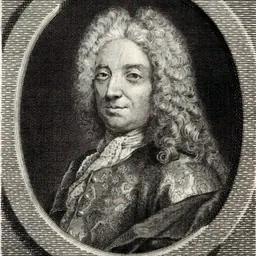





Related people
Same field, nearest in time
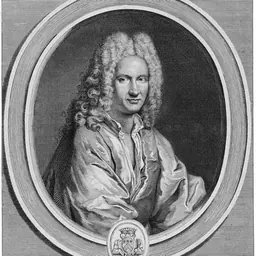

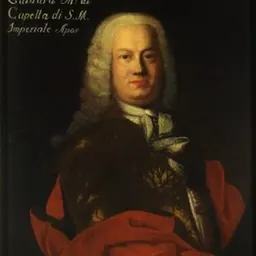
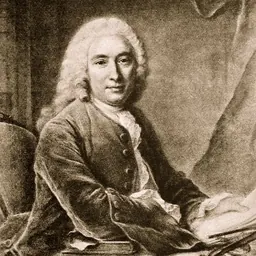
Contemporaries
People whose lives overlapped Henri Desmarets's



Frequently asked questions
Who was Henri Desmarets?
French composer (1661-1741)
When was Henri Desmarets born?
Henri Desmarets was born on 1 February 1661 in Paris.
When did Henri Desmarets die?
Henri Desmarets died on 7 September 1741 in Lunéville.
What was Henri Desmarets's occupation?
Henri Desmarets was a composer, choreographer and musician.
What nationality was Henri Desmarets?
Henri Desmarets was French.
Sources & further reading
Cite this page
APA: Biography.guide. (2026). Henri Desmarets. https://biography.guide/henri-desmarets/
MLA: "Henri Desmarets." Biography.guide, https://biography.guide/henri-desmarets/.
Chicago: "Henri Desmarets." Biography.guide. https://biography.guide/henri-desmarets/.
Data last updated: 2026-09-20 · Spot an error? Report a correction.
Page generated 2026-09-27 05:03 UTC