
About Jean-Baptiste Lully
Lived 1632 – 1687 (aged 54). Jean-Baptiste Lully was a French and Italian composer, conductor, choreographer, violinist, music educator and ballet dancer.
Jean-Baptiste Lully (born Giovanni Battista Lulli; – 22 March 1687) was an Italian-French composer, dancer and instrumentalist, who is considered a master of the French Baroque music style. Best known for his operas, he spent most of his life working in the court of Louis XIV and became a French subject in 1661. He was a close friend of the playwright Molière, with whom he collaborated on numerous comédie-ballets, including L'Amour médecin, George Dandin ou le Mari confondu, Monsieur de Pourceaugnac, Psyché and his best known work, Le Bourgeois gentilhomme.
Biography
Lully was born on November 28 or 29, 1632, in Florence, Grand Duchy of Tuscany, to Lorenzo Lulli and Caterina Del Sera, a Tuscan family of millers. His general education and his musical training during his youth in Florence remain uncertain, but his adult handwriting suggests that he manipulated a quill pen with ease. He used to say that a Franciscan friar gave him his first music lessons and taught him guitar. He also learned to play the violin. In 1646, dressed as Harlequin during Mardi Gras and amusing bystanders with his clowning and his violin, the boy attracted the attention of Roger de Lorraine, chevalier de Guise, son of Charles, Duke of Guise, who was returning to France and was looking for someone to converse in Italian with his niece, Mademoiselle de Montpensier (la Grande Mademoiselle). Guise took the boy to Paris, where the fourteen-year-old entered Mademoiselle's service; from 1647 to 1652 he served as her "chamber boy" (garçon de chambre). He probably honed his musical skills by working with Mademoiselle's household musicians and with composers Nicolas Métru, François Roberday and Nicolas Gigault. The teenager's talents as a guitarist, violinist, and dancer quickly won him the nicknames "Baptiste", and "le grand baladin" (great street-artist).
When Mademoiselle was exiled to the provinces in 1652 after the rebellion known as the Fronde, Lully "begged his leave ... because he did not want to live in the country." The princess granted his request.
By February 1653, Lully had attracted the attention of young Louis XIV, dancing with him in the Ballet royal de la nuit. By March 16, 1653, Lully had been made royal composer for instrumental music. His vocal and instrumental music for court ballets gradually made him indispensable. In 1660 and 1662 he collaborated on court performances of Francesco Cavalli's Xerse and Ercole amante. When Louis XIV took over the reins of government in 1661, he named Lully superintendent of the royal music and music master of the royal family. In December 1661, the Florentine was granted letters of naturalization. Thus, when he married Madeleine Lambert (1643–1720), the daughter of the renowned singer and composer Michel Lambert in 1662, Giovanni Battista Lulli declared himself to be "Jean-Baptiste Lully, escuyer squire , son of Laurent de Lully, gentilhomme Florentin [Florentine gentleman]". The latter assertion of high birth was an untruth. The couple had six children who survived past childhood: Catherine-Madeleine, Louis, Jean-Baptiste, Gabrielle-Hilarie, Jean-Louis and Louis-Marie.
From 1661 on, the trios and dances he wrote for the court were promptly published. As early as 1653, Louis XIV made him director of his personal violin orchestra, known as the Petits Violons ("Little Violins"), which was proving to be open to Lully's innovations, as contrasted with the Twenty-Four Violins or Grands Violons ("Great Violins"), who only slowly were abandoning the polyphony and divisions of past decades. When he became surintendant de la musique de la chambre du roi in 1661, the Great Violins also came under Lully's control. He relied mainly on the Little Violins for court ballets.
Lully's collaboration with the playwright Molière began with in 1661, when Lully provided a single sung courante, added after the work's premiere at Nicolas Fouquet's sumptuous chateau of Vaux-le-Vicomte. Their collaboration began in earnest in 1664 with Le Mariage forcé. More collaborations followed, some of them conceived for fetes at the royal court, and others taking the form of incidental music (intermèdes) for plays performed at command performances at court and also in Molière's Parisian theater.
In 1672, Lully broke with Molière, who turned to Marc-Antoine Charpentier. Having acquired Pierre Perrin's opera privilege, Lully became the director of the Académie Royale de Musique, that is, the royal opera, which performed in the Palais-Royal. Between 1673 and 1687, he produced a new opera almost yearly and fiercely protected his monopoly over that new genre.
After Queen Marie-Thérèse's death in 1683 and the king's secret marriage to Mme de Maintenon, devotion came to the fore at court. The king's enthusiasm for opera dissipated; he was annoyed by Lully's dissolute life and homosexual encounters. Lully had avoided getting too close to the secret homosexual grouping that had gathered in the court around the Duc de Vendôme, the Comte de Tallard and the Duc de Gramont. But in 1685 he was accused of improper relations with a page boy living in his household called Brunet. Brunet was removed after a police raid, and Lully escaped punishment. However, to show his general displeasure, Louis XIV made a point of not inviting Lully to perform Armide at Versailles the following year.
Lully was not known for his gentleness; historian Rupert Hughes writes that "his temper was enforced by a ruthless brutality," noting that he disinherited his own son. In one episode reported by biographer François-Joseph Fétis, Lully discovered that his chorister Marie Le Rochois was pregnant. Enraged that this might interfere with the debut of Armide, he kicked her stomach until she miscarried.
Lully died from gangrene, having struck his foot with his long conducting staff during a performance of his Te Deum to celebrate Louis XIV's recovery from surgery. He refused to have his toe amputated. This resulted in gangrene propagating through his body and ultimately infecting the greater part of his brain, causing his death. He died in Paris and was buried in the church of Notre-Dame-des-Victoires, where his tomb with its marble bust can still be seen. All three of his sons (Louis Lully, Jean-Baptiste Lully fils, and Jean-Louis Lully) had musical careers as successive surintendants of the King's Music.
Lully himself was posthumously given a conspicuous place on Titon du Tillet's Parnasse François ("the French Mount Parnassus"). In the engraving, he stands to the left, on the lowest level, his right arm extended and holding a scroll of paper with which to beat time. (The bronze ensemble has survived and is part of the collections of the Museum of Versailles.) Titon honored Lully as:
Music, style and influence Lully's music was written during the Middle Baroque period, 1650 to 1700. Typical of Baroque music is the use of the basso continuo as the driving force behind the music. The pitch standard for the French opera at the time was about 392 Hz for A above middle C, a whole tone lower than modern practice where A is usually 440 Hz.
Lully's music is known for its power, liveliness in its fast movements and its deep emotional character in its slower movements. Some of his most popular works are his (passacaglias) and chaconnes, which are dance movements found in many of his works such as Armide or Phaëton.
The influence of Lully's music produced a radical revolution in the style of the dances of the court itself. In the place of the slow and stately movements which had prevailed until then, he introduced lively ballets of rapid rhythm, often based on well-known dance types such as gavottes, menuets, rigaudons and sarabandes.
Through his collaboration with playwright Molière, a new music form emerged during the 1660s: the comédie-ballet which combined theater, comedy, incidental music and ballet. The popularity of these plays, with their sometimes lavish special effects, and the success and publication of Lully's operas and its diffusion beyond the borders of France, played a crucial role in synthesizing, consolidating and disseminating orchestral organization, scorings, performance practices, and repertory.
Portrait of Several Musicians and Artists by François Puget. The two main figures have been identified as Lully and the librettist Philippe Quinault. (Louvre)
The instruments in Lully's music were: five voices of strings such as dessus (a higher range than soprano), haute-contre (the instrumental equivalent of the high tenor voice by that name), taille (baritenor), quinte, and basse, divided as follows: one voice of violins, three voices of violas, one voice of cello, and basse de viole (viole, viola da gamba). He also utilized guitar, lute, archlute, theorbo, harpsichord, organ, oboe, bassoon, recorder, flute, brass instruments (natural trumpet) and various percussion instruments (castanets, timpani).
He is often credited with introducing new instruments into the orchestra, but this legend needs closer scrutiny. He continued to use recorders in preference to the newer transverse flute, and the "hautbois" he used in his orchestra were transitional instruments, somewhere between shawms and so-called Baroque oboes.
Lully's works
Sacred music Lully's grand motets were written for the royal chapel, usually for vespers or for the King's daily Low Mass. Lully did not invent the genre, he built upon it. Grand motets often were psalm settings, but for a time during the 1660s Lully used texts written by Pierre Perrin, a neo-Latin poet. Lully's petit motets were probably composed for the nuns at the convent of the Assumption, rue Saint-Honoré.
Motets à deux chœurs pour la Chapelle du roi, published 1684 Miserere, at court, winter 1664 Plaude laetare, text by Perrin, April 7, 1668 Te Deum, at Fontainebleau, September 9, 1677 De profundis, May 1683 Dies irae, 1683 Benedictus Domine salvum fac regem, grand motet Exaudiat te Dominus, grand motet, 1687 Jubilate Deo, grand motet, 1660? Notus in Judea Deux, grand motet O lacrymae, grand motet, text by Perrin, at Versailles, 1664 Quare fremuerunt, grand motet, at Versailles, April 19, 1685 Petits motets: Anima Christi; Ave coeli manus, text by Perrin; Dixit Dominus; Domine salvum; Laudate pueri; O dulcissime Domine; Omnes gentes; O sapientia; Regina coeli; Salve regina
Ballets de cour When Lully began dancing and composing for court ballets, the genre blossomed and markedly changed in character. At first, as composer of instrumental music for the King's chamber, Lully wrote overtures, dances, dance-like songs, descriptive instrumental pieces such as combats, and parody-like récits with Italian texts. He was so captivated by the French overture that he wrote four of them for the Ballet d'Alcidiane.
The development of his instrumental style can be discerned in his chaconnes. He experimented with all types of compositional devices and found new solutions that he later exploited to the full in his operas. For example, the chaconne that ends the Ballet de la Raillerie (1659) has 51 couplets plus an extra free part; in Le Bourgeois gentilhomme (1670) he added a vocal line to the chaconne for the Scaramouches.
The first menuets appear in the Ballet de la Raillerie (1659) and the Ballet de l'Impatience (1661). In Lully's ballets one can also see the emergence of concert music, for example, pieces for voice and instruments that could be excerpted and performed alone and that prefigure his operatic airs: "Bois, ruisseau, aimable verdure" from the Ballet des saisons (1661), the lament "Rochers, vous êtes sourds" and Orpheus's sarabande "Dieu des Enfers", from the Ballet de la naissance de Vénus (1665).
Ballet du Temps, text by Benserade, at Louvre, November 30, 1654 Ballet des plaisirs, text by Benserade, at Louvre, February 4, 1655 Le Grand Ballet des Bienvenus, text by Benserade, at Compiègne, May 30, 1655 Le Ballet de la Revente des habits, text by Benserade, at court, January 6, 1655 (or 1661?) Ballet of Psyché ou de la puissance de l'Amour, text by Benserade, at Louvre, January 16, 1656 La Galanterie du temps, mascarade, anonymous text, February 14, 1656 L'Amour malade, text by Buti, at Louvre, January 17, 1657 Ballet royal d'Alcidiane, Benserade, at court, February 14, 1658 Ballet de la Raillerie, text by Benserade, at court, February 19, 1659 six ballet entrées serving as intermèdes to Cavalli's Xerse, at Louvre, November 22, 1660 Ballet mascarade donné au roi à Toulouse, April 1660 Ballet royal de l'impatience, text by Buti, at Louvre, February 19, 1661 Ballet des Saisons, text by Benserade, at Fontainebleau, July 23, 1661 ballet danced between the acts of Hercule amoureux, text by Buti, at Tuileries, February 7, 1662 Ballet des Arts, text by Benserade, at Palais-Royal, January 8, 1663 Les Noces du village, mascarade ridicule, text by Benserade, at Vincennes, October 3, 1663 Les Amours déguisés, text by Périgny, at Palais-Royal, February 13, 1664 incidental music between the acts of Oedipe, play by Pierre Corneille, Fontainebleau, August 3, 1664 Mascarade du Capitaine ou l'Impromptu de Versailles, anonymous text, at Palais-Royal, 1664 or February 1665 Ballet royal de la Naissance de Vénus, text by Benserade, at Palais-Royal, January 26, 1665 Ballet des Gardes ou des Délices de la campagne, anonymous text, 1665 Le Triomphe de Bacchus, mascarade, anonymous text, at court, January 9, 1666 Ballet des Muses, Benserade, at St-Germain-en-Laye, 1666 Le Carnaval, mascarade, text by Benserade, at Louvre, January 18, 1668 Ballet royal de Flore, text by Benserade, at Tuileries, February 13, 1669 Le Triomphe de l'Amour, text by Benserade and Quinault, at St-Germain-en-Laye, December 2, 1681 Le Temple de la Paix, text by Quinault, at Fontainebleau, October 20, 1685
Music for the theater (intermèdes) Intermèdes became part of a new genre, the comédie-ballet, in 1661, when Molière described them as "ornaments which have been mixed with the comedy" in his preface to . "Also, to avoid breaking the thread of the piece by these interludes, it was deemed advisable to weave the ballet in the best manner one could into the subject, and make but one thing of it and the play." The music for the premiere of Les Fâcheux was composed by Pierre Beauchamp, but Lully later provided a sung courante for act 1, scene 3. With and La Princesse d'Élide (1664), intermèdes by Lully began to appear regularly in Molière's plays: for those performances there were six intermèdes, two at the beginning and two at the end, and one between each of the three acts. Lully's intermèdes reached their apogee in 1670–1671, with the elaborate incidental music he composed for Le Bourgeois gentilhomme and Psyché. After his break with Molière, Lully turned to opera; but he collaborated with Jean Racine for a fete at Sceaux in 1685, and with Campistron for an entertainment at Anet in 1686.
Most of Molière's plays were first performed for the royal court.
Les Fâcheux, play by Molière, at Vaux-le-Vicomte, August 17, 1661 Le Mariage forcé, ballet, play by Molière, at Louvre, January 29, 1664 Les Plaisirs de l'Isle enchantée, play by Molière, at Versailles, May 7–12, 1664 L'Amour médecin, comédie-ballet, play by Molière, at Versailles, September 14, 1665 La Pastorale comique, play by Molière, at St-Germain-en-Laye, January 5, 1667 Le Sicilien, play by Molière, at St-Germain-en-Laye, February 14, 1667 Le Grand Divertissement royal de Versailles (Georges Dandin), play by Molière, at Versailles, August 18, 1668 La Grotte de Versailles, eclogue in music, play by Quinault, April (?) 1668 Le Divertissement de Chambord (Monsieur de Pourceaugnac), play by Molière, at Chambord, October 6, 1669 Le Divertissement royal (Les Amants magnifiques), play by Molière, at St-Germain-en-Laye, February 7, 1670 Le Bourgeois gentilhomme, comédie-ballet, play by Molière, at Chambord, October 14, 1670 Idylle sur la Paix, text by Racine, at Sceaux, July 16, 1685
Operas
With five exceptions, each of Lully's operas was described as a tragédie mise en musique, or tragedy set to music. The exceptions were: Bellérophon, Cadmus et Hermione, and Psyché, each called simply a tragédie; and Les fêtes de l'Amour et de Bacchus, described as a pastorale, and Acis et Galathée, which is a pastorale héroïque. (The term tragédie lyrique came later.)
With Lully, the point of departure was always a verse libretto, in most cases by the verse dramatist Philippe Quinault. For the dance pieces, Lully would hammer out rough chords and a melody on the keyboard, and Quinault would invent words. For the recitative, Lully imitated the speech melodies and dramatic emphasis used by the best actors in the spoken theater. His attentiveness to transferring theatrical recitation to sung music shaped French opera and song for a century.
Unlike Italian opera of the day, which was rapidly moving toward opera seria with its alternating recitative and da capo airs, in Lully's operas the focus was on drama, expressed by a variety of vocal forms: monologs, airs for two or three voices, rondeaux and French-style da capo airs where the chorus alternates with singers, sung dances, and vaudeville songs for a few secondary characters. In like manner the chorus performed in several combinations: the entire chorus, the chorus singing as duos, trios or quartets, the dramatic chorus, the dancing chorus.
The intrigue of the plot culminated in a vast tableau, for example, the sleep scene in Atys, the village wedding in Roland, or the funeral in Alceste. Soloists, chorus and dancers participated in this display, producing astonishing effects thanks to machinery. In contrast to Italian opera, the various instrumental genres were present to enrich the overall effect: French overture, dance airs, rondeaux, marches, "simphonies" that painted pictures, preludes, ritournelles. Collected into instrumental suites or transformed into trios, these pieces had enormous influence and affected instrumental music across Europe.
The earliest operas were performed at the indoor Bel Air tennis court (on the grounds of the Luxembourg Palace) that Lully had converted into a theater. The first performance of later operas either took place at court, or in the theater at the Palais-Royal, which had been made available to Lully's Academy. Once premiered at court, operas were performed for the public at the Palais-Royal. Psyché, tragi-comedy, Molière, play by Pierre Corneille and Quinault, at the Théâtre des Tuileries, January 17, 1671 Les Fêtes de l'Amour et de Bacchus, pastoral, text by Quinault, Molière and Périgny, at the Salle du Bel-Air, a converted tennis court (jeu de paume), November 15 (?), 1672 Cadmus et Hermione, tragedy by Quinault, at tennis court (jeu de paume) of Bel-Air, April 27 (?), 1673 Alceste ou le Triomphe d'Alcide, tragedy by Quinault, at tennis court (jeu de paume) of Bel-Air, January 19, 1674 Thésée, tragedy by Quinault, at St-Germain-en-Laye, January 11, 1675 Atys, tragedy by Quinault, at St-Germain-en-Laye, January 10, 1676 Isis, tragedy by Quinault ornamented by ballet entrées, at St-Germain-en-Laye, January 5, 1677 Psyché, tragedy by Quinault, Thomas Corneille and Fontanelle, at Palais-Royal, April 19, 1678 Bellérophon, tragedy by Thomas Corneille, Fontenelle and Boileau, at Palais-Royal, January 31, 1679 Proserpine, tragedy by Quinault ornamented with ballet entrées, at St-Germain-en-Laye, February 3, 1680 Persée, tragedy by Quinault, at Palais-Royal, April 18, 1682 Phaëton, tragedy by Quinault, at Versailles, January 6, 1683 Amadis, tragedy by Quinault, at Palais-Royal, January 18, 1684 Roland, tragedy by Quinault, at Versailles (Grande Écurie), January 8, 1685 Armide, tragedy by Quinault, 1686 Acis et Galatée, pastorale héroïque, text by Campistron, chateau of Anet, September 6, 1686 Achille et Polyxène, tragedy by Campistron, completed by Colasse, at Palais-Royal, November 7 (or 23), 1687
Depictions in fiction Henry Prunières's 1929 novel La Vie illustre et libertine de Jean-Baptiste Lully (Paris: Plon) was the first 20th-century novel about Lully that raised supposed questions about the composer's "moral character." Gérard Corbiau's 2000 film Le Roi danse (The King is dancing) presents libertine and pagan Lully as a natural ally of Louis XIV in the King's conflicts with the Catholic establishment. The movie depicts Lully with a concealed romantic interest in the King. In 2011, the BBC's hit children's show Horrible Histories featured the death of Lully in the skit "Stupid Deaths" in a live show at the Prom. In 2025 the French children's show "Belfort & Lupin" featured Lully in the episode "Major Dischord."
Don’t just read it —
keep it.
Full-length biographies made to live with: read them, listen on the way to work, watch them tonight.
- E-book
- Audio
- Video
Instant download · yours to keep · every purchase keeps this site free
Important facts
People in Jean-Baptiste Lully's life
Named in this biography and alive at the same time
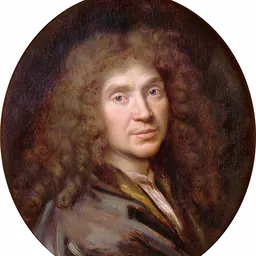
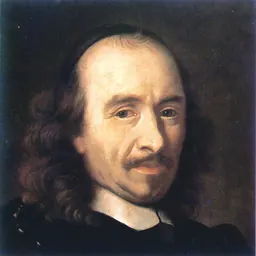

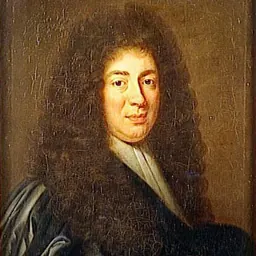


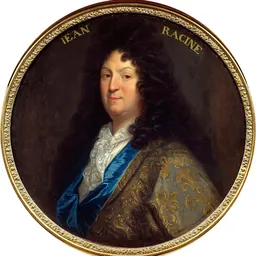

Related people
Same field, nearest in time


Contemporaries
People whose lives overlapped Jean-Baptiste Lully's





Frequently asked questions
Who was Jean-Baptiste Lully?
Italian-born French composer (1632–1687)
When was Jean-Baptiste Lully born?
Jean-Baptiste Lully was born on 28 November 1632 in Florence.
When did Jean-Baptiste Lully die?
Jean-Baptiste Lully died on 22 March 1687 in Paris.
What was Jean-Baptiste Lully's occupation?
Jean-Baptiste Lully was a composer, conductor, choreographer, violinist, music educator and ballet dancer.
What nationality was Jean-Baptiste Lully?
Jean-Baptiste Lully was French and Italian.
Sources & further reading
· Wikipedia: Jean-Baptiste Lully
· DBpedia: Jean-Baptiste Lully
Cite this page
APA: Biography.guide. (2026). Jean-Baptiste Lully. https://biography.guide/jean-baptiste-lully/
MLA: "Jean-Baptiste Lully." Biography.guide, https://biography.guide/jean-baptiste-lully/.
Chicago: "Jean-Baptiste Lully." Biography.guide. https://biography.guide/jean-baptiste-lully/.
Data last updated: 2026-09-20 · Spot an error? Report a correction.
Page generated 2026-09-27 05:09 UTC