
About Francesco Cavalli
Lived 1602 – 1676 (aged 73). Francesco Cavalli was an Italian organist, opera composer, chapelmaster, composer and conductor.
Francesco Cavalli (born Pietro Francesco Caletti-Bruni; 14 February 1602 – 14 January 1676) was a Venetian composer, organist and singer of the early Baroque period. He succeeded his teacher Claudio Monteverdi as the dominant and leading opera composer of the mid 17th-century. A central figure of Venetian musical life, Cavalli wrote more than thirty operas, almost all of which premiered in the city's theaters. His best known works include Ormindo, Giasone (1649) and La Calisto (1651).
Life Cavalli was born at Crema, then an inland province of the Venetian Republic. He became a singer (boy soprano) at St Mark's Basilica in Venice in 1616, where he had the opportunity to work under the tutorship of Claudio Monteverdi. He became second organist in 1639, first organist in 1665, and in 1668 maestro di cappella. He took the name "Cavalli" from his patron, Venetian nobleman Federico Cavalli. Though he wrote prolifically for the church, he is chiefly remembered for his operas. He began to write for the stage in 1639 (Le nozze di Teti e di Peleo) soon after the first public opera house opened in Venice, the Teatro San Cassiano. He established so great a reputation that he was summoned to Paris from 1660 (when he revived his opera Xerse) until 1662, producing his Ercole amante. He died in Venice at the age of 73.
Music and influence Cavalli was the most influential composer in the rising genre of public opera in mid-17th-century Venice. Unlike Monteverdi's early operas, scored for the extravagant court orchestra of Mantua, Cavalli's operas make use of a small orchestra of strings and basso continuo to meet the limitations of public opera houses.
Cavalli introduced melodious arias into his music and popular types into his libretti. His operas have a remarkably strong sense of dramatic effect as well as a great musical facility, and a grotesque humour which was characteristic of Italian opera down to the death of Alessandro Scarlatti. Cavalli's operas provide the only example of a continuous musical development of a single composer in a single genre from the early to the late 17th century in Venice — only a few operas by others (e.g., Monteverdi and Antonio Cesti) survive. The development is particularly interesting to scholars because opera was still quite a new medium when Cavalli began working, and had matured into a popular public spectacle by the end of his career.
More than forty-two operas have been attributed to Cavalli. Manuscript scores of twenty-six are extant, preserved in the Biblioteca Nazionale Marciana (Library of St Mark) in Venice. Scores of some of the operas also exist in other locations. In addition, the music of his two last operas (Coriolano and Masenzio), which are clearly attributed to him, is lost. Another twelve or so for which the music is lost have also been attributed to him, but these attributions have either been disproved or remain uncertain. Cristoforo Ivanovich, who published the first chronicle of Venetian opera, Minerva al tavolino (Venice, 1681), attributed most of the anonymous works from the first 15 years of public performances in Venice to Cavalli, and many of these attributions were repeated by subsequent authors. The American musicologist Thomas Walker, writing in The New Grove Dictionary of Opera, considered seven of Ivanovich's attributions and another two by other authors as doubtful.
In addition to operas, Cavalli wrote settings of the Magnificat in the grand Venetian polychoral style, settings of the Marian antiphons, other sacred music in a more conservative manner – notably a Requiem Mass in eight parts (SSAATTBB), probably intended for his own funeral – and some instrumental music. More recently, Hipermestra was performed at Glyndebourne in 2017. The discography is extensive and Cavalli has featured in BBC Radio 3's Composer of the Week series.
Operas Attributions to Cavalli considered doubtful by American musicologist Thomas Walker are indicated in the notes.
Sacred works Musiche sacre concernenti messa, e salmi concertati con istromenti, imni, antifone et sonate (Venecia, 1656). Messa, 8vv, 2 vn, vc, otros instrumentos ad libitum ed. R. Leppard (Londres, 1966). Alma redemptoris mater, 2 S, A, T, B, ed. B. Stäblein, Musica divina, iv (Regensburg, 1950). Ave maris stella, A, T, B. Ave regina caelorum, T, B, ed. B. Stäblein, Musica divina, i (Regensburg, 1950). Beatus vir, A, T, B, 2 vn, vc. Confitebor tibi Domine, 8vv, 2 vn, vc Credidi, 2 S, A, T, B, 2 vn, vc Deus tuorum militum, A, T, B, 2 vn, vc Dixit Dominus, 8vv, 2 vn, vc, other insts ad lib Domine probasti, S, A, B, 2 vn, vc Exultet orbis, 4vv, 2 vn, vc In convertendo, 2 S, A, T, B Iste confessor, 2 S, 2 vn, vc Jesu corona virginum, A, T, B, 2 vn, vc Laetatus sum, A, T, B, 2 vn, 3 va, ed. R. Leppard (London, 1969) Lauda Jerusalem, 8vv, 2 vn, vc, other insts ad lib Laudate Dominum, 8vv, 2 vn, vc, ed. R. Leppard (London, 1969) Laudate pueri, 2 S, A, T, B, 2 vn, vc Magnificat, 8vv, 2 vn, vc, other insts ad lib, ed. R. Leppard (London, 1969) Nisi Dominus, 4vv, 2 vn, vc Regina caeli, A, T, B, ed. B. Stäblein, Musica divina, ii (Regensburg, 1950) Salve regina, A, 2 T, B, ed. B. Stäblein, Musica divina, iii (Regensburg, 1950) Canzoni [sonate] a 3, 4, 6, 8, 10, 12; a 6 y a 12 ed. R. Nielsen (Bologna, 1955) Vesperi, 8vv, bc (Venice, 1675) Vespero della B.V. Maria: Dixit Dominus; Laudate pueri; Laetatus sum; Nisi Dominus; Lauda Jerusalem; Magnificat. ed. G. Piccioli (Milan, 1960); ed. F. Bussi (Milan, 1995) Vespero delle domeniche: Dixit Dominus; Confitebor; Beatus vir; Laudate pueri; In exitu Israel; Laudate Dominum; Credidi; In convertendo; Domine probasti; Beati omnes; De profundis; Memento; Confitebor angelorum; Magnificat, ed. G. Piccioli (Milan, 1960); all ed. F. Bussi (Milan, 1995) Vespero delle cinque Laudate ad uso della cappella di S Marco: Laudate pueri; Laudate Dominum laudate eum; Lauda anima mea; Laudate Dominum quoniam bonus; Lauda Jerusalem; Magnificat, ed. G. Piccioli (Milan, 1960); all ed. F. Bussi (Milan, 1995) Cantate Domino, 1v, bc, 16252; ed. F. Vatielli, Antiche cantate spirituali (Turin, 1922) O quam suavis, 1v, bc, 16453 Magnificat, 6vv, 2 vn, bc, 16505; ed. F. Bussi (Milan, 1988) In virtute tua, 3vv, bc, 16561 O bone Jesu, 2vv, bc, 16561 Plaudite, cantate, 3vv, bc, 16561 Missa pro defunctis [Requiem], 8vv, bc, D-Bsb, Dlb; ed. F. Bussi (Milan, 1978)
Don’t just read it —
keep it.
Full-length biographies made to live with: read them, listen on the way to work, watch them tonight.
- E-book
- Audio
- Video
Instant download · yours to keep · every purchase keeps this site free
Important facts
People in Francesco Cavalli's life
Named in this biography and alive at the same time
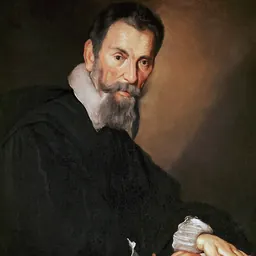

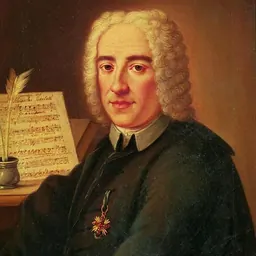
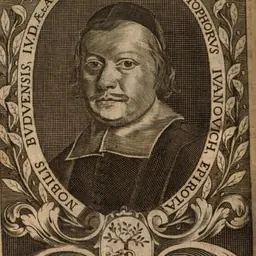

Related people
Same field, nearest in time
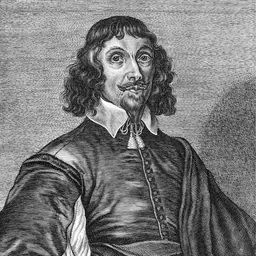
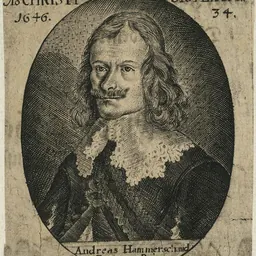
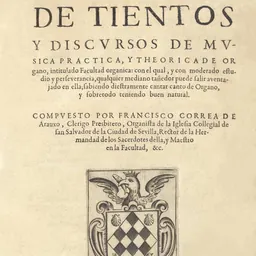
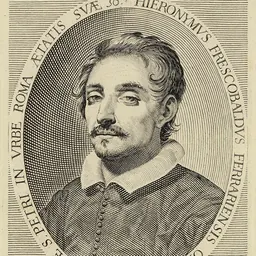
Contemporaries
People whose lives overlapped Francesco Cavalli's





Frequently asked questions
Who was Francesco Cavalli?
Italian composer (1602–1676)
When was Francesco Cavalli born?
Francesco Cavalli was born on 14 February 1602 in Crema.
When did Francesco Cavalli die?
Francesco Cavalli died on 14 January 1676 in Venice.
What was Francesco Cavalli's occupation?
Francesco Cavalli was an organist, opera composer, chapelmaster, composer and conductor.
What nationality was Francesco Cavalli?
Francesco Cavalli was Italian.
Sources & further reading
· Wikipedia: Francesco Cavalli
Cite this page
APA: Biography.guide. (2026). Francesco Cavalli. https://biography.guide/francesco-cavalli/
MLA: "Francesco Cavalli." Biography.guide, https://biography.guide/francesco-cavalli/.
Chicago: "Francesco Cavalli." Biography.guide. https://biography.guide/francesco-cavalli/.
Data last updated: 2026-09-20 · Spot an error? Report a correction.
Page generated 2026-09-27 05:21 UTC