
Princess Isabella of Parma
Archduchess of Austria
About Princess Isabella of Parma
Lived 1741 – 1763 (aged 21). Princess Isabella of Parma was a Spanish.
Isabella of Bourbon-Parma (, , ; 31 December 1741 – 27 November 1763) was a princess of Parma and infanta of Spain from the House of Bourbon-Parma as the daughter of Philip, Duke of Parma, and Louise-Élisabeth of France. She became an archduchess of Austria and crown princess of Bohemia and Hungary in 1760 by her marriage to Archduke Joseph of Austria, the future Joseph II, Holy Roman Emperor (she never became empress due to her early death). As a granddaughter of King Louis XV of France, she was the first cousin of future French kings Louis XVI, Louis XVIII, and Charles X.
Secretly an Enlightenment thinker, she was a prolific writer on philosophy, religion, ethics, politics, diplomacy, military theory, world trade, education and childrearing, human culture and societies, and the position of women. In secret essays, she argued for the intellectual equality of women. None of her writings were published in her life. Her Méditations chrétiennes (“Christian Meditations”) were published in 1764, the year after her death. Some of her personal correspondence and other works have been published by biographers and historians.
Although her husband loved her, she did not fully return his feelings and found more fulfillment in her (likely romantic, possibly sexual) relationship with her sister-in-law, Archduchess Maria Christina. Despite her popularity at the Viennese court, she was unhappy because of the guilt of being unable to reciprocate her husband's feelings, compounded by the same-sex attraction that she considered sinful. A lonely childhood with demanding and unaffectionate caretakers, the sudden loss of her mother, a difficult birth and two miscarriages in the span of ten months, and later a fourth pregnancy all adversely affected her physical and mental health. She was described as melancholic and experienced suicidal ideation. Biographers have suggested that she suffered from depression or bipolar disorder, to which she was likely genetically predisposed. She died at the age of 21 from smallpox.
Early life
Birth and family Infanta Isabel María Luisa Antonieta of Spain was born on 31 December 1741 at Buen Retiro Palace in Madrid as the first child of Infante Philip of Spain and his wife, Louise-Élisabeth of France (known as “Madame Infante”), both from the House of Bourbon.
Isabella (right) with her cousin Maria Isabel Ana of Naples and Sicily on The Family of Philip V by Louis Michel van Loo.
Isabella's parents were first cousins once removed with an age difference of six years (her mother had been twelve and her father eighteen years old when they married). Madame Infante was the eldest daughter of Louis XV of France and Queen Marie Leszczyńska. She and her contemporaries thought that she should only marry a (future) monarch, yet the Infante Philip was only Philip V of Spain's third son. Madame Infante was ambitious and strong-willed, unlike her husband. She worked through her international connections to secure a higher position for herself and her husband and more power for the Bourbons as a whole. She had a contentious relationship with her mother-in-law Elisabeth Farnese, the de facto ruler of Spain, whom she threatened in her influence over her son, but they worked together to advance the Infante Philip's career.
Madame Infante was fourteen years old when she gave birth to Isabella. The delivery was difficult and lasted for two days. Two months later, Philip left to fight in the War of the Austrian Succession. He did not see his family again until Isabella was eight years old, although he kept up an intensive correspondence with his wife and mother, learning about his daughter from them. According to a work by her that is probably autobiographical in part, she appers to have been an energetic and mischievous child. The character, l'Étourderie (“Amazement”) personified, that she wrote about as an adult, was always loud, “jumping, climbing, falling”, breaking furniture and ornaments as a child. Her favourite pastimes were chasing after butterflies, horse-riding, and performing stunts with a rope, but she also liked to write, sing, and draw. Because her behaviour was considered unsuitable, her governess forbade her access to ropes, horses, and swings. “What to do in this sad situation? [...] But I eventually learned to be reasonable”, Isabella commented, writing as l'Étourderie. She started to entertain herself silently, later recalling that her head was “always in the clouds, occupying itself with a hundred thousand ideas at once”. Badinter argues that these scenes reveal the character and difficulties of Isabella as a young child, and Seth agrees that the work is at least somewhat autobiographical. This was organised despite the ongoing Seven Years' War draining the treasury, as Maria Theresa wished to distract attention and display the wealth of her empire.
Married life and relationship with her husband Joseph at Isabella's bedside after the birth of their daughter Maria Theresa. He was beside her throughout the delivery. alt=A bedroom with a young woman in white laying on the pink, canopy bed. A man in a gray coat is sitting next to her, leaning towards her. A woman in white is seated in the middle, nursing a swaddled baby, with a young woman in blue looking on. Next to them is a crib.
Joseph fell in love with Isabella and behaved attentively, but she did not reciprocate his feelings. It was considered her duty to produce an heir as quickly as possible and she became pregnant in late 1761. This caused her anxiety, but she was relieved that she did not cause disappointment. She worried that she would be unable to endure the pain of childbirth, but behaved in the expected way, with 'no sensitivity nor grimacing' according to Maria Theresa.
alt=A young woman in a simple white dress with a light blue coat is sitting next to a gilded table with fruits on it. Her hair is powdered white with black lace braided into it. A toddler in a light pink dress is running near her, with a small black dog and a white parrot.
Her pregnancy was difficult with many physical symptoms, depression, and a fear of death, worsened by her husband not understanding her problems. On 20 March 1762, she gave birth to Archduchess Maria Theresa (named after her paternal grandmother). How Isabella felt about her child is unknown, but she only mentioned her once in her intimate correspondence and never in her private writings. A friend commented that her love for her child “did not show much on the exterior”.
She miscarried in August 1762 and in January 1763. The second miscarriage was kept secret, but Maria Theresa and Joseph were “in great distress” according to the French ambassador, who wrote that Isabella was “in good health” but remained bedridden for days. Maria Theresa advised Joseph to wait for six months before trying again for a son so that Isabella could recover. Her miscarriages worsened Isabella's depression and eroded her will to live; the risks of childbirth aggravated her death anxiety. In early March 1763, it was reported in France that she was psychologically unwell, still grieving her last miscarriage, and displaying physical symptoms: she was “extremely thin”, had a “dry cough” that was “almost constant”, and she experienced pain in her sides. It was concluded that her health was “seriously threatened” and her “soul” needed to be “calmed”.
Meanwhile, the love of her husband and mother-in-law for her grew, and it seems that Isabella found a maternal figure in the Empress. She appears to have hidden her independence and revolutionary opinions well, being submissive towards both her husband and her mother-in-law. Biographers describe her as living a “double life” as both a “liberated intellectual” and a “submissive young wife”. Despite her personal doubts, contemporaries considered her to behave as expected, and she had an “acute sense of duty” in her role as a princess.
Relationship with Archduchess Maria Christina alt=A young woman in a simple white dress with a black apron and a white cap is sitting before a background of small paintings. She is weaving on a small loom.
Her sister-in-law, Archduchess Maria Christina (known as Marie) was Isabella's best friend and only confidante in Vienna. Marie was the third surviving child of the imperial couple, less than five months younger than Isabella, and the Empress' favourite. She was intelligent and artistically inclined. The two quickly developed a close relationship, spending so much time together that they earned a comparison with Orpheus and Eurydice. Despite living in the same palace, they exchanged letters and small notes daily, which Freyermuth connects to the popularity of intimate correspondence and epistolary novels at the time. Isabella's death contributed to Maria Theresa's 1768 decision to have younger members of the family variolated (three or four of the Empress' children had also died of the disease, while almost all other members of her family, including Maria Theresa herself, almost died of it). The practice subsequently became accepted in Austria.
Impact on Joseph and Maria Christina Joseph was devastated by Isabella's death and never fully recovered. He considered marrying Isabella's younger sister Luisa, but she was already engaged to Charles, Prince of Asturias (later Charles V of Spain). Under pressure from his mother, he married his second cousin Maria Josepha of Bavaria in 1765. Maria Josepha physically repulsed him, and he mistreated her despite her attempts to accommodate him. She died of smallpox after two years of marriage. He adored his only living child, Maria Theresa, who died of pleurisy in 1770, aged seven. Joseph, who was considered to have a difficult personality, changed positively during his marriage to Isabella, but after her death, he became even more sarcastic, easily irritable, and aggressive after her death than he had been before.
There is no record of Marie's reaction to Isabella's death. She took care of her daughter until she died in childhood. She married Prince Albert Casimir of Saxony in 1766 as the only one of Maria Theresa's children to be allowed to choose their own spouse. Later, she wrote that Isabella's death had been “to the great regret of all, but above all of me”. Lost to the 1956 fire of the National Archives of Hungary, known from a transcript published by Joseph Hraszky in 1959. Autobiographical tale of l'Étourderie (“Amazement”), probably based on Isabella's own childhood. boxstyle_1=background-color: #fcc; boxstyle_2=background-color: #fb9; boxstyle_3=background-color: #ffc; boxstyle_4=background-color: #bfc; boxstyle_5=background-color: #9fe; 1= 1. Isabella of Parma 2= 2. Philip, Duke of Parma 3= 3. Louise-Élisabeth of France 4= 4. Philip V of Spain 5= 5. Elisabeth Farnese 6= 6. Louis XV of France 7= 7. Marie Leszczyńska 8= 8. Louis, Dauphin of France 9= 9. Maria Anna Victoria of Bavaria 10= 10. Odoardo Farnese, Hereditary Prince of Parma 11= 11. Dorothea Sophie of Neuburg 12= 12. Louis, Duke of Burgundy 13= 13. Marie Adélaïde of Savoy 14= 14. Stanisław I Leszczyński 15= 15. Katarzyna Opalińska 16= 16. Louis XIV of France 17= 17. Maria Theresa of Austria 18= 18. Ferdinand Maria, Elector of Bavaria 19= 19. Henriette Adelaide of Savoy 20= 20. Ranuccio II Farnese, Duke of Parma 21= 21. Isabella d'Este 22= 22. Philip William, Elector Palatine 23= 23. Elisabeth Amalie of Hesse-Darmstadt 24= 24. Louis, Dauphin of France 25= 25. Maria Anna Victoria of Bavaria 26= 26. Victor Amadeus II of Sardinia 27= 27. Anne Marie of Orléans 28= 28. Rafał Leszczyński 29= 29. Anna Jabłonowska 30= 30. Jan Karol Opaliński 31= 31. Zofia Czarnkowska
Don’t just read it —
keep it.
Full-length biographies made to live with: read them, listen on the way to work, watch them tonight.
- E-book
- Audio
- Video
Instant download · yours to keep · every purchase keeps this site free
Important facts
Family & relationships
People in Princess Isabella of Parma's life
Named in this biography and alive at the same time
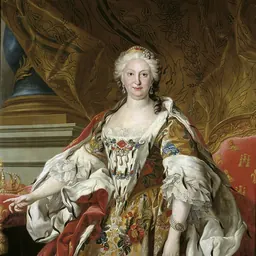
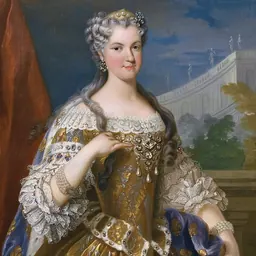
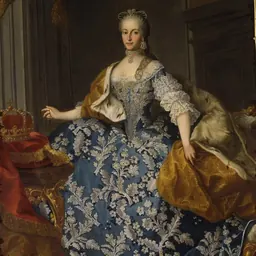

Contemporaries
People whose lives overlapped Princess Isabella of Parma's
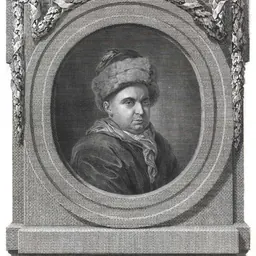





Frequently asked questions
Who was Princess Isabella of Parma?
Archduchess of Austria
When was Princess Isabella of Parma born?
Princess Isabella of Parma was born on 31 December 1741 in Madrid.
When did Princess Isabella of Parma die?
Princess Isabella of Parma died on 27 November 1763 in Vienna.
What nationality was Princess Isabella of Parma?
Princess Isabella of Parma was Spanish.
Sources & further reading
· Wikipedia: Princess Isabella of Parma
· DBpedia: Princess Isabella of Parma
Cite this page
APA: Biography.guide. (2026). Princess Isabella of Parma. https://biography.guide/princess-isabella-of-parma/
MLA: "Princess Isabella of Parma." Biography.guide, https://biography.guide/princess-isabella-of-parma/.
Chicago: "Princess Isabella of Parma." Biography.guide. https://biography.guide/princess-isabella-of-parma/.
Data last updated: 2026-09-20 · Spot an error? Report a correction.
Page generated 2026-09-27 05:26 UTC