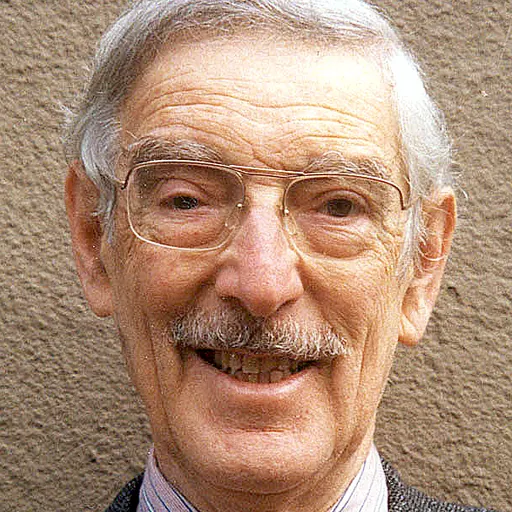
About Bruce N. Ames
Lived 1928 – 2024 (aged 95). Bruce N. Ames was an American biochemist, university teacher, chemist and molecular biologist, known for Ames test.
Bruce Nathan Ames (December 16, 1928 – October 5, 2024) was an American biochemist who was a professor of biochemistry and Molecular Biology Emeritus at the University of California, Berkeley, and was a senior scientist at Children's Hospital Oakland Research Institute (CHORI). Ames made contributions to understanding the mechanisms of mutagenesis and DNA repair. He invented the Ames test, a widely used assay for easily and cheaply evaluating the mutagenicity of compounds.
Ames was elected a Fellow of the American Academy of Arts and Sciences in 1970. He is a recipient of the Bolton S. Corson Medal in 1980, Tyler Prize for Environmental Achievement in 1985, the Japan Prize in 1997, the National Medal of Science in 1998 and the Thomas Hunt Morgan Medal in 2004, among many others.
Ames' research focused on cancer and aging and he authored over 550 scientific publications. He is among the few hundred most-cited scientists in all fields.
Ames' later research included identifying agents that delay the mitochondrial decay of aging, understanding the role of mitochondrial decay in aging, particularly in the brain, optimizing micronutrient intakes in the population to prevent disease, malnutrition, and obesity. He was also interested in mutagens as they relate to cancer prevention and aging.
Ames received more than $650,000 in support from the National Foundation for Cancer Research between 1998 and 2007.
He was married to Giovanna Ferro-Luzzi Ames, who was also a professor of biochemistry at the University of California, Berkeley.
Ames died on October 5, 2024 at a hospital in Berkeley, California at the age of 95.
Ames on synthetic carcinogens In the 1970s, Ames developed the Ames test which is a cheap and convenient assay for mutagens and therefore potential carcinogens. Previous carcinogenic testing used live animals, and the procedures are expensive and time-consuming. This made animal testing impractical for use in screening on a wide scale, and reduced the number of compounds that could be tested. The Ames test on the other hand uses the bacteria Salmonella typhimurium to test for mutagens, and is considerably cheaper and faster. The Ames test became widely used as an initial screen for possible carcinogens and has been used to identify potential carcinogens previously used in commercial products. Their identification led to some of those formulations, such as chemicals used in hair dye, being withdrawn from commercial use. The ease with which Ames test allows widely used chemicals to be identified as possible carcinogens made him an early hero of environmentalism. He contended that most human genetic damage arises from essential micronutrients lacking in poor diets and the oxidation of DNA during normal metabolism, and that the most important environmental carcinogens may include some whose chief effect is to cause the chronic division of stem cells whereby the normal protective mechanisms of a cell become less effective.
He argued against the banning of synthetic pesticides and other chemicals such as Alar which have been shown to be carcinogenic. Ames published results showing that many ordinary food products would be found carcinogenic according to the same criteria. Ames was concerned that overzealous attention to the relatively minor health effects of trace quantities of carcinogens may divert scarce financial resources away from major health risks, and cause public confusion about the relative importance of different hazards. Ames considered himself a leading "contrarian in the hysteria over tiny traces of chemicals that may or may not cause cancer", and said that "if you have thousands of hypothetical risks that you are supposed to pay attention to, that completely drives out the major risks you should be aware of."
Awards and honors Eli Lilly Award of the American Chemical Society 1964 Elected to American Academy of Arts and Sciences 1970 Elected to National Academy of Sciences 1972 IBM-Princess Takamatsu Cancer Res Fund Lectureship 1984 Tyler Prize for Environmental Achievement 1985 Elected Foreign Member, The Royal Swedish Academy of Sciences 1989 Gold Medal Award of the American Institute of Chemists 1991 Elected Fellow, Academy of Toxicological Sciences 1992 Elected Fellow, American Academy of Microbiology 1992 Glenn Foundation Award of the Gerontological Society of America 1992 Röntgen Prize of the Accademia Nazionale de Lincei (Italy) 1993 Messel Medal, British Society of Chemical Industry 1996 Society of Toxicology Public Communications Award 1996 Honda Prize 1996 Japan Prize 1997 Kehoe Award, American College of Occup. and Environ. Med 1997 Medal of the City of Paris 1998 U.S. National Medal of Science 1998 American Society for Microbiology Lifetime Achievement Award 2001 Linus Pauling Institute Prize for Health Research 2001 Thomas Hunt Morgan Medal, Genetics Society Am 2004 American Society for Nutrition/CRN M.S. Rose Award 2008 Orthomolecular Medicine Hall of Fame 2010 Society Of Toxicology Lifetime Achievement Award 2012 American Society of Nutrition Class of 2018 Fellows 2018
Don’t just read it —
keep it.
Full-length biographies made to live with: read them, listen on the way to work, watch them tonight.
- E-book
- Audio
- Video
Instant download · yours to keep · every purchase keeps this site free
Important facts
People in Bruce N. Ames's life
Named in this biography and alive at the same time



Related people
Same field, nearest in time




Contemporaries
People whose lives overlapped Bruce N. Ames's
Frequently asked questions
Who was Bruce N. Ames?
American biochemist (1928–2024)
When was Bruce N. Ames born?
Bruce N. Ames was born on 16 December 1928 in New York City.
When did Bruce N. Ames die?
Bruce N. Ames died on 5 October 2024 in Berkeley.
What was Bruce N. Ames's occupation?
Bruce N. Ames was a biochemist, university teacher, chemist and molecular biologist.
What was Bruce N. Ames known for?
Bruce N. Ames was known for Ames test.
What nationality was Bruce N. Ames?
Bruce N. Ames was American.
Sources & further reading
Cite this page
APA: Biography.guide. (2026). Bruce N. Ames. https://biography.guide/bruce-n-ames/
MLA: "Bruce N. Ames." Biography.guide, https://biography.guide/bruce-n-ames/.
Chicago: "Bruce N. Ames." Biography.guide. https://biography.guide/bruce-n-ames/.
Data last updated: 2026-09-21 · Spot an error? Report a correction.
Portrait: Wikimedia Commons · author & licence
Page generated 2026-09-27 05:00 UTC