
About Billy Meyer
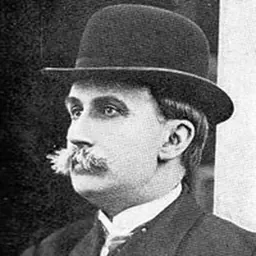
Lived 1893 – 1957 (aged 64). Billy Meyer was an American baseball player.
William Adam Meyer (January 14, 1893 – March 31, 1957) was an American baseball player and manager. He holds the dubious distinction of having played with, then managed, two of the worst teams in the history of Major League Baseball.
A catcher who spent most of his 19-year active (1910–1928) playing career in the minor leagues, he threw and batted right-handed, and was listed as tall and .
Meyer broke into the majors with the 1913 Chicago White Sox, though he appeared in only one game. Three years later, when he returned to the American League with the Philadelphia Athletics in 1916, he appeared in 50 games for a squad which won only 36 games and lost 117. The following year, he played in 62 games for an improved A's club which, however, still posted a 55–98 mark.
Then, a generation-and-a-half later, Meyer managed the 1952 Pittsburgh Pirates to the third-worst record in modern National League history, the Bucs winning only 42 of 154 games.
However, during the period from 1932 through 1947, Meyer was a successful minor league manager, helming high-level teams in the New York Yankees' organization and winning four playoff championships. In addition, in , Meyer's first season at the helm of the Pirates, he was selected The Sporting News Major League Manager of the Year,
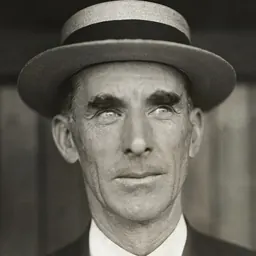
Major league playing career In 1915, Meyer played so well for a Davenport, Iowa, team Connie Mack acquired him to back up catcher Wally Schang for his major league Philadelphia Athletics. He recalled Mack had him catch for unpredictable young pitchers in order to save Schang. He played 50 games for the A's that year—and was thus on hand for a season in which the A's finished with the worst winning percentage in Major League Baseball history. He played 62 games for the A's in 1917. As it turned out, this would be Meyer's last season in the majors as an active player.
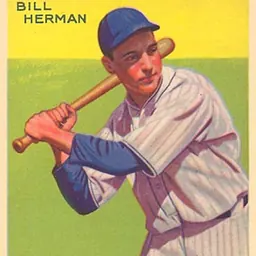
Minor league managerial career Playing manager When McCarthy was called up to manage the Chicago Cubs for the 1926 season, Meyer was named to succeed him at the helm of the Colonels. In his first season, Louisville won a second consecutive pennant with a team which included future Baseball Hall of Fame second baseman Billy Herman (whom Meyer would replace as skipper of the Pirates over 20 years later). Overall, as a manager in the minors, Meyer won eight pennants, narrowly missed a ninth, and finished in the second division only twice. On July 6, 1944, Meyer and Newark were in last place, 30 games behind Bucky Harris and his Buffalo Bisons, and had lost to Buffalo seven consecutive times. Newark rebounded by winning 30 of 34 games while Buffalo dropped into the second division, and missed winning the pennant by a fraction of a percent. The hot-tempered, hard-drinking MacPhail also had a reputation for clashing with his managers. Meyer declined MacPhail's offer and instead returned to Kansas City, leading the 1947 Blues to a first-place finish,
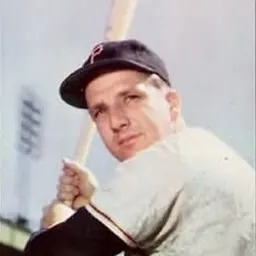
Despite the home run heroics of Ralph Kiner, the Pirates dropped to sixth place in 1949. Reportedly, Meyer lost the team when he suggested to reporters a player had run into a pitchout on his own when he had actually given the player a hit and run sign. By 1950 they were back in the cellar.
Legacy In 1954, the Pirates retired Meyer's uniform number #1. It was only the seventh number retired by a team in AL/NL history, with Meyer the first person who was primarily a manager to have his number retired. Several later historians have remarked on the puzzling circumstances of the number retirement, given that Meyer had a managing record of 317–452 (.412) over only five seasons in Pittsburgh and never finishing higher than fourth in the league. This is a contrast to the vast majority of retired numbers, which recognize either professional accomplishments at the highest level (frequently but not always including membership in the Baseball Hall of Fame), long-term tenure with the same team, significant post-season success, or a personal connection/possible tragedy associated with the franchise.
Meyer also was honored by his native city of Knoxville, where he maintained his home and had married a classmate from grade school, Madelon Warters, in 1932. The city's baseball park, for years the home of the minor-league Knoxville Smokies, was named Bill Meyer Stadium in his honor. The stadium was closed in 1999 and demolished in 2003.
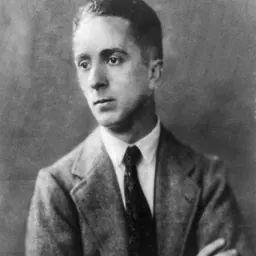
Meyer appears in the Norman Rockwell painting Tough Call.
Post-managerial career After his managing days, Meyer worked as a scout Meyer died two years later, in Knoxville, of heart and kidney ailments at age 64.
Don’t just read it —
keep it.
Full-length biographies made to live with: read them, listen on the way to work, watch them tonight.
- E-book
- Audio
- Video
Instant download · yours to keep · every purchase keeps this site free
Important facts
People in Billy Meyer's life
Named in this biography and alive at the same time


Related people
Same field, nearest in time

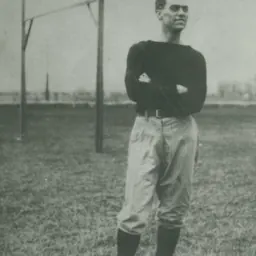

Contemporaries
People whose lives overlapped Billy Meyer's
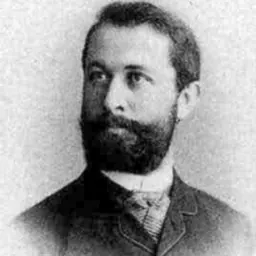

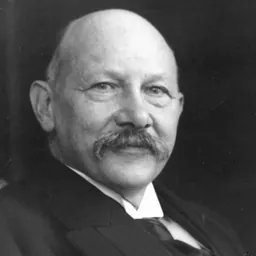
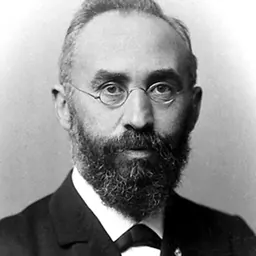

Frequently asked questions
Who was Billy Meyer?
American baseball player
When was Billy Meyer born?
Billy Meyer was born on 14 January 1893 in Knoxville.
When did Billy Meyer die?
Billy Meyer died on 31 March 1957 in Knoxville.
What was Billy Meyer's occupation?
Billy Meyer was a baseball player.
What nationality was Billy Meyer?
Billy Meyer was American.
Sources & further reading
Cite this page
APA: Biography.guide. (2026). Billy Meyer. https://biography.guide/billy-meyer/
MLA: "Billy Meyer." Biography.guide, https://biography.guide/billy-meyer/.
Chicago: "Billy Meyer." Biography.guide. https://biography.guide/billy-meyer/.
Data last updated: 2026-09-20 · Spot an error? Report a correction.
Page generated 2026-09-27 05:34 UTC