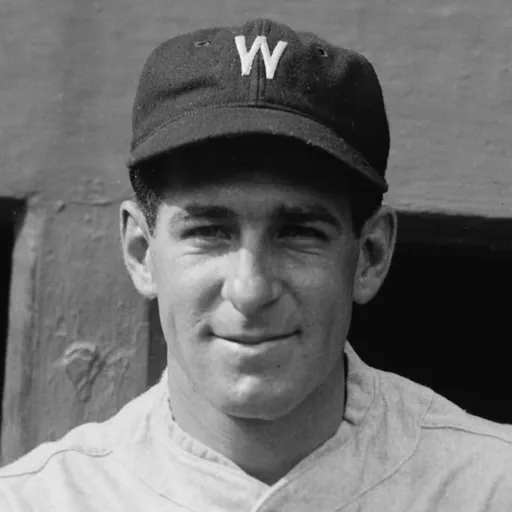
About Bucky Harris
Lived 1896 – 1977 (aged 81). Bucky Harris was an American baseball player and baseball player-manager.
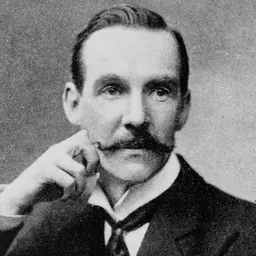
Stanley Raymond "Bucky" Harris (November 8, 1896 – November 8, 1977) was an American professional baseball second baseman, manager and executive. While Harris played in Major League Baseball (MLB) for the Washington Senators and Detroit Tigers, it was his long managerial career that led to his enshrinement in the Baseball Hall of Fame by the Veterans Committee in 1975.
Hired by the Senators to act as player-manager at the age of 27, Harris would lead the team to the 1924 World Series title, becoming the youngest manager to win a championship and the first rookie manager to do so (four other rookies have accomplished the feat since). Harris managed 29 seasons, fourth most in MLB history. In his tenure as manager for five teams (with three terms for Washington and two for Detroit), Harris won over 2,150 games, three league pennants and two World Series championships (1924 with the Senators and 1947 with the New York Yankees); the gap between Harris's World Series appearances (22 years) and championships (23) are the longest in major league history.
Early life Stanley Raymond "Bucky" Harris was born on November 8, 1896, in Port Jervis, New York, and raised after the age of six in Pittston, Pennsylvania. He was of Swiss and Welsh descent. His father, Thomas, had emigrated from Wales, while his mother, Catherine (Rupp), hailed from Hughestown, near Pittston. His elder brother, Merle, was a minor league second baseman. Bucky Harris left school at age 13 to work at a local colliery, the Butler Mine, as an office boy and, later, a weigh master. In his spare time, Harris played basketball for the Pittston YMCA team as well as sandlot baseball.
Professional career Minor leagues Harris was listed as tall and ; he threw and batted right-handed. In 1916, when Harris was 19, Pittston native Hughie Jennings, then the manager of the Detroit Tigers, signed him to his first contract and farmed him to the Class B Muskegon Reds of the Central League, where he struggled as a batsman and was released. batting a meager .214 and getting into only eight games that first season. Despite this poor showing, owner-manager Clark Griffith made him Washington's regular second baseman in 1920, and before long Harris was batting .300 and making a mark for himself as a tough competitor, standing up to even ferocious superstar Ty Cobb, who threatened Harris when he tagged Cobb in their first encounter. He won a second consecutive American League pennant in 1925, but the Senators lost the 1925 World Series in Pittsburgh in the late innings of Game 7 after leading 3–1 in the Series. Baseball historian William C. Kashatus wrote of his dominant play in the 1924 World Series: "Not only did he set records for chances accepted, double plays and put-outs in the exciting seven-game affair, but he batted .333 and hit two home runs" and Yawkey may have hired Harris without consulting Collins. When Joe Cronin, the hard-hitting, 28-year-old playing manager of the Senators, became available on the trade market, Yawkey and Collins moved quickly, sending shortstop Lyn Lary and $225,000 to Washington on October 26, 1934, for Cronin, and then naming him manager for . Harris then took Cronin's old job, returning to Clark Griffith and the Senators.
Second stint with Washington Senators (1935–1942)
Harris' second term in Washington lasted for eight seasons (1935–1942), his longest tenure as a skipper. However, he never approached the highs of 1924 or 1925. Only one of his teams, the 1936 Senators, had a winning record (82–71) and first-division finish. Harris kept the club out of the American League basement, but three consecutive seventh-place finishes from 1940 to 1942 led to his departure.
Philadelphia Phillies (1943) His only season in the National League was spent as skipper of the 1943 Phillies.
Perhaps the worst team (42–109.278) in baseball in , the Phillies had just been sold to lumberman William D. Cox. Under Harris, the 1943 edition improved to play .424 baseball (39–53) by July 27, with just three fewer victories than they had in all of 1942. However, Harris chafed at Cox' constant interference. When Harris protested, Cox abruptly fired him after only 92 games.
Harris then played a role in Cox' banishment from professional baseball for betting on games. On the day after his firing, Harris dropped a bombshell at his hotel room — he had evidence that Cox was betting on baseball. Harris's friends, outraged at his firing, informed Commissioner of Baseball Kenesaw Mountain Landis that Cox was violating baseball's anti-gambling mandate. Landis then summoned Harris to his office to testify in person about Cox' behavior. The owner was suspended indefinitely three months later and banned from baseball outright soon afterward. The Phillies were sold to R. R. M. Carpenter in November 1943.
New York Yankees (1947–1948) United States President Harry Truman (left) shaking hands with Washington Senators manager Ossie Bluege (center) and New York Yankees manager Bucky Harris (right) on April 18, 1947. Harris then spent three seasons out of the big leagues, serving as general manager (1944–1946) and field manager (1944–1945) of the Buffalo Bisons, his old team in the International League. In August 1946, the Yankees' co-owner and GM, Larry MacPhail, appointed Harris to a front-office position.
The tumultuous season saw MacPhail employ three managers — Joe McCarthy, Bill Dickey and Johnny Neun — and finish third, 17 games in arrears of the pennant-winning Red Sox. At the close of the season, MacPhail named Harris the Bombers' 1947 manager, and he led them to his third American League pennant — the Yankees' 15th league title.
Behind Most Valuable Player Joe DiMaggio and newly acquired starting pitcher Allie Reynolds, the 1947 Yanks won 97 games and prevailed over the Tigers by a 12-game margin. Then they won Harris's second World Series championship, defeating the Jackie Robinson-led Brooklyn Dodgers in a thrilling, seven-game Fall Classic.
MacPhail sold his stake in the Yankees and left baseball immediately after the 1947 Series and Harris returned for a second season as manager. His 1948 Yankees won 94 games to finish a close third in a hectic pennant race, two games behind the Cleveland Indians and Red Sox, who ended the regular season in a tie for first place. Then, Detroit won 82 games in . But the Tigers finished fifth each season, and were experiencing turmoil in their front office; outspoken owner Walter Briggs Jr. was harshly critical of Harris and his coaches during the season and was in the process of selling the team. Fired by new owner Fred Knorr, Harris closed out his 29-year MLB managing career with a win–loss record of 2,158–2,219 (.493). As of September 2019, Harris ranked seventh in MLB manager career wins.
Managerial record Team Year Regular season PostseasonGamesWonLostWin %Finish Won Lost Win % ResultWSH 1549262 1st in AL 4 3 .571 Won World Series (NYG)WSH 1519655 1st in AL 3 4 .429 Lost World Series (PIT)WSH 1508169 4th in AL – – – –WSH 1548569 3rd in AL – – – –WSH 1547579 4th in AL – – – –DET 1547084 6th in AL – – – –DET 1547579 5th in AL – – – –DET 1546193 7th in AL – – – –DET 1517675 5th in AL – – – –DET 1527379 resigned – – – –BOS 1527676 4th in AL – – – –BOS total 152 76 76 0 0 – WSH 1536786 6th in AL – – – –WSH 1538271 4th in AL – – – –WSH 1537380 6th in AL – – – –WSH 1517576 5th in AL – – – –WSH 1526587 6th in AL – – – –WSH 1546490 7th in AL – – – –WSH 1547084 6th in AL – – – –WSH 1516289 7th in AL – – – –PHI 923953 fired – – – –PHI total 92 39 53 0 0 – NYY 1549757 1st in AL 4 3 .571 Won World Series (BKN)NYY 1549460 3rd in AL – – – –NYY total 308 191 117 4 3 .571 WSH 1546787 5th in AL – – – –WSH 1546292 7th in AL – – – –WSH 1547876 5th in AL – – – –WSH 1527676 5th in AL – – – –WSH 1546688 6th in AL – – – –WSH total 2752 1336 1416 7 7 .500 DET 1547975 5th in AL – – – –DET 1548272 5th in AL – – – –DET total 1073 516 557 0 0 – Total 4377 2158 2219 11 10
Front office career In 1957, at 60, Harris rejoined the Red Sox in a front office capacity. He was assistant general manager to Joe Cronin for two seasons, and then, when Cronin was named president of the American League, succeeded him as GM in January 1959, 24 years after Cronin had displaced Harris as Boston's field manager. Harris served for two losing seasons as general manager of the Red Sox before his firing in late September 1960. On his watch, the Red Sox finally broke the baseball color line by promoting Pumpsie Green from Triple-A on July 21, 1959, more than a dozen years after Robinson's debut with the Dodgers. They were the last of the 16 pre-expansion teams to integrate.
But the Red Sox went 75–79 in and fell into the second division, beginning a streak of eight straight losing seasons. Then, in , Hall of Famer Ted Williams's final season, they won only 65 games and finished seventh in the eight-team league. Rightfielder Jackie Jensen, still productive at age 33 — he had been 's American League MVP and the AL's 1959 runs batted in leader — sat out the entire 1960 campaign in retirement due to his fear of flying.
Harris made a flurry of minor trades in an attempt to shake up his faltering team. His two highest-profile transactions, which occurred during the 1959–1960 offseason, saw him send left-handed pitcher and former bonus baby Frank Baumann to the Chicago White Sox and veteran starting catcher Sammy White to the Indians. But Baumann led the AL in earned run average with the 1960 Chisox (while the player Harris obtained, first baseman Ron Jackson, struggled through only ten games with Boston before being traded away again) and White abruptly retired rather than report to Cleveland, canceling his trade. Harris also ran afoul of Yawkey when he fired Yawkey associate Pinky Higgins as manager and replaced him with Billy Jurges, a Senators' coach, on July 3, 1959, without consulting the owner.
Don’t just read it —
keep it.
Full-length biographies made to live with: read them, listen on the way to work, watch them tonight.
- E-book
- Audio
- Video
Instant download · yours to keep · every purchase keeps this site free
Important facts
People in Bucky Harris's life
Named in this biography and alive at the same time
Related people
Same field, nearest in time


Contemporaries
People whose lives overlapped Bucky Harris's




Frequently asked questions
Who was Bucky Harris?
American baseball player, manager (1896-1977)
When was Bucky Harris born?
Bucky Harris was born on 8 November 1896 in Port Jervis.
When did Bucky Harris die?
Bucky Harris died on 8 November 1977 in Bethesda.
What was Bucky Harris's occupation?
Bucky Harris was a baseball player and baseball player-manager.
What nationality was Bucky Harris?
Bucky Harris was American.
Sources & further reading
Cite this page
APA: Biography.guide. (2026). Bucky Harris. https://biography.guide/bucky-harris/
MLA: "Bucky Harris." Biography.guide, https://biography.guide/bucky-harris/.
Chicago: "Bucky Harris." Biography.guide. https://biography.guide/bucky-harris/.
Data last updated: 2026-09-20 · Spot an error? Report a correction.
Page generated 2026-09-27 05:10 UTC