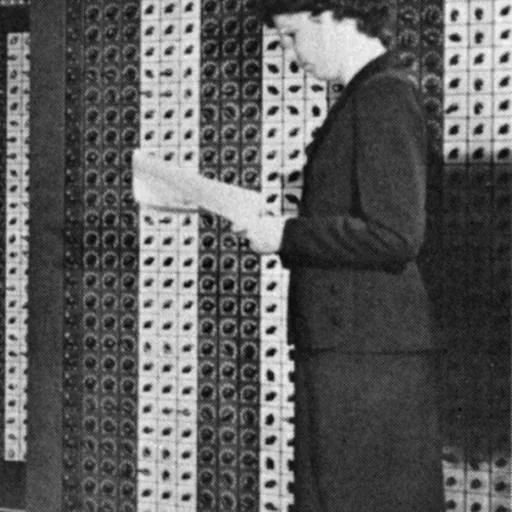
About Betty Holberton
Lived 1917 – 2001 (aged 84). Betty Holberton was an American computer scientist, programmer and mathematician, known for ENIAC.
Frances Elizabeth Holberton (March 7, 1917 – December 8, 2001) was an American computer scientist who was one of the six original programmers of the first general-purpose electronic digital computer, ENIAC (Electronic Numerical Integrator And Computer). The other five ENIAC programmers were Jean Bartik, Ruth Teitelbaum, Kathleen Antonelli, Marlyn Meltzer, and Frances Spence.
Holberton invented breakpoints in computer debugging.
Holberton was the first person to write a program to write a program ie use a computer to write a program.
Early life and education Holberton was born Frances Elizabeth Snyder in Philadelphia, Pennsylvania in 1917. Her father was John Amos Snyder (1884–1963), her mother was Frances J. Morrow (1892–1981), and she was the third child in a family of eight children.
Holberton studied journalism, because its curriculum let her travel far afield. Journalism was also one of the few fields open to women as a career in the 1940s.
Career
In the beginning, because the ENIAC was classified, the women were only allowed to work with blueprints and wiring diagrams in order to program it. During her time working on ENIAC, she had many productive ideas at night-time, leading other programmers to jokingly state that she "solved more problems in her sleep than other people did awake."
The ENIAC was unveiled on February 15, 1946, at the University of Pennsylvania. It cost around $487,000.
According to Captain Grace Hopper, who worked with Betty Holberton, she never received the credit that she should have for the work she did. "Everybody’s forgotten that she wrote the first program that wrote a program. She wrote that sort-merge generator, and what she did was feed in the specs for the data you were handling and the keys and that sort of thing, and then it generated the sort program for that specific data. That’s the first time to my knowledge that anyone used the computer to write a program."
She was one of those who wrote the first generative programming system (SORT/MERGE). Holberton used a deck of playing cards to develop the decision tree for the binary sort function, and wrote the code to employ a group of ten tape drives to read and write data as needed during the process. She wrote the first statistical analysis package, which was used for the 1950 US Census.
In 1953 she was made a supervisor of advanced programming in a part of the Navy's Applied Math lab in Maryland, where she stayed until 1966. set for BINAC, which is considered to be the prototype of all modern programming languages. She also participated in the development of early standards for the COBOL and FORTRAN programming languages with Grace Hopper. Later, as an employee of the National Bureau of Standards, she was very active in the first two revisions of the Fortran language standard ("FORTRAN 77" and "Fortran 90").
Death She died on December 8, 2001, in Rockville, Maryland, aged 84, of heart disease, diabetes, and complications from a stroke she had suffered several years before. She was survived by her husband John Vaughn Holberton and her daughters Pamela and Priscilla.
In 1997, she was the only woman of the original six who programmed the ENIAC to receive the Augusta Ada Lovelace Award, the highest award given by the Association of Women in Computing.
That same year, she received the IEEE Computer Pioneer Award from the IEEE Computer Society for developing the sort/merge generator which, according to IEEE, "inspired the first ideas about compilation."
Legacy The Holberton School, a project-based school for software engineers based in San Francisco, was founded in her honor in 2015.
In 2010, a documentary called, Top Secret Rosies: The Female "Computers" of WWII was released. The film centered around in-depth interviews of three of the six women programmers, focusing on the commendable patriotic contributions they made during World War II.
The ENIAC team is the inspiration behind the award-winning 2013 documentary The Computers. This documentary, created by Kathy Kleiman and the ENIAC Programmers Project, combines actual footage of the ENIAC team from the 1940s with interviews with the female team members as they reflect on their time working together on the ENIAC. It is the first documentary of a series of three, with the other two entitled The Coders and The Future-Maker, respectively.
Don’t just read it —
keep it.
Full-length biographies made to live with: read them, listen on the way to work, watch them tonight.
- E-book
- Audio
- Video
Instant download · yours to keep · every purchase keeps this site free
Important facts
People in Betty Holberton's life
Named in this biography and alive at the same time




Related people
Same field, nearest in time



Contemporaries
People whose lives overlapped Betty Holberton's

Frequently asked questions
Who was Betty Holberton?
American computer programmer (1917–2001)
When was Betty Holberton born?
Betty Holberton was born on 7 March 1917 in Philadelphia.
When did Betty Holberton die?
Betty Holberton died on 8 December 2001 in Rockville.
What was Betty Holberton's occupation?
Betty Holberton was a computer scientist, programmer and mathematician.
What was Betty Holberton known for?
Betty Holberton was known for ENIAC.
What nationality was Betty Holberton?
Betty Holberton was American.
Sources & further reading
Cite this page
APA: Biography.guide. (2026). Betty Holberton. https://biography.guide/betty-holberton/
MLA: "Betty Holberton." Biography.guide, https://biography.guide/betty-holberton/.
Chicago: "Betty Holberton." Biography.guide. https://biography.guide/betty-holberton/.
Data last updated: 2026-09-22 · Spot an error? Report a correction.
Portrait: Wikimedia Commons · author & licence
Page generated 2026-09-27 05:01 UTC