
Jean Bartik
American ENIAC computer programmer
About Jean Bartik
Lived 1924 – 2011 (aged 86). Jean Bartik was an American programmer, mathematician, computer scientist and technical writer.
Jean Bartik ( Betty Jean Jennings; December 27, 1924 – March 23, 2011) was an American computer programmer who was one of the original six programmers of the ENIAC computer.
Bartik studied mathematics in school then began work at the University of Pennsylvania, first manually calculating ballistics trajectories and then using ENIAC to do so. The other five ENIAC programmers were Betty Holberton, Ruth Teitelbaum, Kathleen Antonelli, Marlyn Meltzer, and Frances Spence. Bartik and her colleagues developed and codified many of the fundamentals of programming while working on the ENIAC, since it was the first computer of its kind.
After her work on ENIAC, Bartik went on to work on BINAC and UNIVAC, and spent time at a variety of technical companies as a writer, manager, engineer and programmer. She spent her later years as a real estate agent and died in 2011 from congestive heart failure complications.
Content-management framework Drupal's default theme, Bartik, is named in her honor.
Early life and education Born Betty Jean Jennings in Gentry County, Missouri in 1924, she was the sixth of seven children. Her father, William Smith Jennings (1893–1971) was from Alanthus Grove, where he was a schoolteacher as well as a farmer. Her mother, Lula May Spainhower (1887–1988) was from Alanthus. Jennings had three older brothers, William (January 10, 1915) Robert (March 15, 1918); and Raymond (January 23, 1922); two older sisters, Emma (August 11, 1916) and Lulu (August 22, 1919), and one younger sister, Mable (December 15, 1928).
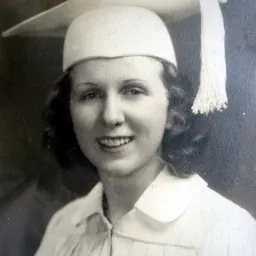
In her childhood, she would ride on horseback to visit her grandmother, who bought the young girl a newspaper to read every day and became a role model for the rest of her life. She was given the title of salutatorian on her graduation.
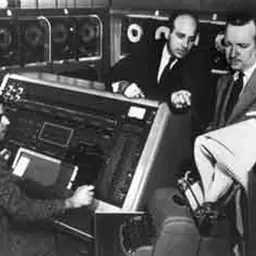
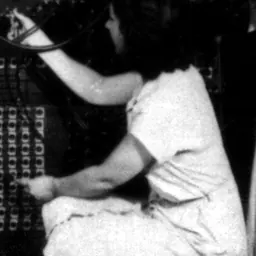
Career Programmers Betty Jean Jennings (left) and Fran Bilas (right) operate the ENIAC's main control panel.
In 1945, the United States Army was recruiting mathematicians from universities to aid in the war effort; despite a warning by her adviser that she would be "a cog in a wheel" with the Army, and encouragement to become a mathematics teacher instead, Bartik decided to become a human computer. Bartik's calculus professor encouraged her to take the job at University of Pennsylvania because they had a differential analyzer.
While working there, Bartik met her future husband, William Bartik, who was an engineer working on a Pentagon project at the University of Pennsylvania. They married in December 1946. Many other women who are often unrecognized contributed to the ENIAC during a period of wartime male labor shortage.
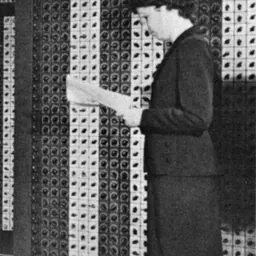
Bartik, who became the co-lead programmer (with Betty Holberton), and the other four original programmers became extremely adept at running the ENIAC; with no manual to rely on, the group reviewed diagrams of the device, interviewed the engineers who had built it, and used this information to teach themselves the skills they needed. Initially, they were not allowed to see the ENIAC's hardware at all since it was still classified and they had not received security clearance; they had to learn how to program the machine solely through studying schematic diagrams. Bartik and the other ENIAC female programmers learned to physically modify the machine, moving switches and rerouting cables, in order to program it.
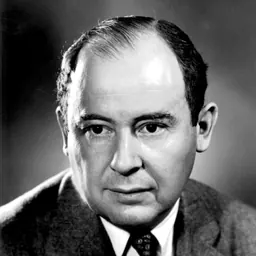
Bartik was later asked to form and lead a group of programmers to convert the ENIAC into a stored program computer, working closely with John von Neumann, Dick Clippinger, and Adele Goldstine. was in Bartik's handwriting.
After the end of the war, Bartik went on to work with the ENIAC designers John Eckert and John Mauchly, and helped them develop the BINAC and UNIVAC I computers. Kleiman worked with PBS producer David Roland to record their oral histories and with documentary producers Jon Palfreman and Kate McMahon to produce the award-winning documentary The Computers (premiere 2014). The women's work was also popularized by columnist Tom Petzinger in articles for the Wall Street Journal on Bartik and Holberton in 1996.
Later life After getting her master's degree from the University of Pennsylvania in 1967 and making the decision to divorce her husband, Bartik joined the Auerbach Corporation writing and editing technical reports on minicomputers.
The ENIAC team is also the subject of the 2013 short documentary film The Computers. This documentary, created by Kathy Kleiman and the ENIAC Programmers Project, combines actual footage of the ENIAC team from the 1940s with interviews with the female team members as they reflect on their time working together on the ENIAC. The Computers is the first part of a three-part documentary series, titled Great Unsung Women of Computing: The Computers, The Coders, and The Future Makers.
Bartik wrote her autobiography Pioneer Programmer: Jean Jennings Bartik and the Computer that Changed the World prior to her death in 2011 with the help of long-time colleagues, Dr. Jon T. Rickman and Kim D. Todd. The autobiography was published in 2013 by Truman State Press to positive reviews.
One of the best pieces of advice Bartik ever received was: "Don't ever let anyone tell you that you can't do something because they think you can't. You can do anything, achieve anything, if you think you can and you educate yourself to succeed." Encouraging girls and women to follow their dreams, she said, "If my life has proved anything, it is that women (and girls) should never be afraid to take risks and try new things."
The default theme in the content management framework Drupal, was named Bartik for over a decade. It was named in her honor. Fellow, Computer History Museum (2008) IEEE Computer Pioneer Award, IEEE Computer Society (2008) Korenman Award from the Multinational Center for Development of Women in Technology (2009)
Don’t just read it —
keep it.
Full-length biographies made to live with: read them, listen on the way to work, watch them tonight.
- E-book
- Audio
- Video
Instant download · yours to keep · every purchase keeps this site free
Important facts
People in Jean Bartik's life
Named in this biography and alive at the same time



Related people
Same field, nearest in time





Contemporaries
People whose lives overlapped Jean Bartik's



Frequently asked questions
Who was Jean Bartik?
American ENIAC computer programmer (1924–2011)
When was Jean Bartik born?
Jean Bartik was born on 27 December 1924 in Alanthus Grove.
When did Jean Bartik die?
Jean Bartik died on 23 March 2011 in Poughkeepsie.
What was Jean Bartik's occupation?
Jean Bartik was a programmer, mathematician, computer scientist and technical writer.
What nationality was Jean Bartik?
Jean Bartik was American.
Sources & further reading
Cite this page
APA: Biography.guide. (2026). Jean Bartik. https://biography.guide/jean-bartik/
MLA: "Jean Bartik." Biography.guide, https://biography.guide/jean-bartik/.
Chicago: "Jean Bartik." Biography.guide. https://biography.guide/jean-bartik/.
Data last updated: 2026-09-20 · Spot an error? Report a correction.
Page generated 2026-09-27 05:20 UTC