
About Augustin Verot
Lived 1805 – 1876 (aged 71). Augustin Verot was a French catholic priest and catholic bishop.
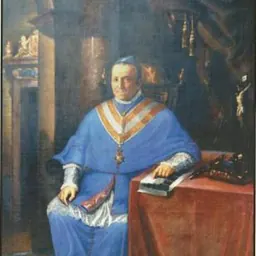
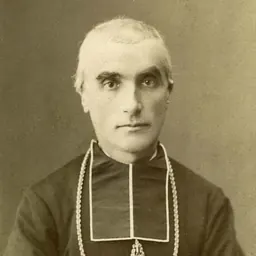
Jean Marcel Pierre Auguste Vérot (May 23, 1805 – June 10, 1876) was a French-born American prelate of the Catholic Church. He was a longtime Catholic leader of Florida, serving first as vicar apostolic of the state (1858–1861) and later as bishop of St. Augustine (1870–1876). He also served as bishop of Savannah in Georgia (1861–1870).
Early life and education Augustin Vérot was born on May 23, 1805, in Le Puy-en-Velay, in the Haute-Loire department of south-central France. He was the son of Pierre Vérot, a lace dealer, and his wife, Madeleine Verot (née Marcet). He then entered Saint-Sulpice Seminary in Issy-les-Moulineaux, where he completed his studies for the priesthood. Among his fellow seminarians were Félix Dupanloup and Jean-Baptiste Henri Lacordaire.
Priesthood Vérot was ordained a priest on September 20, 1828, by Archbishop Hyacinthe-Louis de Quélen. Shortly afterwards, he joined the Society of the Priests of Saint Sulpice, also known as the Sulpicians.
At St. Mary's, Vérot served as professor of mathematics, astronomy, and chemistry. One of his students, Aloysius Leo Knott, later wrote that Vérot "had what I have never observed in any other teacher of mathematics, the faculty of interesting while initiating his students into the abstruse studies they pursued under his direction."
Following the closure of the college in 1852, Vérot became pastor of St. Paul Church in Ellicott City. He also did pastoral work among the enslaved people at the nearby Doughoregan Manor, the ancestral home of Charles Carroll. Future bishop William Hickley Gross, then a student at St. Charles College, later recalled, "Bishop Verot edified us all by his assiduous care of the many slaves belonging to the Carroll family, whose estates adjoined the college grounds."
Vérot received his episcopal consecration on April 25, 1858, from Archbishop Francis Kenrick at the Baltimore Cathedral, with Bishops John McGill and John Barry serving as co-consecrators. In 1859, he traveled to France, where he recruited six priests, four religious brothers, and two nuns to come to Florida. Later that year, he also recruited five Sisters of Mercy from Connecticut and three Christian Brothers from Canada to open girls' and boys' schools.
Bishop of Savannah On July 23, 1861, Vérot was appointed the third bishop of Savannah by Pius IX. By the end of Vérot’s tenure, the diocese had nine churches, 30 chapels and stations, 11 schools, and a Catholic population of about 20,000.
Civil War Vérot's tenure in Savannah largely coincided with the Civil War (1861–1865), during which he supported the Confederacy and the institution of slavery. While he acknowledged "the many privations, sufferings and calamities entailed upon us by the war," he believed the war was necessary for "the preservation of our just liberties and legitimate possessions." In the summer of 1862, he ordered Te Deum (a hymn of thanksgiving) to be sung at Catholic churches in Georgia and Florida for Confederate victories.
In March 1865, following the siege of Savannah, Union troops began constructing a defense line through a Catholic cemetery, destroying large sections and disinterring bodies. Vérot expressed his outrage to Secretary of War Edwin Stanton, writing, "I thought I could not do less than send my humble protest in behalf of the Catholic Church, whose right and privileges I deem to be infringed by this proceeding; in behalf of an outraged community obliged now to carry away where they can the moldering remains of their relatives and friends; in behalf of the Irish-Catholic soldiers, who are obliged to perform the work of hyenas, and in behalf of those who will have to stand in the midst of exhalations arising from opened and mutilated graves." Stanton had Major General James Allen Hardie reply to Vérot, criticizing "the disrespectful and unbecoming language of your letters towards the Govt. and its officers." Vérot successfully demanded that the U.S. government restore the cemetery, reinterring the bodies in December 1866.
Despite his Confederate sympathies, Vérot and his priests were the only clergy of any denomination who ministered to Union prisoners of war, including at the Andersonville Prison. In late 1865, he ministered to Samuel Mudd, a Catholic doctor accused of conspiring with John Wilkes Booth to assassinate Abraham Lincoln, while he was imprisoned at Fort Jefferson in Dry Tortugas.
Following the end of the war, Vérot went on a fundraising tour in Northern states to collect money for repairing churches under his charge. In 1867, he opened a Catholic school for Black children in Savannah and recruited Sisters of St. Joseph from his native Le Puy-en-Velay to run it. He subsequently established more schools for Black children in Jacksonville (1868) and Fernandina (1870), as well as Palatka, Mandarin, and Key West.
First Vatican Council Vérot participated in the First Vatican Council (1869–1870), first as bishop of Savannah and then as bishop of St. Augustine. The council held a preliminary vote on the decree on July 13, 1870. Vérot and 87 other bishops voted no, 451 voted yes, and 62 voted yes with conditions. Ahead of the scheduled final vote on July 18, many opponents of infallibility received permission to leave the council rather than offend the pope with their vote. Vérot left Rome on July 19, but still declared his formal adherence to the new dogma.
Beyond the issue of papal infallibility, Vérot argued for "the rehabilitation of Galileo in the name of science." He also sought a declaration upholding the humanity of Black people, condemning "the inept error" that "Negroes do not belong to the human family, or that they are not endowed with spiritual and immortal souls." Neither proposal was accepted by the council.
Vérot's comments at the council were often met with laughter and derision by his fellow bishops. Due to his outspoken role in the proceedings, Father Léon Dehon, who served as stenographer at the council, described Vérot as "an enfant terrible." Furthermore, Bishop James Alipius Goold noted in his personal diary that Vérot "had outraged the patience of all."
Bishop of St. Augustine In April 1869, the bishops at the tenth Provincial Council of Baltimore recommended elevating the Vicariate Apostolic of Florida into a diocese. On March 11, 1870, during the First Vatican Council, Pope Pius IX established the Diocese of St. Augustine and named Vérot as its first bishop.
Vérot was buried at Tolomato Cemetery, in a vault alongside the remains of Félix Varela. In 1911, the vault was reopened to return Varela's remains to his native Cuba. In his sermon, Vérot defended the religious and legal basis of slavery, saying it had "received the sanction of God, of the Church, and of society at all times, and in all governments." However, consistent with the 1839 In supremo apostolatus of Pope Gregory XVI, he condemned the Atlantic slave trade, saying, "What right has any man to steal another man and enslave him? This, next to murder, seems to be the grossest violation of justice that can be conceived."
Vérot also laid out the conditions under which he believed slavery was lawful. These conditions included: the slaveowner’s repudiation of the slave trade; respect for the rights of free people of color; avoiding the sexual exploitation of enslaved and free Black women; allowing enslaved people to marry and not separating married couples; providing adequate food, clothing, and shelter to enslaved people; and allowing enslaved people to practice religion.
His sermon was soon printed and widely circulated under the title A Tract for the Times: Slavery and Abolitionism. Vérot subsequently became known as the Rebel Bishop by many in the North. Archbishop Francis Kenrick of Baltimore sought to have the tract suppressed, and an official of the Congregation for the Propagation of the Faith noted: "It would seem that one cannot accept everything which is affirmed in this argument."
In October 1865, following the end of slavery in the United States, Vérot addressed a pastoral letter to the people of Georgia and Florida, writing
In another pastoral letter in August 1866, Vérot wrote about the necessity of "giving to that race admitted to the boon of freedom the opportunity of obtaining instruction and knowledge," allowing "the colored race to be admitted and invited to the benefits of Catholic schools and Catholic education." He concluded:
Hence we wish in all sincerity and with great earnestness, all kinds of blessings to the colored race, and we exhort all to put away all prejudice, all dislike, all antipathy, all bitterness against their former servants. Away with all feelings of bickerings, envy or jealousy which would only bespeak a narrow mind and the lack of noble and elevated feelings. The golden rule, love thy neighbor as thyself, must not admit of any exceptions... Vérot disagreed with both of those particular points, saying "the Government of America ought not to make any discrimination [against religion]" and describing freedom of the press as one of the "cherished ideas of this Republic."
During the proceedings of the First Vatican Council, Vérot told the assembled bishops:
Papal infallibility Vérot strongly disagreed with the concept of papal infallibility at the First Vatican Council. Addressing his fellow bishops in May 1870, he declared "that we do not have here the most essential condition for defining any question; we do not have that constant tradition of the Church which would be required for defining papal infallibility." When Cardinal Annibale Capalti ordered him to leave the ambo, Vérot persisted, declaring, "I conclude that pontifical infallibility is not an apostolic tradition, but an opinion introduced by a piety and a zeal not based on knowledge. Therefore for me to give my vote for it would be a sacrilege—yes, a sacrilege."
Vérot also proposed the following decree to the Council Fathers: "If any man say that the pope has such plenary authority in the Church that he can dispose all things at his will, let him be accursed." This prompted Cardinal Capalti to stand up and say, "We are not in a theatre to hear buffooneries, but in the Church of the Living God to deal with important affairs of the Church; and nothing should be said in this discussion that is contumelious or foolish or erroneous."
Don’t just read it —
keep it.
Full-length biographies made to live with: read them, listen on the way to work, watch them tonight.
- E-book
- Audio
- Video
Instant download · yours to keep · every purchase keeps this site free
Important facts
People in Augustin Verot's life
Named in this biography and alive at the same time


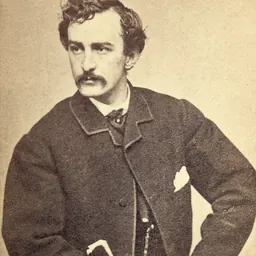
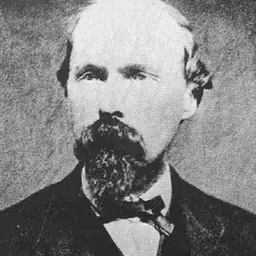
Related people
Same field, nearest in time
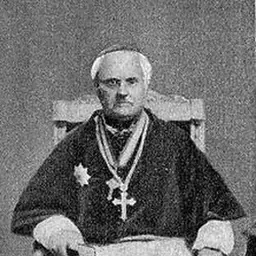


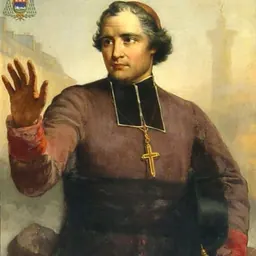
Contemporaries
People whose lives overlapped Augustin Verot's





Frequently asked questions
Who was Augustin Verot?
Catholic bishop (1804-1876)
When was Augustin Verot born?
Augustin Verot was born on 23 May 1805 in Le Puy-en-Velay.
When did Augustin Verot die?
Augustin Verot died on 10 June 1876 in St. Augustine.
What was Augustin Verot's occupation?
Augustin Verot was a catholic priest and catholic bishop.
What nationality was Augustin Verot?
Augustin Verot was French.
Sources & further reading
Cite this page
APA: Biography.guide. (2026). Augustin Verot. https://biography.guide/augustin-verot/
MLA: "Augustin Verot." Biography.guide, https://biography.guide/augustin-verot/.
Chicago: "Augustin Verot." Biography.guide. https://biography.guide/augustin-verot/.
Data last updated: 2026-09-20 · Spot an error? Report a correction.
Page generated 2026-09-27 05:21 UTC