
About Hyacinthe-Louis de Quélen
Lived 1778 – 1839 (aged 61). Hyacinthe-Louis de Quélen was a French politician, catholic priest, catholic bishop, prince of the Church, archbishop and coadjutor bishop.
Hyacinthe-Louis De Quélen (8 October 1778 – 31 December 1839) was an Archbishop of Paris. He was the fourth archbishop to serve the Paris diocese after the restoration of the French hierarchy in 1802.
Biography De Quélen was born in Paris, in the Quélen noble Breton family. His motto "Em Pob Emser Quelen" and the older Breton expression for "Better death than dishonour" figure in stained glass in the Lazarist church in the rue de Sèvres. He was educated at the College of Navarre and the seminary in St. Sulpice.
Ordained in 1807, he served a year as Vicar-General of Saint-Brieuc and then became secretary to Joseph Fesch, uncle to the Emperor Napoleon. When the latter was exiled from his diocese of Lyon under the Bourbon Restoration, de Quélen exercised his ministry at Saint-Sulpice and in the military hospitals. Under the Bourbons, he became successively spiritual director of the schools in the archdiocese, Vicar-General of Paris, and coadjutor archbishop to the Cardinal de Talleyrand-Périgord, succeeding the latter in 1821.
A good preacher, he was favored by Louis XVIII and then Charles X, but retained some measure of independence. As a peer of the realm he opposed, on behalf of the middle classes, the conversion of the national debt. At his reception into the Académie française he publicly lauded Chateaubriand, then in disgrace. While blessing the cornerstone of the Chapelle Expiatoire, he requested in vain an amnesty for the exiled members of the Convention. The ordinance of 1828, disbanding the Jesuits and limiting the recruiting of the clergy, was also issued against his advice. the "Conferences apologétiques de Notre-Dame" and several religious institutes, among which are the nursing Sisters of Bon-Secours.
Legacy Besides the eulogies on Louis XVI (Paris, 1816), on Madame Elizabeth (Paris, 1817), on the Duke of Berry (Paris, 1830), his "Discours de réception à l'académie française" (Paris, 1824), and some 120 pastoral letters, there are the "Manuels pour l'administration des Sacrements de l'Eucharistie et de l'Extrême-Onction: du Baptême des Enfants: du Marriage" (3 vols., Paris, 1837–38) collected in the "Rituel de Paris".
Don’t just read it —
keep it.
Full-length biographies made to live with: read them, listen on the way to work, watch them tonight.
- E-book
- Audio
- Video
Instant download · yours to keep · every purchase keeps this site free
Important facts
People in Hyacinthe-Louis de Quélen's life
Named in this biography and alive at the same time
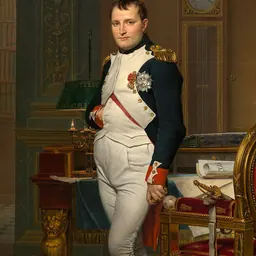
Related people
Same field, nearest in time
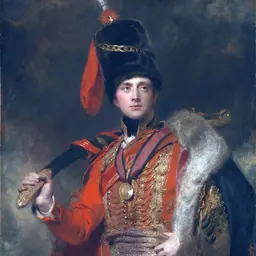


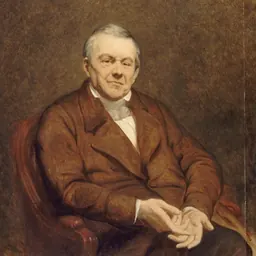

Contemporaries
People whose lives overlapped Hyacinthe-Louis de Quélen's



Frequently asked questions
Who was Hyacinthe-Louis de Quélen?
Catholic archbishop
When was Hyacinthe-Louis de Quélen born?
Hyacinthe-Louis de Quélen was born on 8 October 1778 in Paris.
When did Hyacinthe-Louis de Quélen die?
Hyacinthe-Louis de Quélen died on 31 December 1839 in Paris.
What was Hyacinthe-Louis de Quélen's occupation?
Hyacinthe-Louis de Quélen was a politician, catholic priest, catholic bishop, prince of the Church, archbishop and coadjutor bishop.
What nationality was Hyacinthe-Louis de Quélen?
Hyacinthe-Louis de Quélen was French.
Sources & further reading
· Wikipedia: Hyacinthe-Louis de Quélen
· DBpedia: Hyacinthe-Louis de Quélen
Cite this page
APA: Biography.guide. (2026). Hyacinthe-Louis de Quélen. https://biography.guide/hyacinthe-louis-de-quelen/
MLA: "Hyacinthe-Louis de Quélen." Biography.guide, https://biography.guide/hyacinthe-louis-de-quelen/.
Chicago: "Hyacinthe-Louis de Quélen." Biography.guide. https://biography.guide/hyacinthe-louis-de-quelen/.
Data last updated: 2026-09-26 · Spot an error? Report a correction.
Page generated 2026-09-27 05:15 UTC