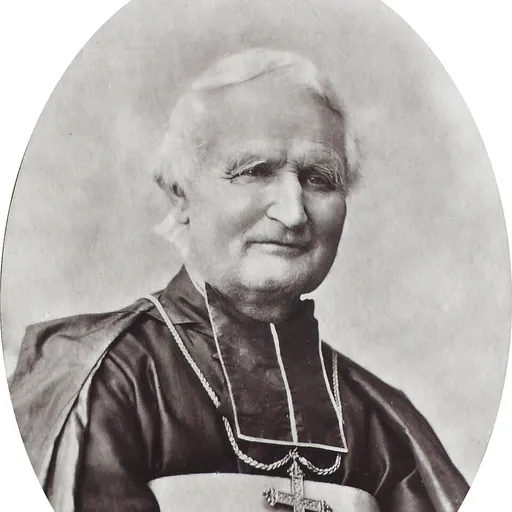
About Félix Dupanloup
Lived 1802 – 1878 (aged 76). Félix Dupanloup was a French politician, catholic priest and philosopher.
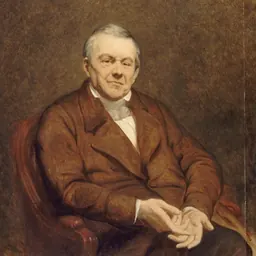
Félix Antoine Philibert Dupanloup (3 January 180211 October 1878) was a French Catholic prelate who served as Bishop of Orléans from 1849 to 1878. He was among the leaders of Liberal Catholicism in France.
Biography Dupanloup was born at Saint-Félix, in Upper Savoy, (which at the time was part of the Kingdom of Piedmont-Sardinia rather than France) an illegitimate son of Prince Camillo Borghese. In his earliest years he was confided to the care of his brother, a priest in the diocese of Chambéry. In 1810 he was sent to a pensionnat ecclésiastique at Paris. Thence he went to the seminary of Saint-Nicolas-du-Chardonnet in 1813, and was transferred to the seminary of Saint Sulpice at Paris in 1820. In 1825 he was ordained priest, and was appointed vicar of the Madeleine at Paris. For a time he was tutor to the Orléans princes. He became the founder of a celebrated academy at St Hyacinthe, and received a letter from Gregory XVI lauding his work there, and calling him Apostolus juventutis.
He was elected to the Académie française in 1854, occupying the thirty-eighth chair and leading the academy's "religious party", in which capacity he manoeuvred against the election of agnostic intellectuals. Dupanloup resigned in 1875 after Émile Littré, an agnostic, was elected to the academy.
When made bishop of Orléans in 1849, he pronounced a fervid panegyric on Joan of Arc, which attracted attention in England as well as France. Joan of Arc was later canonized, due partly to Dupanloup's efforts. Before this, he had been sent by Archbishop Aifre to Rome, and had been appointed Roman prelate and protonotary apostolic. but after the definition was among the first to accept the dogma.
Dupanloup died on 11 October 1878 at the château of La Combe-de-Lancey.
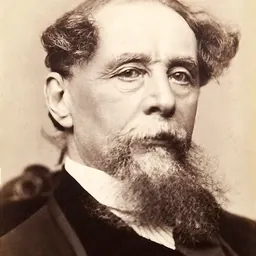
Memory In the work known as Illustrissimi, a collection of letters written by Pope John Paul I when he was Patriarch of Venice, Dupanloup is one of the "recipients" of the letters. There are 40 letters in all, mainly to people in Italian history and fiction, but also to internationally well known fictional and historical characters such as Pinocchio, Charles Dickens, Hippocrates, and Jesus. Each of the letters tend to be droll and witty, but cleverly turned into a short sermon in order to make a point, whether it is on fashion, pornography, capitalism, or the communications industry.
In his book My Life and Loves, volume III, chapter 15, Frank Harris tells of an anecdote he told Prince Edward, The Prince of Wales, about the bishop:
Works Dupanloup's mausoleum in the Orléans Cathedral, by Henri Chapu, 1888–1891. (1845). . Lecoffre et Cie. (1860). . J. Lecoffre et Cie. (1860). . Paris: Charles Douniol. (1861). . R. Ruffet. (1865). . Paris: Charles Douniol. (1866). . Paris: Charles Douniol et Cie. (1866). . Paris: Charles Douniol. (1866). . Paris: Charles Douniol. (1867). . H. Plon. (1869). . Paris: Charles Douniol. (1869). . Paris: Charles Douniol. (1872). . Paris: Charles Douniol et Cie. [3 volumes]. . . . (1875). . Paris: Charles Douniol. (1878). . Paris: . (1879). . Paris: Charles Douniol. (1920). . Paris: P. Téqui.
Works in English translation (1860). The Papal Sovereignty. London: Catholic Publishing and Bookselling Company. (1869). Studious Women. Boston: Patrick Donahoe. (1869). Joan of Arc. London: Burns and Oates. (1875). The Child. Boston: Thomas B. Noonan & Co. (1875). A Study of Freemasonry. London: Burns and Oates (American edition: Newark, N.J.: J.J. O'Connor & Co, 1876). (1890). The Ministry of Catechising. London: Griffith Farran & Co. (1891). The Ministry of Preaching. London: Griffith Farran, Okeden & Welsh.
Selected articles (1867). "Learned Women and Studious Women," Part II, The Catholic World, Vol. VI, pp. 24–43, 209–226.
Don’t just read it —
keep it.
Full-length biographies made to live with: read them, listen on the way to work, watch them tonight.
- E-book
- Audio
- Video
Instant download · yours to keep · every purchase keeps this site free
Important facts
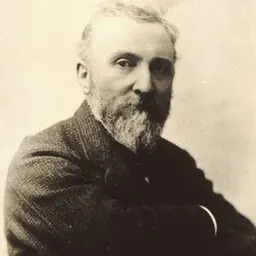
People in Félix Dupanloup's life
Named in this biography and alive at the same time




Related people
Same field, nearest in time



Contemporaries
People whose lives overlapped Félix Dupanloup's






Frequently asked questions
Who was Félix Dupanloup?
French bishop (1802-1878)
When was Félix Dupanloup born?
Félix Dupanloup was born on 3 January 1802 in Saint-Félix.
When did Félix Dupanloup die?
Félix Dupanloup died on 11 October 1878 in La Combe-de-Lancey.
What was Félix Dupanloup's occupation?
Félix Dupanloup was a politician, catholic priest and philosopher.
What nationality was Félix Dupanloup?
Félix Dupanloup was French.
Sources & further reading
Cite this page
APA: Biography.guide. (2026). Félix Dupanloup. https://biography.guide/felix-dupanloup/
MLA: "Félix Dupanloup." Biography.guide, https://biography.guide/felix-dupanloup/.
Chicago: "Félix Dupanloup." Biography.guide. https://biography.guide/felix-dupanloup/.
Data last updated: 2026-09-23 · Spot an error? Report a correction.
Portrait: Wikimedia Commons · author & licence
Page generated 2026-09-27 05:06 UTC