
Francis Kenrick
Catholic Bishop of Philadelphia
About Francis Kenrick
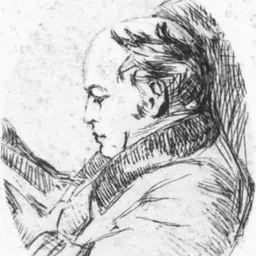
Lived 1796 – 1863 (aged 66). Francis Kenrick was a translator, catholic priest, bible translator, writer, catholic bishop and bishop.
Francis Patrick Kenrick (December 3, 1796 or 1797 – July 8, 1863) was an Irish-born Catholic prelate who served as bishop of Philadelphia (1842–1851) and archbishop of Baltimore (1851–1863).
Kenrick grew up in Ireland, where he received his early education. He then attended the Pontifical Urbaniana University in Rome, where he built a reputation as a theologian and scholar. After his ordination, he went to teach theology in the Diocese of Bardstown in the United States, where he became president of its seminary. Starting in 1830, Kenrick served as Coadjutor Bishop and later Bishop of Philadelphia, dealing with rebellious parish trustees and anti-Catholic riots in the city. He became Archbishop of Baltimore in 1851, serving there until his death in 1863.
Kenrick is known for his contributions to the American Catholic Church as a theologian and canon law scholar as well as for his introducing free parochial schools in the Diocese of Philadelphia and the Archdiocese of Baltimore.
Biography
Early life and education Francis Kenrick was born on December 3, 1796, in Dublin, Ireland, to Thomas and Jane (née Eustace) Kenrick. His younger brother, Peter Kenrick, became the first archbishop of the Archdiocese of St. Louis. The brothers' uncle, pastor of St. Nicholas of Myra Parish in Dublin, took an active role in their education. Francis Kenrick decided as a boy that he wanted to enter the priesthood. He attended elementary school and a so-called classical school in Dublin, where he achieved a strong academic record.
At age 18, Kenrick was selected to study at the Pontifical Urbaniana University in Rome, where he became a distinguished student in theology.
Ordination and ministry Kenrick was ordained to the priesthood in Rome by Archbishop Candido Maria Frattini on April 7, 1821. In response, Kenrick placed St. Mary's under interdict. After the epidemic passed in September 1832, Philadelphia Mayor John Swift praised Kenrick for his assistance.
With the strong growth of the Catholic population in Western Pennsylvania, Kenrick petitioned the Vatican to create a new diocese there in 1835. The Vatican was leaning toward creating the new diocese and also appointing Kenrick as coadjutor bishop of the Diocese of New York. When Kenrick expressed his opposition to the appointment, the Vatican dropped the coadjutor issue, along with that of the new diocese. The Vatican finally erected the Diocese of Pittsburgh on August 11, 1843.
On May 7, 1844, the American Republican Party, a nativist group, staged a rally near Kensington that triggered three days of rioting and bloodshed in the city. During the riot, nativist mobs burned St. Michael's and Saint Augustine's Catholic Churches. The theological library and rectory at St. Augustine's were also lost. The state militia quelled the disturbances on May 8. The riots reignited on July 6, 1844, lasting for two days. He also began construction on the Cathedral Basilica of Saints Peter and Paul and oversaw the rebuilding of St. Michael and St. Augustine following the Bible riots.
Publications A new translation of the Douay Bible, with a commentary Theologia Moralis (3 Vols) (1860) The Primacy of the Apostolic See, Vindicated (1848) A Treatise on Baptism (1852) Theologia dogmatica. Secundis curis auctoris (1858) A Vindication of the Catholic Church, in a Series of Letters Addressed to the Rt. Rev. John Henry Hopkins (1855)
Don’t just read it —
keep it.
Full-length biographies made to live with: read them, listen on the way to work, watch them tonight.
- E-book
- Audio
- Video
Instant download · yours to keep · every purchase keeps this site free
Important facts
People in Francis Kenrick's life
Named in this biography and alive at the same time


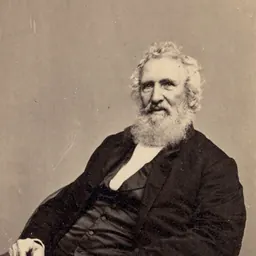
Related people
Same field, nearest in time
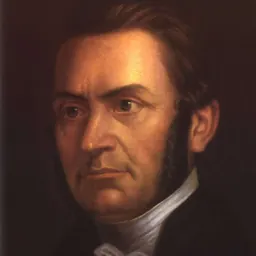
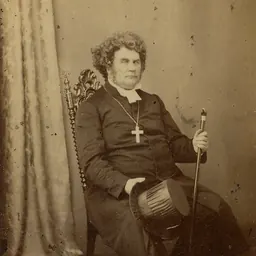

Contemporaries
People whose lives overlapped Francis Kenrick's






Frequently asked questions
Who was Francis Kenrick?
Catholic Bishop of Philadelphia (1796–1863)
When was Francis Kenrick born?
Francis Kenrick was born on 3 December 1796 in Dublin.
When did Francis Kenrick die?
Francis Kenrick died on 8 July 1863 in Baltimore.
What was Francis Kenrick's occupation?
Francis Kenrick was a translator, catholic priest, bible translator, writer, catholic bishop and bishop.
Sources & further reading
Cite this page
APA: Biography.guide. (2026). Francis Kenrick. https://biography.guide/francis-kenrick/
MLA: "Francis Kenrick." Biography.guide, https://biography.guide/francis-kenrick/.
Chicago: "Francis Kenrick." Biography.guide. https://biography.guide/francis-kenrick/.
Data last updated: 2026-09-20 · Spot an error? Report a correction.
Page generated 2026-09-27 05:23 UTC