
Archduke Leopold Wilhelm of Austria
Austrian archduke
About Archduke Leopold Wilhelm of Austria
Lived 1614 – 1662 (aged 48). Archduke Leopold Wilhelm of Austria was a German politician, catholic priest, art collector, military leader, patron of the arts and bishop.
Archduke Leopold Wilhelm of Austria (5 January 1614 – 20 November 1662), younger brother of Emperor Ferdinand III, was an Austrian soldier, administrator and patron of the arts.
He held a number of military commands, with limited success, and served as Governor of the Spanish Netherlands, before returning to Vienna in 1656. Despite being nominated as Holy Roman Emperor after Ferdinand's death in 1657, he stood aside in favour of his nephew Leopold I.
His main interest was in art, and he patronised artists including David Teniers the Younger, Frans Snyders, Peter Snayers, Daniel Seghers, Peter Franchoys, Frans Wouters, Jan van den Hoecke and Pieter Thijs. His collection of 17th century Venetian and Dutch paintings are now held by the Kunsthistorisches Museum in Vienna.
Life
Born at Wiener Neustadt on 5 January 1614, he was the final of seven children born to Emperor Ferdinand II (1578-1637) and his first wife, Maria Anna of Bavaria (1574–1616). His elder brother became Emperor Ferdinand III (1608–1657).
Career As a younger son, Leopold was educated for the church. However, he was never ordained. In spite of the reforms of the Council of Trent that were meant to weaken the basis for Protestant claims of impropriety, Leopold accumulated a variety of ecclesiastical titles. In 1626, at the age of 12, he became bishop of Strasbourg and Passau, succeeding his uncle Archduke Leopold V.
While this title can be understood as a traditional sinecure for a noble who was the youngest of his siblings, he also held the title of bishop of Halberstadt beginning in 1627 and archbishop of Magdeburg beginning in 1629. These latter two titles can be best understood as related to the ambitions of his father, Emperor Ferdinand II, to re-Catholicize these Protestant areas where Catholic infrastructure had largely disappeared. This attempt was unsuccessful, as Magdeburg was secularized in 1635 and given to the duke of Saxony, while Halberstadt passed to Brandenburg and out of Catholic hands in 1648.
Art collection
While in Brussels, he employed David Teniers the Younger as keeper of his collection, spending immense sums on works by Frans Snyders, Peter Snayers, Daniel Seghers, Peter Franchoys, Frans Wouters, Jan van den Hoecke, Pieter Thijs, Jan van de Venne and others. He also acquired a number of Italian masters, purchased from the sale of collections owned by Bartolomeo della Nave and Charles I. His most prized pieces engraved in the book Theatrum Pictorium, which is often called the first "art catalogue".
When the tomb of Childeric I, an early Merovingian king, was discovered in 1653 by a mason doing repairs in the church of Saint-Brice in Tournai, it was Leopold Wilhelm who had the find published in Latin. On his return to Vienna in 1656, his collection relocated to the Hofburg Palace, where Jan Anton van der Baren, a Flemish priest and artist, served as director. The collection was bequeathed to his nephew Leopold I, and is now part of the collections of the Kunsthistorisches Museum in Vienna.
He played an active role in court politics and was close to his stepmother, Eleonora of Mantua (1598-1655), who shared his interest in Italian art and was a prominent supporter of the Catholic Counter-Reformation. Although suggested as a candidate to replace Ferdinand as Holy Roman Emperor in 1657, he ensured his nephew Leopold I was elected when he reached 18 in July 1658.
Ancestors
Male-line family tree
Don’t just read it —
keep it.
Full-length biographies made to live with: read them, listen on the way to work, watch them tonight.
- E-book
- Audio
- Video
Instant download · yours to keep · every purchase keeps this site free
Important facts
more
Archduke of Austria Wilhelm, Archduke of Austria Léopold Guillaume, Archduke of Austria Leopold GuillaumePeople in Archduke Leopold Wilhelm of Austria's life
Named in this biography and alive at the same time


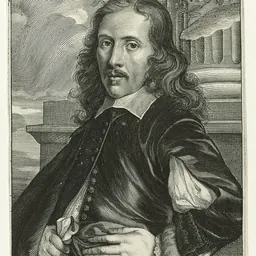
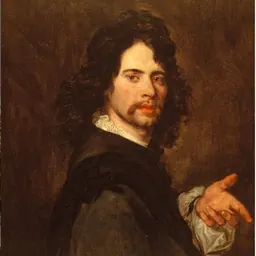

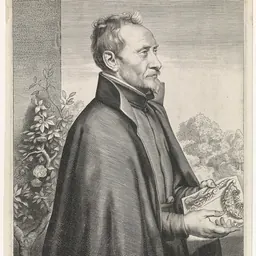
Related people
Same field, nearest in time

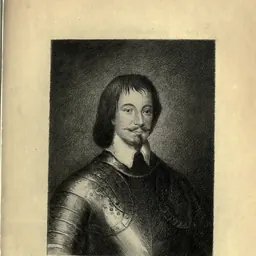
Contemporaries
People whose lives overlapped Archduke Leopold Wilhelm of Austria's






Frequently asked questions
Who was Archduke Leopold Wilhelm of Austria?
Austrian archduke (1614-1662)
When was Archduke Leopold Wilhelm of Austria born?
Archduke Leopold Wilhelm of Austria was born on 5 January 1614 in Wiener Neustadt, Graz.
When did Archduke Leopold Wilhelm of Austria die?
Archduke Leopold Wilhelm of Austria died on 20 November 1662 in Vienna.
What was Archduke Leopold Wilhelm of Austria's occupation?
Archduke Leopold Wilhelm of Austria was a politician, catholic priest, art collector, military leader, patron of the arts and bishop.
What nationality was Archduke Leopold Wilhelm of Austria?
Archduke Leopold Wilhelm of Austria was German.
Sources & further reading
· Wikipedia: Archduke Leopold Wilhelm of Austria
· DBpedia: Archduke Leopold Wilhelm of Austria
Cite this page
APA: Biography.guide. (2026). Archduke Leopold Wilhelm of Austria. https://biography.guide/archduke-leopold-wilhelm-of-austria/
MLA: "Archduke Leopold Wilhelm of Austria." Biography.guide, https://biography.guide/archduke-leopold-wilhelm-of-austria/.
Chicago: "Archduke Leopold Wilhelm of Austria." Biography.guide. https://biography.guide/archduke-leopold-wilhelm-of-austria/.
Data last updated: 2026-09-20 · Spot an error? Report a correction.
Page generated 2026-09-27 05:22 UTC